Whether you are a healthcare provider setting up a new clinic, a patient trying to verify a diagnostic facility, or a laboratory director ensuring compliance, navigating the world of clinical laboratory certifications is crucial. Understanding how to use a clia lookup tool can save you time, ensure regulatory compliance, and guarantee that patient health is in safe hands.
In this comprehensive guide, we will explore everything you need to know about certified clinical laboratories, from performing a basic clia number search to understanding lab personnel requirements and complex accreditation standards.
What is CLIA and What Does CLIA Stand For?
If you are new to healthcare administration, you might be wondering: what is clia?
In the medical world, what does clia stand for? It stands for the Clinical Laboratory Improvement Amendments of 1988. These federal regulations ensure quality laboratory testing. The clia meaning revolves around standardizing clinical tests to ensure accuracy, reliability, and timeliness of patient test results.
(Note: If you stumbled here looking for travel agent certifications or a travel agent certification program, you are thinking of the Cruise Lines International Association, which also uses the acronym CLIA. This article focuses strictly on medical clinical laboratories!)
So, what is a clia number? A clia id (or CLIA number) is a unique ten-digit alphanumeric identifier assigned to a facility. A facility that is clia certified has demonstrated that it meets federal quality standards.
Why Perform a CLIA Laboratory Lookup?
Using a clia laboratory lookup is essential to verify lab certification status. Doctors, insurers, and auditors regularly perform a clia license search to confirm that a lab is legally permitted to test human specimens for health assessment.
Through the Medicare and Medicaid services lab portal, you can access a vast database of certified labs. Performing a clia lab lookup helps you:
- Perform a laboratory compliance history check.
- View the facility’s clia certification verification.
- Confirm you are partnering with an active, certified clia lab.
Step-by-Step: Using the CLIA Lookup Tool
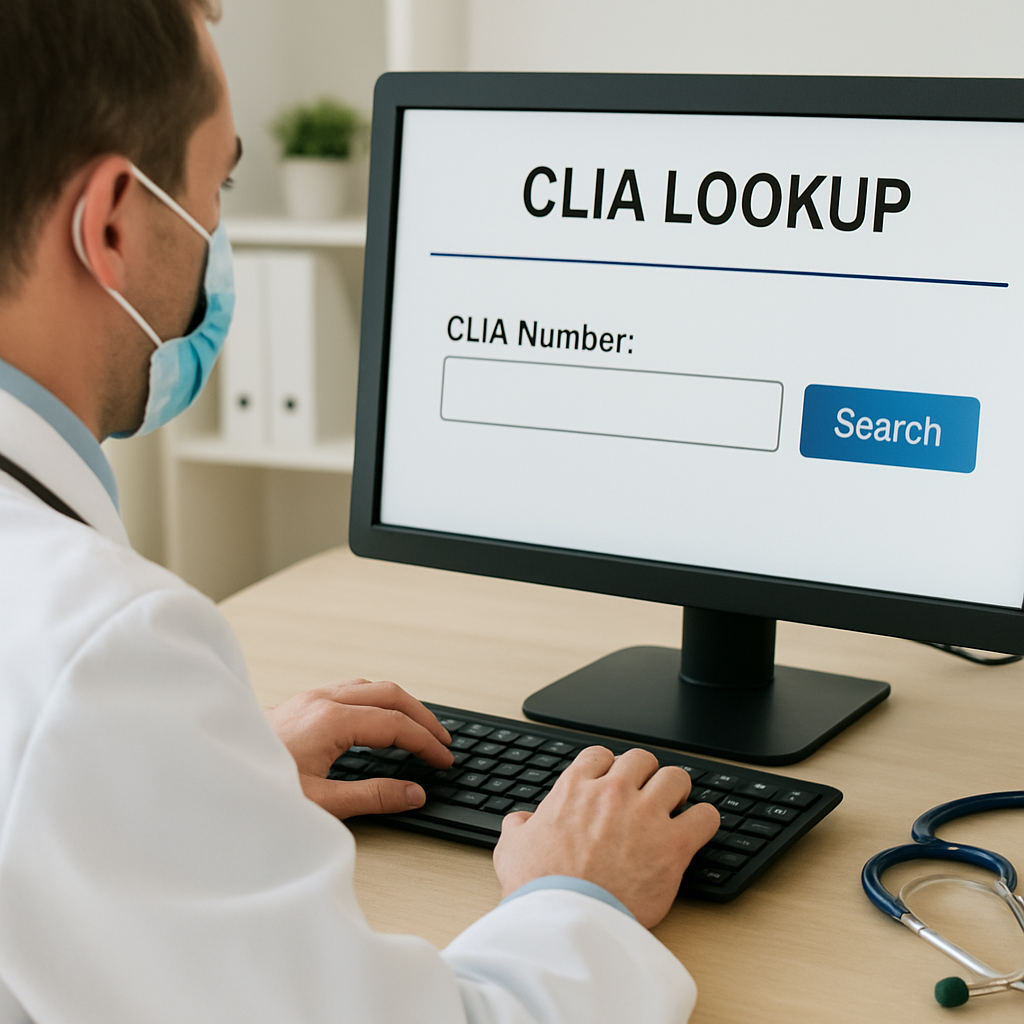
Finding a lab’s status is straightforward using the CMS laboratory search tool. Here are a few ways to find what you need:
- Direct CLIA Number Lookup: If you already have the ID, simply enter it into the clia id lookup to check its active status.
- CLIA Lookup by NPI: Many databases allow you to cross-reference National Provider Identifier (NPI) numbers with laboratory data.
- CLIA Lookup with Expiration Date: It is vital to check expiration dates. A clia certificate search will show you exactly when a lab’s credentials expire.
- Advanced CLIA Search: Using the CMS laboratory demographic files, researchers and administrators can conduct a broad clia laboratory search by state or testing volume.
If you ever forget a facility’s ID, you can usually figure out how to find CLIA certificate number details by searching the lab’s name and location in the clia lab search directory.
Navigating CLIA Waivers and Test Complexity
Under federal guidelines, tests are categorized by complexity. It is the government’s job to validate medical test complexity.
What Does CLIA Waived Mean?
What is a clia waived test? The waived testing definition applies to simple laboratory examinations and procedures that have an insignificant risk of an erroneous result. Facilities that only perform these tests can apply for a clia certificate of waiver.
Examples of CLIA Waived Tests
If you are wondering, “which of the following is a clia waived laboratory test?” here is a brief list of clia waived tests:
- Over-the-counter pregnancy tests
- Rapid strep tests
- Certain blood glucose monitors
- Fecal occult blood tests
If your clinic only performs waived testing, your CLIA certificate of waiver requirements will be much simpler than a high-complexity lab. To verify if a facility holds this specific certificate, you can utilize a clia waiver lookup or a general clia license lookup.
Quality Standards: CLIA vs COLA Accreditation and CAP
Meeting clinical laboratory quality standards is non-negotiable. While CMS oversees basic federal compliance, laboratories often seek third-party accreditation.
When comparing CLIA vs COLA accreditation, COLA is a physician-directed organization that accredits medical laboratories and often provides a more educational, consultative approach to compliance, while still meeting all federal standards. Alternatively, many high-complexity facilities seek accreditation as a cap laboratory through the College of American Pathologists (cap clia).
Accredited labs must participate in proficiency testing. A designated pt laboratory will send unknown samples to the facility to test their accuracy. When state surveyors evaluate a lab, administrators must be skilled at interpreting laboratory survey reports to fix any deficiencies quickly.
Laboratory Personnel: Certifications and Licenses
Behind every accurate clia test is a team of highly trained professionals. A certification laboratory relies heavily on its staff. If you are conducting a laboratory director qualifications search, you will find that the laboratory director must meet rigorous educational and experiential benchmarks.
But what about the bench workers?
How to Become a Lab Technician
If you are curious about how to become a lab technician, you must first understand the lab technician prerequisites. How long does it take to become a lab technician? Typically, a medical lab technician certificate takes about two years via an associate degree. These roles require a valid mlt license and adherence to strict lab technician requirements.
For entry-level roles, individuals might pursue a laboratory assistant certification to become a certified laboratory assistant. Earning an mla certification (Medical Laboratory Assistant) is an excellent stepping stone into the field.
Clinical Laboratory Scientists (CLS) and Medical Technologists (MT)
The terms often overlap, but the cls medical abbreviation stands for Clinical Laboratory Scientist. How to become a clinical lab scientist or how to become a cls usually requires a bachelor’s degree and passing a national exam to earn a clinical lab scientist certification.
Once completed, professionals receive a clinical laboratory scientist license (often referred to as a cls license). A professional who is cls certified ensures high-complexity tests are performed accurately.
Similarly, many pursue a medical technologist certification (or mt certification). Whether you hold a medical technologist license, a medical tech license, or are recognized as a certified medical technologist, you must maintain your medical laboratory science certificate. Depending on the state, this is formally known as a clinical laboratory technologist license.
State-Specific Licensing Requirements
State laws vary wildly. If you are aiming to work in the sunshine state, you will need a florida department of health license. This is frequently referred to as a fl doh license, florida doh license, or simply an fdoh license.
California has some of the strictest cls requirements. To work there, you need a california clinical laboratory scientist license (also known as a california clinical lab scientist license, california laboratory scientist license, or clinical laboratory scientist california). Professionals often refer to this highly sought-after credential as cls california. Another notable California-specific credential is the ca medical technologist license.
Phlebotomists also require state credentials. Staying on top of your phlebotomy license renewalsuch as a california phlebotomy license renewal or general phlebotomy renewal is essential to keep your lab certifications active and legally draw blood.
Applications, Renewals, and State Agencies
Establishing and maintaining your lab credentials requires dealing with state and federal paperwork.
The CLIA Application Process
To start, facilities must submit a clia application (Form CMS-116). Fortunately, many states now accept a clia online application or utilize a dedicated clia app portal. If you only intend to perform basic tests, you will submit a clia waiver application to secure your clia waiver.
Before applying, it is best to review all clia certification requirements specific to your test menu.
CLIA License Renewal
Your certification is not permanent. A clia renewal is typically required every two years. Managing your clia license renewal (or clia certification renewal) involves paying fees, updating test menus, and sometimes enduring an inspection. Ensure you use the clia certification lookup tool well before your expiration date to confirm your status is current.
Contacting State Agencies
While CMS handles federal oversight, applications are processed at the state level. You will need to find state laboratory survey agency representatives for your area. CMS provides a comprehensive CMS state agency contacts list online. This list is invaluable when you have questions about your specific clia number lookup or need to update demographic information.
Conclusion
From ensuring that simple clia waived lab tests are legally compliant, to performing a complex clia lookup for an audit, understanding the framework of laboratory certification is non-negotiable for medical professionals.
By familiarizing yourself with the CMS laboratory search tool, understanding the educational journey of a certified laboratory scientist, and keeping track of your state’s florida doh license or california laboratory scientist license requirements, you contribute to a safer, more accurate healthcare system. Remember, a quick clia number search takes only a few minutes, but the peace of mind it provides regarding patient safety is immeasurable.