
Whether you are opening a new medical facility, stepping into the role of a laboratory director, or simply trying to understand the regulatory landscape of medical testing, navigating healthcare compliance can feel like learning a foreign language. At the center of this regulatory world are the Clinical Laboratory Improvement Amendments (CLIA).
Established by Congress in 1988, these regulations ensure that all laboratory testing performed on humans in the United States is accurate, reliable, and timely. But what is CLIA, exactly, and how does it impact your day-to-day operations or your career as a medical professional?
In this comprehensive guide, we will break down everything you need to know about the Clinical Laboratory Improvement Amendments, from understanding waived testing and the CMS laboratory certification process to navigating complex laboratory personnel qualification standards.
What Does CLIA Stand For and What is its Purpose?
To start, what does CLIA stand for? The CLIA meaning refers to the Clinical Laboratory Improvement Amendments. Any facility that performs even a single CLIA test on clinical specimens for health assessment, diagnosis, or treatment must be a CLIA certified entity.
(A quick, fun clarification: If you stumbled upon this article looking for travel agent certifications or a travel agent certification program, you are likely thinking of the Cruise Lines International Association, which shares the same acronym! But in the healthcare and scientific communities, CLIA stands for strict federal laboratory regulations.)
Every regulated facility is assigned a unique identifier. So, what is a CLIA number? Your CLIA ID is a 10-digit alphanumeric number that tracks your facility’s compliance, inspection history, and approved testing complexities.
CLIA Testing Categories: Waived vs. Non-Waived
The FDA and CMS categorize lab tests based on their complexity. Understanding the difference between moderate vs high complexity testing and waived tests is crucial for maintaining regulatory compliance in labs.
So, what does CLIA waived mean? The waived testing definition applies to simple tests with a low risk for an incorrect result. But what are waived laboratory tests, practically speaking? If you look at a list of CLIA waived tests, you will see common point-of-care diagnostics. Examples of CLIA waived tests include urine pregnancy tests, basic dipstick urinalysis, and rapid strep tests. If a student asks, “Which of the following is a CLIA waived laboratory test?” the answer will almost always be a simple, highly automated test designed for use outside of traditional lab environments.
To perform these CLIA waived lab tests, a facility needs a CLIA certificate of waiver. The CLIA certificate of waiver requirements are relatively straightforward, focusing mainly on proper oversight of point of care testing and following the manufacturer’s instructions to the letter.
How to Apply for CLIA Certification
If you are setting up a CLIA lab, understanding how to apply for CLIA certification is your first hurdle. The CLIA online application has made the process easier, but you can also submit paper forms through your state agency.
Here are the basic steps for a CLIA application or a CLIA waiver application:
- Download and Complete the Form: Review the CMS Form 116 instructions. This form requires details about your facility, testing volume, and the laboratory director.
- Determine Your Test Complexity: Decide if you are applying for a waiver, moderate, or high-complexity certificate.
- Pay the Fees: CLIA certification fees by lab type vary depending on the volume and complexity of the tests performed.
- Coordinate with State Agencies: Keep in mind state survey agency responsibilities. State health departments act on behalf of CMS to process your CLIA certification requirements and perform routine inspections.
For those facing an upcoming review, utilizing a laboratory inspection preparation guide is highly recommended to ensure continuous compliance.
Navigating CLIA Lookup and Verification Tools
Healthcare providers, insurers, and vendors frequently need to verify a facility’s status. Fortunately, CMS provides public databases for CLIA certification verification.
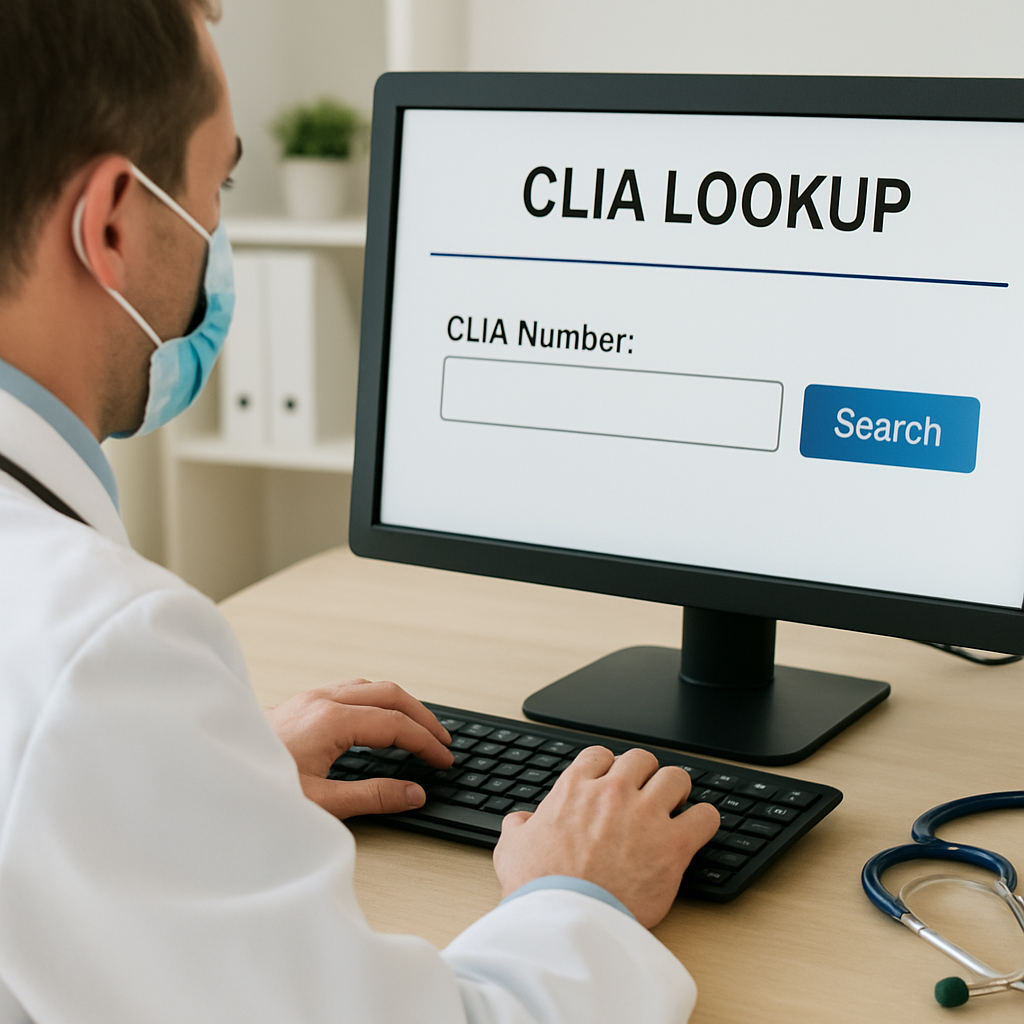
If you need to verify a facility, utilizing a CLIA lookup tool is incredibly helpful. Here are a few ways to perform a verification:
- CLIA Number Search / CLIA Number Lookup: Enter the 10-digit ID directly into the database to view the certificate status.
- CLIA Lab Search / CLIA Laboratory Search: You can perform a CLIA lab lookup using the facility name or address.
- CLIA Lookup by NPI: Many databases link the National Provider Identifier to the CLIA ID lookup, making it easy for billing departments.
- CLIA Lookup with Expiration Date: To ensure a facility hasn’t lapsed, perform a CLIA license lookup (or CLIA certificate search) to check the expiration dates. This is especially useful during CLIA license renewal or CLIA certification renewal periods.
Whether you call it a CLIA search, a CLIA waiver lookup, or a CLIA laboratory lookup, these tools are vital for ensuring that a certification laboratory is legally permitted to test patient samples.
Laboratory Personnel Qualification Standards and Careers
The Clinical Laboratory Improvement Amendments don’t just regulate facilities; they heavily dictate laboratory personnel qualification standards. If you are wondering how to become a lab technician or how long does it take to become a lab technician, your journey will be guided by these rules.
Understanding the Acronyms: CLS, MT, and MLT
The medical testing field is full of specific titles. What is the CLS medical abbreviation? It stands for Clinical Laboratory Scientist. Below is a breakdown of common lab roles and lab technician requirements:
- Clinical Laboratory Scientist (CLS) / Medical Technologist (MT): If you want to know how to become a clinical lab scientist or how to become a CLS, it generally requires a bachelor’s degree in a hard science, completion of a clinical training program, and passing a national exam to earn a clinical lab scientist certification (or medical technologist certification). Achieving your CLS certification (or MT certification) proves you are a certified medical technologist capable of high-complexity testing.
- Medical Laboratory Technician (MLT): A medical lab technician certificate or MLT license typically requires a two-year associate degree. Laboratory technician requirements allow MLTs to perform moderate and some high-complexity tests under supervision.
- Laboratory Assistants: For entry-level roles, a certified laboratory assistant credential (such as MLA certification or laboratory assistant certification) is ideal. The lab technician prerequisites at this level are usually a high school diploma and a short training program.
State-Specific Licenses and Renewals
While national bodies (like ASCP) provide your base certified laboratory scientist credentials, many states require a separate state license.
- California: Known for having some of the strictest standards, obtaining a California clinical laboratory scientist license (often referred to simply as a CLS license or CLS California credential) requires specific coursework beyond national CLS requirements. Whether you are applying for a new California laboratory scientist license, a general clinical laboratory scientist California permit, or processing a California phlebotomy license renewal, you must go through Laboratory Field Services (LFS).
- Florida: Similarly, working as a cls certified professional in Florida requires a Florida Department of Health license. You will frequently see this abbreviated as a FL DOH license, FDOH license, or Florida DOH license when applying for a medical technologist license (or CA medical technologist license equivalent) in the Sunshine State.
- Phlebotomy: For those drawing blood, phlebotomy renewal and phlebotomy license renewal are strictly enforced by state boards to ensure ongoing competency.
Securing a medical tech license, clinical laboratory technologist license, or a medical laboratory science certificate is a testament to a professional’s rigorous education and dedication to patient safety. If you are wondering how to get clinical lab scientist license credentials in your state, always check your local department of health website.
Maintaining Quality: Proficiency Testing and Accreditation
Being a CLIA lab is not a set-it-and-forget-it status. Facilities must adhere to strict diagnostic testing quality control measures.
A major component of this is participating in mandatory proficiency testing programs. A PT laboratory receives unknown samples from an approved provider, tests them, and submits the results. Proficiency testing ensures that a lab’s equipment and personnel are consistently producing accurate data.
CLIA vs CAP Accreditation
When discussing lab certifications, you will often hear about CAP (College of American Pathologists). What is the difference between CLIA vs CAP accreditation? While CLIA represents the baseline federal law, a CAP laboratory has opted for a higher, more rigorous standard of excellence. CAP accreditation meets and exceeds CLIA standards, which is why CMS grants CAP “deemed status.” A facility might proudly display both their CAP CLIA certificates to show their commitment to top-tier diagnostics.
Renewals and Ongoing Compliance
Don’t forget about your CLIA renewal! Whether you operate a high-complexity lab or just perform basic waived tests, tracking your CLIA certification renewal deadline is critical. Lapses can result in a halt of testing and loss of Medicare/Medicaid reimbursements. Use the CLIA lookup tool to routinely verify your own expiration dates.
Conclusion
The Clinical Laboratory Improvement Amendments form the backbone of diagnostic safety in the United States. Whether you are performing a CLIA number search to verify a vendor, submitting a CLIA online application, studying for your clinical laboratory scientist license, or navigating the complex CMS laboratory certification process, understanding these regulations is non-negotiable.
By familiarizing yourself with everything from the waived testing definition to high-level laboratory personnel qualification standards, you ensure that your facility remains compliant, your staff remains properly certified, and most importantly, your patients receive the accurate healthcare results they deserve.