
In the highly regulated life sciences industry, guaranteeing that your technology works exactly as intended is not just a best practice, it is a legal requirement. Whether you are manufacturing pharmaceuticals, conducting clinical trials, or developing medical devices, reliance on software systems is unavoidable. This is where computerized system validation becomes critical. It serves as documented evidence that your technology consistently performs its intended functions securely, reliably, and accurately.
However, navigating the complexities of regulatory frameworks, evolving software delivery models, and strict data integrity rules can be overwhelming. This guide breaks down the processes, methodologies, and modern trends shaping how organizations approach system validation today.
Understanding the Basics: Defining the Scope
To begin, we must answer a fundamental question: what is computerized system exactly? (Or, depending on your region’s spelling preference, what is computerised system?)
In regulatory terms, a computerized system is not just the software application itself. It is a comprehensive ecosystem that includes the hardware, the software, the network infrastructure, the operating procedures, and the personnel interacting with it.
If you are new to the industry and wondering about the csv full form, it stands for Computerized System Validation. At its core, csv validation is the systematic process of testing and documenting that this entire ecosystem meets a set of predefined requirements and is fit for its intended use.
Why is Validation Necessary?
Traditional computer validation ensures that any system capable of impacting product quality, patient safety, or data integrity (collectively known as GxP) operates flawlessly. Without proper computer systems validation, life science companies risk warning letters, product recalls, and severe reputational damage.
The Paradigm Shift: CSV vs. CSA
For decades, the industry relied heavily on documentation-heavy validation protocols. However, regulatory bodies recognized that excessive focus on documentation often detracted from actual software quality.
This realization prompted fda’s new software validation requirements, transitioning the industry toward FDA Computer Software Assurance (CSA). Understanding the debate of csv vs csa is vital for modern compliance:
- Traditional CSV: Focuses heavily on generating comprehensive documentation to prove compliance, often treating all system features with equal risk.
- fda computer software assurance: Encourages critical thinking and a risk-centric approach. It focuses testing efforts on high-risk features that directly impact patient safety, while leveraging supplier documentation and unscripted testing for low-risk features.
By adopting this modern fda software validation framework, organizations can drastically reduce documentation overhead while actually improving software quality.
Structuring the Validation Lifecycle
A robust software development life cycle for GxP (Good Practice) systems requires careful planning, risk evaluation, and meticulous execution.
Planning and Risk Assessment
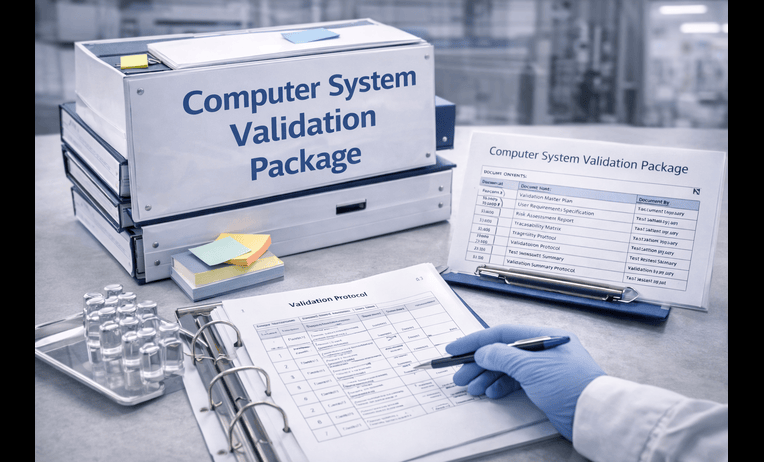
Before testing begins, you must define the scope. The validation master plan essential components typically include the project scope, roles and responsibilities, validation strategy, acceptance criteria, and a clear timeline.
Once the plan is in place, conducting a GxP system risk assessment is the next critical step. Industry leaders rely on the GAMP 5 risk-based approach (Good Automated Manufacturing Practice) to classify software based on its complexity and novelty—ranging from standard operating system software (Category 1) to bespoke, custom-built applications (Category 5). Higher categories require more rigorous testing and oversight.
Requirements and Traceability
A system is only as good as the rules governing it. Following user requirements specification best practices means writing requirements that are specific, measurable, achievable, realistic, and testable (SMART).
To prove to auditors that every requirement has been tested, you must maintain a traceability matrix for regulatory audits. This matrix connects every user requirement to its corresponding functional specification and the specific test script that verified it, leaving no gaps for auditors to question.
Testing Frameworks and Execution
When structuring your project timeline, the conversation of the V-model versus agile for regulated software frequently arises. While the traditional V-model provides a linear, highly documented path ideal for legacy systems, Agile methodologies are increasingly accepted in GxP environments, provided that documentation is integrated seamlessly into the sprints.
Regardless of the methodology, the core testing phases remain. Understanding the difference between IQ OQ and PQ is crucial:
- Installation Qualification (IQ): Proves the system is installed correctly in the specified environment according to the vendor’s guidelines.
- Operational Qualification (OQ): Verifies that the system operates according to functional specifications throughout all specified operating ranges (including error testing).
- Performance Qualification (PQ): Demonstrates that the system consistently performs as intended in the real-world, live environment, using actual business processes and trained personnel.
Meeting Global Regulatory Standards: Data Integrity and Security
Operating globally means adhering to strict regional guidelines. In the United States, organizations must understand how to implement 21 CFR Part 11 compliance, which governs electronic records and electronic signatures. In Europe, companies must align with Annex 11 regulatory requirements.
Both frameworks heavily emphasize data integrity. The data integrity requirements for automated processes dictate that data must be ALCOA+ (Attributable, Legible, Contemporaneous, Original, Accurate, Complete, Consistent, Enduring, and Available).
To achieve this, secure audit trails are non-negotiable. Regulators have strict expectations regarding what the audit trails of computer systems include:
- The exact date and time of the entry or change.
- The identity of the user making the change.
- The original value (which must not be obscured or deleted).
- The new value.
- The reason for the change.
Best Practices for Modern Validation Workflows
As technology evolves, so too must validation strategies. Applying the best practices for software validation in research settings, laboratories, and manufacturing floors requires an eye for innovation and efficiency.
Handling Legacy Systems
Many life science organizations still rely on older software. Remediating legacy system compliance gaps requires performing a gap analysis against current 21 CFR Part 11/Annex 11 regulations and implementing procedural controls (like restricted physical access or manual logbooks) if technical controls are impossible to retrofit.
Change Control and State Maintenance
Validation is not a one-and-done event. Software updates, patches, and infrastructure migrations happen continuously. Maintaining validated state during change control involves assessing every proposed change for its potential impact on the system’s validated status. If a patch alters a core function, partial or full re-validation (regression testing) is required.
Embracing Automation and Paperless Systems
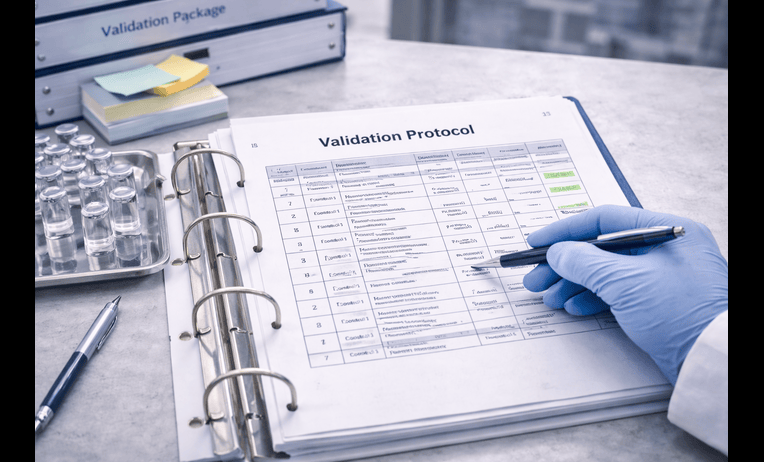
Historically, validation meant printing thousands of pages of test scripts, signing them manually, and storing them in massive binders. Today, companies are leveraging dedicated pharma validation software (also known as Validation Lifecycle Management Systems).
There are immense benefits of paperless validation protocols:
- Real-time Collaboration: Distributed teams can execute and review tests simultaneously.
- Enforced Compliance: Electronic systems prevent users from skipping required fields or missing electronic signatures.
- Faster Audits: Retrieving a traceability matrix or a specific IQ test script takes seconds rather than days.
Furthermore, forward-thinking organizations are reducing compliance costs through automated testing. By automating repetitive regression tests, QA teams can focus their manual efforts on high-risk, complex scenarios aligning perfectly with the FDA’s CSA guidance.
Conclusion
Mastering computerized system validation is an ongoing journey that balances regulatory strictness with technological innovation. By moving away from outdated, document-heavy mindsets and embracing risk-based frameworks like GAMP 5 and FDA CSA, organizations can ensure product quality without stalling innovation.
Remember that compliance is a continuous state. Whether you are defining user requirements, configuring audit trails, or modernizing your approach with paperless tools, a proactive and well-documented validation strategy is your best defense against regulatory scrutiny and operational failure.