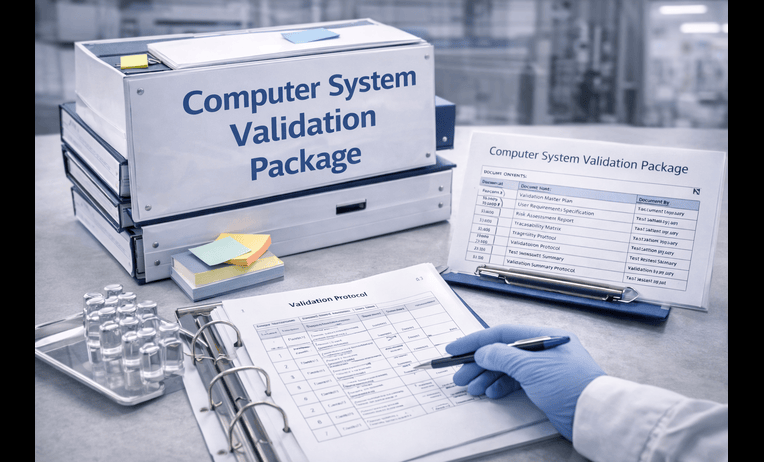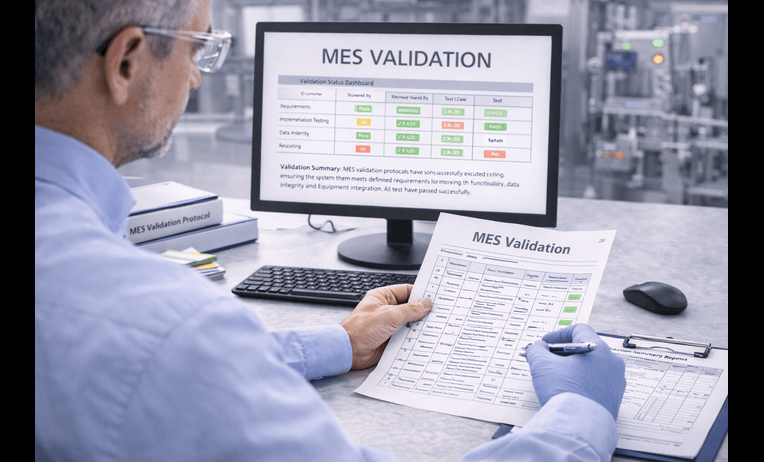
Imagine your favorite smartphone app freezing right before you finish sending a text message. It is incredibly frustrating, but nobody gets hurt. Now, what if that same software glitch happened inside an automated insulin pump or an airplane navigation screen? In high-stakes environments, a simple error transforms from a minor annoyance into a life-threatening disaster.
This stark difference is exactly why regulated industries rely on a rigorous process called computer validation. Many people confuse this practice with regular software testing. Testing is simply checking to see if a program works correctly once. Validation, on the other hand, is the rigorous process of proving it works perfectly every single time.
According to standard quality engineering practices, it is not enough for a machine to just function properly in the laboratory. Manufacturers must build a permanent paper trail that proves they checked every possible outcome. This creates what professionals call documented trust, ensuring companies never cut corners when our health or money is on the line.
Ultimately, these safety-critical systems operate as an invisible shield in our modern world. Whenever you withdraw cash or take a prescription medication, you are relying on technology built to protect you.
The ‘Proof of Intent’: Why Computer Systems Validation (CSV) is More Than Just a Password
We trust computers daily, from oven timers to GPS. But when software controls a blood bank, a simple glitch becomes a disaster. Industries prevent harm through Computer Systems Validation (the CSV full form). CSV establishes a “Proof of Intent.” This means proving the software does exactly what it was designed to do every single time, and keeping the receipts to show your work.
There is a vast gap between standard bug-checking and formal FDA software validation. Everyday testing checks if an app works once, while validation guarantees it won’t fail during critical moments. Consider these three core differences:
- Verification: Asks, “Did we build the code right?” by looking for basic errors.
- Validation: Asks, “Did we build the right thing?” to ensure it safely meets the user’s actual needs.
- Documentation: Provides the unshakeable receipts proving no corners were cut.
This invisible shield protects us when our well-being is at stake. Because a calculator needs far less scrutiny than a medical insulin pump, developers must properly weigh the danger to allocate their testing resources effectively.
Apples to Airplanes: How to Conduct a System Risk Assessment Without a PhD
Not every piece of technology requires the exact same level of scrutiny. Figuring out how to conduct a system risk assessment simply comes down to asking: who gets hurt if this breaks? If a smart thermostat displays the wrong background color, it is just an annoyance, but if a hospital’s life-support monitor freezes, actual lives are at stake.
To determine where to focus their rigorous testing, industries rely on a rulebook known as the GAMP 5 risk-based framework. Think of GAMP 5 as a safety guide that tells developers to spend more time checking custom-built, critical software than standard, off-the-shelf tools. This practical approach ensures nobody wastes years testing a basic word processor while ignoring the code inside a pacemaker.
Applying this logic means closely examining what the software is actually doing. During system validation, engineers isolate the high-risk functions that directly impact human health or secure data. They understand that a simple button generating an automated email requires far less proof of safety than a complex formula calculating a patient’s exact chemotherapy dosage.
By prioritizing the most dangerous risks first, companies can build incredibly reliable technology without getting bogged down in endless paperwork. This targeted focus ensures teams can accurately define their safety requirements before writing a single line of code.
The Software Wish List: Why User Requirement Specifications (URS) Prevent Disasters
Imagine building a house without a blueprint. In early software development life cycle stages, skipping this planning causes disasters. Engineers prevent this by writing a User Requirement Specification (URS), a formal wish list detailing exactly what a system must do to ensure user safety.
Defining goals upfront prevents dangerous errors, like a pharmacy app calculating a medicine dose incorrectly. Following user requirement specification best practices means mastering the “Testable Requirement.” A good requirement shares four crucial traits:
- Clear: Anyone can quickly understand the goal.
- Testable: You can prove it works with a simple pass or fail.
- Traceable: It connects directly to a known safety risk.
- Necessary: It serves a vital, real-world purpose.
This documented wish list forms the foundation of software quality assurance, preventing expensive re-dos by defining success from day one and setting the stage for rigorous physical testing.
The Three-Step Safety Check: Setup, Test, and Real-World Run
Even a brilliant blueprint cannot guarantee a safe building if the pipes burst under pressure. Once a plan is finalized, engineers physically prove the technology works as promised. This relies on three installation operational performance qualification phases, transforming a theoretical wish list into a trusted tool.
The first safety check is “The Setup.” Before checking if a new pharmacy app calculates doses correctly, we must verify it was installed properly on the hospital’s servers. Think of buying a new oven; before baking a cake, you ensure the gas line is safely connected.
Next comes “The Stress Test,” where engineers push the software to its limits. In modern csv validation, this means deliberately trying to break the system by entering letters instead of numbers for a medicine dose. We must know the software safely blocks the error rather than crashing.
Afterward, we conduct “The Real-World Run.” It is not enough that software works in a sterile lab; it must perform perfectly in everyday environments. Modern guidelines, like fda computer software assurance, emphasize testing the system exactly how a rushed pharmacist would use it during a busy shift.
Completing these rigorous checks proves a critical computer system is completely safe for the public. However, proving initial functionality must be paired with permanent, unalterable records to maintain long-term trust.
Digital Breadcrumbs: Mastering Audit Trails and 21 CFR Part 11
Imagine finding money missing from your bank account with no record of who transferred it. In medicine or aviation, this lack of history is life-threatening. To prevent this, software uses digital breadcrumbs. The audit trails of computer systems include an unchangeable history of exactly who pressed a button, what they changed, and when they did it, ensuring total transparency.
Because we rely so heavily on these digital receipts, government agencies created strict safety rules. Specifically, the 21 CFR Part 11 compliance requirements act like a digital notary public. This regulation ensures an electronic signature approving a medical result is just as legally binding and secure as a physical signature written in permanent ink.
How do we know these electronic records are genuinely reliable? Experts use ALCOA+, a framework outlining core data integrity principles in regulated industries. To ensure absolute safety, every critical record must be:
- Attributable: Traced directly to a specific person.
- Legible: Easy to read and understand.
- Contemporaneous: Recorded at the exact moment it happens.
- Original: The very first, unaltered record.
- Accurate: Completely free of errors.
Establishing this undeniable proof guarantees a critical system is safe to use today, though protecting this data as software continually updates requires constant vigilance and proactive maintenance.
The Invisible Shield: Maintaining a Validated State and Cloud Security
Passing a driving test once doesn’t mean a car is safe forever without routine maintenance. Similarly, proving software works flawlessly on day one is only the beginning. Keeping that technology safe over many years requires maintaining a validated state throughout the lifecycle. This approach transforms digital safety from a one-time event into an ongoing habit.
Whenever developers add exciting features or fix minor glitches, these changes act as revalidation triggers for software updates. Think of it like installing a new engine in a trusted airplane; you wouldn’t confidently fly it without inspecting the new parts first. Experts must prove the shiny new update didn’t accidentally break older, life-saving functions.
Today, much of this software lives on the internet, creating new challenges for cloud-based infrastructure as a service compliance. When renting remote servers, keeping data secure becomes a shared responsibility. The cloud provider locks the digital building, but the software owner must lock the sensitive files inside. Mastering these shared security duties ensures the technology remains continuously reliable across its entire lifespan.
From Paperwork to Peace of Mind: Your Roadmap to Reliable Technology
Before today, software simply worked or it didn’t. Now, you recognize the invisible shield of computer validation standing between a basic line of code and a life-critical system. Excellent software quality assurance transforms this complex technical rigor into genuine peace of mind.
You can spot this safety-first approach in everyday technology. The next time you use a new technical system, assess its reliability using this simple three-point framework:
- Evaluate the Intent: Check if the program has a clearly defined, critical purpose.
- Look for the Proof: Notice the visible safeguards designed to prevent dangerous user mistakes.
- Verify the Record: Observe how it safely tracks actions, mirroring best practices for software validation in research settings.
Recognizing this rigorous safety flow reveals the immense effort required to maintain digital reliability. Ultimately, validation is how industries ensure the invisible systems running our world don’t fail us when we need them most.