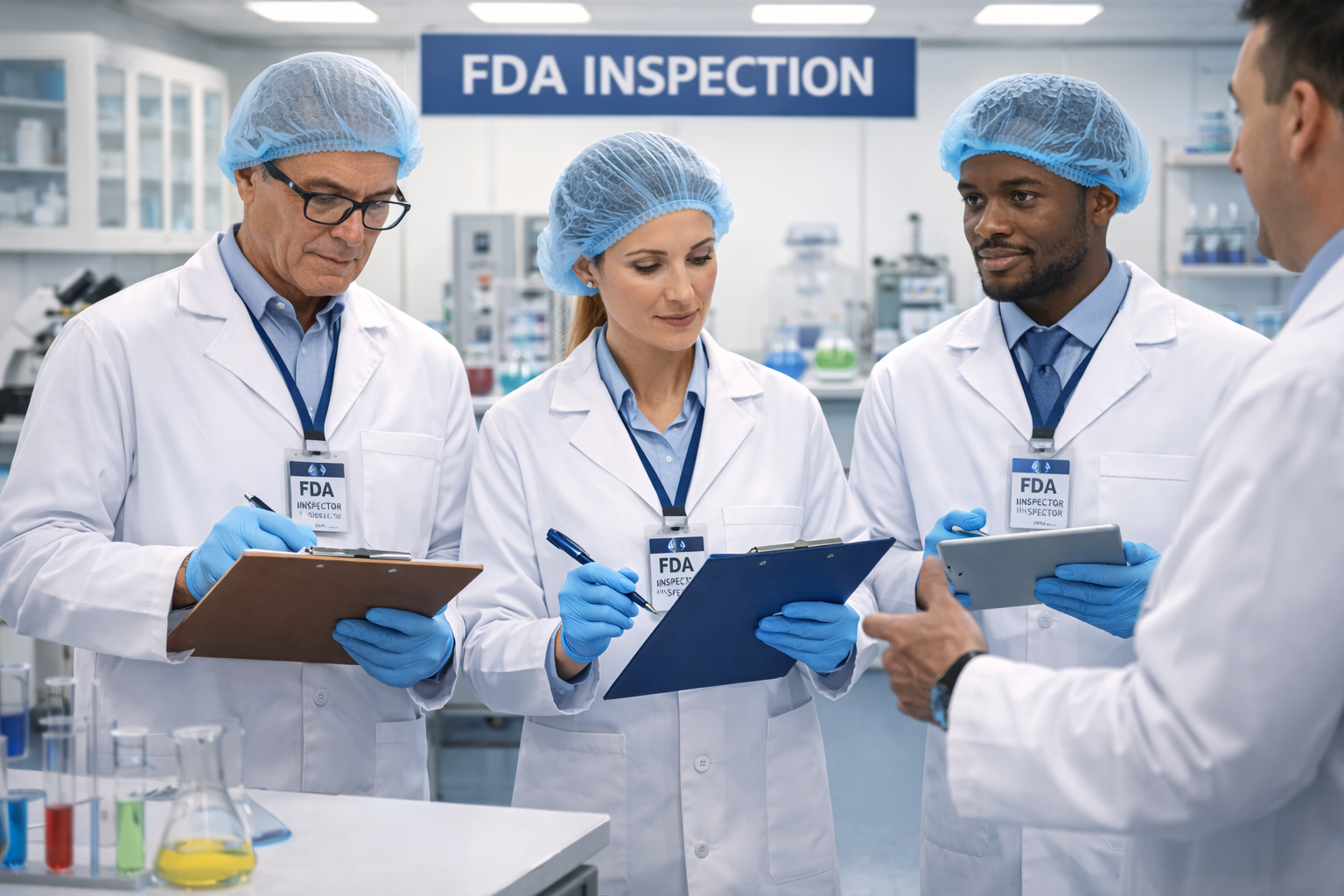
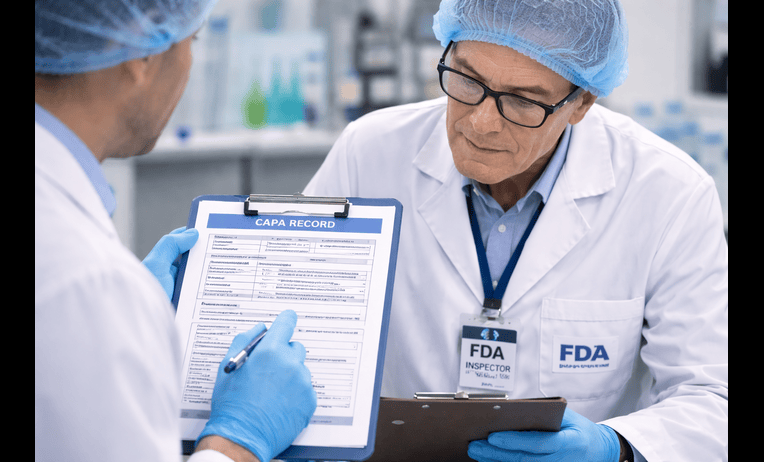
Pick up the aspirin bottle in your medicine cabinet. Before it reached your shelf, a badge-wearing stranger likely walked the factory floor where it was made. This is the world of an FDA inspection, the invisible safety net for your morning routine. People rarely consider exactly what is regulated by the FDA until problems arise. Yet, everything from your morning peanut butter to your nightly eye drops relies entirely on this oversight system.
Hearing a new medication is “approved” provides only half the story. According to public health experts, approving a drug simply proves that the recipe works on paper. Think of it like your favorite restaurant: approving the chef’s menu does not guarantee a clean kitchen. In practice, ongoing regulatory oversight ensures the actual factory floor stays safe and companies follow the recipe every single time.
Ultimately, the primary goal of these routine visits is consumer safety. Checking machines for dust or reviewing cleaning logs guarantees that every facility meets strict FDA standards. Without this constant verification, our trust in everyday products would rely entirely on a corporate pinky swear.
More Than Just a Clipboard: The Wide World of What the FDA Actually Monitors
Walk into any local diner, and you expect the health inspector to check the cleaning logs. The government uses a similar playbook for factories, adjusting the rules based on the complexity of the “dish” being served. An inspector views a simple cough syrup facility very differently than a high-tech pacemaker plant.
The FDA’s regulatory reach stretches far beyond the local pharmacy counter. The agency acts as a global safety net, monitoring an incredibly diverse supply chain that includes:
- Your dog’s favorite pet food
- The cosmetics and lotions in your bathroom
- Radiation-emitting products like laser pointers
- Simple medical supplies, such as adhesive bandages
- Life-saving tools, like artificial heart valves
Because the stakes vary so wildly, FDA standards strictly divide products into low-risk and high-risk categories. A factory making wooden tongue depressors requires basic physical cleanliness, but complex technology demands obsessive, microscopic oversight. For instance, before the FDA approves ProSense Cryoablation breast cancer 2025 treatments, a high-tech system using extreme cold to freeze tumors—inspectors must meticulously verify that the overseas facilities building those intricate parts are completely flawless.
Writing down these strict safety rules is only the first step in protecting the public. To truly ensure that a corporation is following the recipe every single day, inspectors cannot rely on polite, scheduled tours where the factory floors are perfectly polished. This reality makes unannounced visits the agency’s most powerful enforcement tool.
The Element of Surprise: Why Unannounced Visits Keep Your Food and Medicine Pure
Imagine hosting a dinner party where guests arrive three days early. That panic over a messy kitchen is exactly what the government prevents by demanding factories stay spotless daily. An investigator simply walks to the front desk, flashes a badge, and requires entry without any special invitation to check on your family’s food or medicine.
Most unannounced visits are routine safety audits known as surveillance inspections. Think of a typical USFDA inspection as a standard physical for a manufacturing plant. The goal is observing the factory in its natural state, avoiding a staged performance where floors are scrubbed just for visitors. Showing up blindly lets investigators verify everyday safety habits.
Sometimes, the government arrives because a specific alarm was tripped. If a hospital reports cloudy IV fluids, or consumer complaints spike in public FDA inspection data, the agency launches an emergency visit called a for-cause inspection. Your own reports of a bad reaction can actually trigger these targeted investigations, shifting the focus from a general health check to finding the exact broken machine causing the contamination.
Corporations know a federal agent could walk into the lobby at any moment, forcing them to treat every single shift like a test. These surprise FDA inspections are the safety net keeping companies from cutting corners when nobody is looking. Once that investigator clears the front desk, the real detective work begins.
Behind the Hairnets: What Inspectors Actually Look for in a Modern Factory
Stepping onto a factory floor looks a lot like walking into a massive, industrial restaurant kitchen, where a recipe must be followed flawlessly every single time. An investigator doesn’t just wander aimlessly; they bring a strict mental facility walkthrough checklist. They are hunting for the smallest physical clue that a company might be compromising the safety of your daily eye drops or peanut butter.
While observing the machinery in action, these federal detectives compare what they see against baseline safety rules (Current Good Manufacturing Practice compliance standards). They are specially trained to spot critical red flags, including:
- Standing water on the floor, which easily breeds dangerous bacteria.
- Missing signatures on daily cleaning logbooks.
- Dusty equipment that hasn’t been properly sanitized between batches.
- Employee training gaps where workers don’t understand the safety protocols.
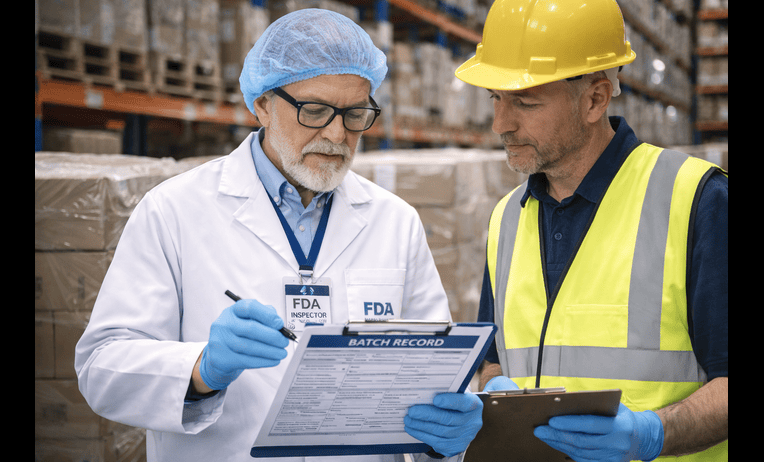
A spotless room is only half the battle, because a clean floor means nothing if the factory’s manufacturing logs are faked. Investigators spend hours reviewing the paper trail to ensure nobody is altering the digital records of how a medicine was made (rules governing this are called data integrity and 21 CFR Part 11 regulations). In the government’s eyes, if a step wasn’t written down and signed for, it simply didn’t happen.
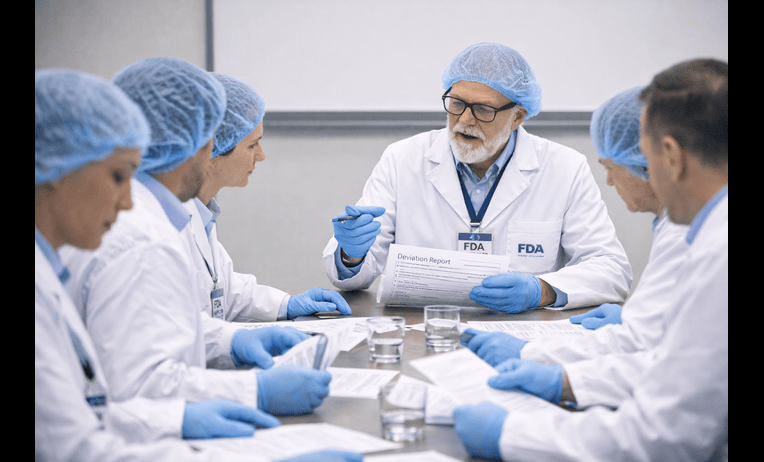
To verify these records, inspectors often pull factory workers aside for private interviews to see if their daily habits match the official paperwork. When the documents and the physical reality don’t line up, the inspector documents every flaw, leading directly to the infamous Form 483.
The Infamous Form 483: How a ‘Fix-it Ticket’ Saves Lives and Forces Better Business Habits
Imagine an inspector spots a dusty machine or a missing signature. Before leaving the factory, they hand management a formal list of observations, officially called an FDA inspection 483. Think of this document as a “fix-it ticket” for a car with a broken taillight; it is a serious alert that safety habits need immediate repair before bad medicine reaches your cabinet.
A fix-it ticket, however, is not the same as losing your driver’s license. When reviewing the aftermath of a government visit, it helps to understand the key differences between these two major enforcement actions:
- Form 483 (The Fix-it Ticket): A list of concerning observations handed over at the end of the tour. It essentially says, “We found these problems; fix them.”
- Warning Letter (The Legal Demand): A severe escalation issued later if the factory ignores the 483 or if the violations are life-threatening. It declares, “Fix this immediately, or we will shut down your ability to sell products.”
Solving these documented flaws requires much more than a quick cleanup. Companies must perform a “Root Cause Analysis” to uncover exactly why the safety rule was broken in the first place. If a mixing vat was dirty, they must determine if the cleaning crew was rushed or if the soap was weak, and then permanently solve the underlying issue (a correction process called remediation).
You don’t have to blindly trust that a corporation made these essential fixes. Consumers can search the public FDA inspection database or the specific FDA inspection classification database to verify a brand’s historical track record. Reviewing these FDA inspection reports empowers you to check if the maker of your daily peanut butter or eye drops passed their latest safety audit.
Because a single bad grade can halt production and ruin public trust, factories rarely navigate this high-stakes process alone. This desperate need for perfection paves the way for a massive shadow industry of safety consultants.
The Safety Consultants: Why Companies Spend Millions to Prepare for the FDA
Before your daily allergy pills reach you, a massive shadow industry works to prevent disastrous safety failures. Since navigating dense government rulebooks is incredibly difficult, factories routinely hire specialized FDA regulatory consulting teams. These experts act as translators, turning complex laws into practical, everyday safety steps for factory workers.
To guarantee they pass the real test, corporations pay FDA compliance consultants to conduct surprise “mock audits.” Think of this as a grueling dress rehearsal. Former government inspectors usually run these practice drills, actively hunting for rusty gears or missing paperwork so the factory can fix hidden dangers long before an official badge arrives.
Ultimately, this massive investment in outside FDA consulting services is what stops contaminated products from ever reaching store shelves. By catching mistakes early, companies prevent dangerous recalls, building the ultimate foundation for trusting your medicine cabinet.
Trusting Your Medicine Cabinet: Why a Rigorous FDA Inspection Process Means Better Health for Everyone
Next time you open that aspirin bottle, you aren’t just blindly trusting a logo. You now understand the rigorous safety net operating behind the scenes. While no system is perfect, strict FDA compliance ensures factories prioritize your health, often guided by US FDA consultants to maintain quality.
Consumers play an active role in this ecosystem. Reporting unsafe food or medicine can trigger targeted inspections, adding a critical layer of protection to public health. By staying informed about the products you use daily, you help maintain the integrity of our shared safety standards.