
In today’s hyper-connected digital landscape, knowing exactly what happens within your IT infrastructure is no longer a luxury, it is an absolute necessity. Whether you are managing sensitive patient data in healthcare, overseeing financial transactions, or developing cutting-edge pharmaceuticals, maintaining a transparent and secure digital environment is vital.
But before we delve into the intricacies of tracking and logging, we must ask a fundamental question: what is computerized system infrastructure in the modern business context? Simply put, it is an integrated setup of hardware, software, network components, and personnel designed to perform specific tasks. Because these systems handle our most sensitive data, ensuring their reliability and security is paramount.
This brings us to a critical concept. If you have ever wondered why are audit trails important for security, the answer is straightforward: they serve as the ultimate, unblinking eyewitness to every digital event. They provide a chronological record of who did what, when they did it, and how it impacted the system.
Let’s explore the anatomy of audit trails, their role in regulatory compliance, and how they fortify your organization against internal and external threats.
Demystifying the Core: What Do Audit Logs Actually Track?
To understand the value of system tracking, we first need to define its scope. Generally, audit trails of computer systems include a secure, time-stamped record of actions that create, modify, or delete electronic records.
When configuring your systems, a common question arises: what information should an audit log contain? A robust audit trail should capture:
- User Identification: The unique ID of the person or service account executing the action.
- Timestamp: The exact date and time the event occurred (typically synchronized to a universal time server).
- Event Details: The specific action taken (e.g., logging in, modifying a file, deleting a record).
- Original and New Values: If data was changed, the log must show the previous state alongside the updated state.
- Terminal/Device ID: The IP address or physical workstation from which the action was initiated.
It is also important to differentiate between system logs vs application audit trails. System logs operate at the infrastructure level, recording operating system events like server reboots, hardware failures, or network traffic spikes. Application audit trails, however, operate at the user level within a specific software program—such as tracking a doctor updating a patient’s medical history or a researcher modifying a clinical trial dataset.
The Regulatory Landscape: Validation and Compliance
In highly regulated industries such as life sciences, healthcare, and finance, audit trails are not just best practices; they are legally mandated. To prove that a system is reliable, companies rely heavily on validation.
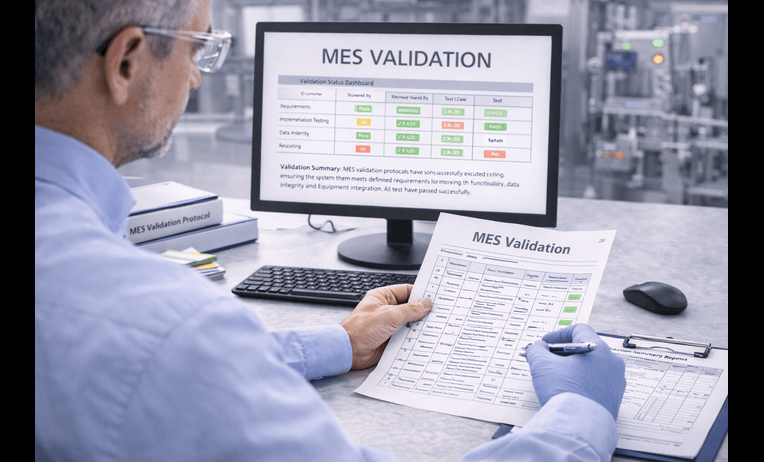
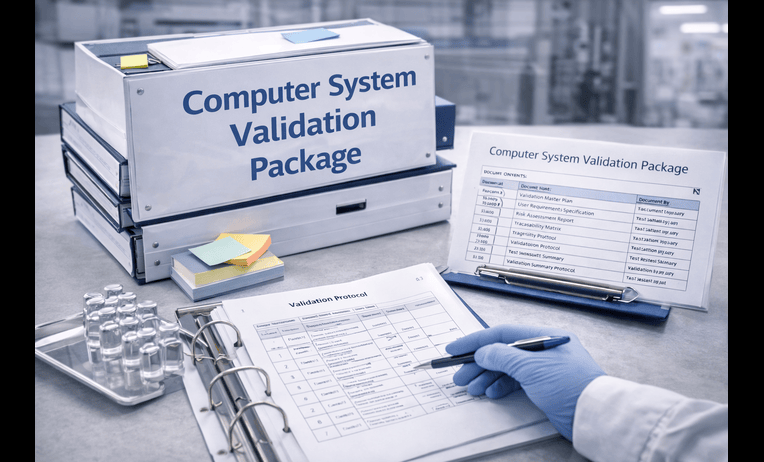
If you are new to the terminology and wondering about the csv full form, it stands for Computer System Validation. Computer system validation (often referred to simply as computer validation or system validation) is the documented process of assuring that an IT system does exactly what it is designed to do in a consistent and reproducible manner.
When dealing with international regulations, determining what is computerised system compliance entails looking at global standards. Regulatory bodies require strict computerized system validation to ensure patient safety, product quality, and data integrity in electronic records. Without proper csv validation, a company cannot prove that its data has not been tampered with or corrupted.
Evolving Frameworks: CSV vs CSA
For decades, FDA software validation has been heavily reliant on exhaustive, paper-heavy CSV processes. Organizations spent countless hours documenting every possible function of their pharma validation software, sometimes prioritizing documentation over actual critical thinking.
However, the landscape is shifting due to the FDA’s new software validation requirements. The industry is currently transitioning from traditional CSV to CSA. In the debate of csv vs csa, CSA (which stands for FDA Computer Software Assurance) represents a modern, risk-based approach.
Instead of generating mountains of paperwork for low-risk system features, CSA encourages testers to focus their energy on high-risk areas that directly impact patient safety or product quality. This paradigm shift relies heavily on automated change tracking mechanisms to handle the compliance burden in the background, establishing new best practices for software validation in research settings. Ultimately, computer systems validation is becoming smarter, leaner, and more effective.
Navigating Security: Threat Detection and Forensics
Beyond meeting strict compliance mandates, audit trails are the backbone of your cybersecurity infrastructure.
Spotting Anomalies and Stopping Breaches
One of the primary benefits of logging is identifying security breaches using logs. Cyber attacks rarely happen in an instant; attackers usually poke around, test credentials, and attempt to escalate privileges. By utilizing preventing unauthorized access through monitoring, IT teams can set up alerts for suspicious behavior. For instance, if a user account attempts to access a restricted database 50 times in two minutes, an active monitoring system will instantly flag the event and lock the account.
Post-Incident Investigations
When a breach or internal data leak does occur, logs become the primary tool for digital forensics and incident response. Investigators comb through the audit trails to determine the exact entry point of the attacker, what data was exfiltrated, and how to patch the vulnerability.
Because modern networks generate millions of log events daily, human review is impossible. This is why enterprise organizations deploy SIEM software for log analysis (Security Information and Event Management). SIEM tools ingest massive amounts of data from servers, firewalls, and applications, using artificial intelligence to correlate events and identify hidden threats in real-time.
Structuring Your Audit Strategy: Best Practices
Knowing what logs do is only half the battle; knowing how to implement secure logging ensures that your safety nets do not fail when you need them most. Implementing an effective audit trail system requires a blend of the right technology and strict operational protocols.
Here are the essential steps and user activity logs best practices for modern enterprises:
1. Automate Everything
The debate between manual vs automated audit logs was settled years ago. Manual logging (where employees self-report changes) is highly prone to human error, forgetfulness, and intentional falsification. Automated logging happens instantly in the background, capturing objective metadata without user intervention. Automated tracking is the only way to satisfy modern regulatory standards.
2. Ensure Immutability
A log is entirely useless if a malicious actor (or a careless employee) can alter or delete it to cover their tracks. Organizations must enforce immutable record keeping for compliance. This means audit trails must be write-once, read-many (WORM). They should be stored in tamper-proof databases or cloud environments where even system administrators lack the permissions to edit or delete historical log entries.
3. Understand Your Compliance Obligations
Different industries have different regulatory compliance requirements for logging. For instance:
- Healthcare (HIPAA): Requires logging access to Electronic Protected Health Information (ePHI).
- Life Sciences (FDA 21 CFR Part 11): Mandates secure, computer-generated, time-stamped audit trails to independently record the date and time of operator entries.
- Finance (SOX/PCI-DSS): Requires strict tracking of financial data access and credit card processing environments.
4. Protect the Logs Themselves
Maintaining audit trail accountability requires defending the logs just as fiercely as the data they track. Log files should be heavily encrypted both in transit and at rest. Furthermore, access to view these logs should be granted only on a strict principle of least privilege, typically reserved for compliance officers and senior security personnel.
Conclusion: The Invisible Guardian of Your Digital Ecosystem
Ultimately, the power of an audit trail lies in its unwavering objectivity. While systems crash, employees leave, and cyber threats evolve, a well-architected audit log remains a permanent, undeniable record of truth.
From facilitating seamless computerized system validation to enabling rapid digital forensics and incident response, audit trails are the connective tissue between operational efficiency, regulatory compliance, and robust cybersecurity. By moving toward modern frameworks like FDA Computer Software Assurance, deploying powerful SIEM tools, and ensuring your logs remain tamper-proof, you do more than just check a compliance box. You build a resilient, transparent organization equipped to face the digital challenges of tomorrow.
Take the time today to review your organization’s logging framework. Ensure your systems are capturing the right data, protecting it relentlessly, and utilizing it to its fullest potential. In the world of data security and compliance, what you don’t track can and will hurt you.