If you are developing a groundbreaking medical technology, navigating the regulatory landscape can feel like decoding a complex puzzle. At the heart of bringing a new medical device to clinical trials in the United States is the Investigational Device Exemption (IDE). Whether your product is a physical implant or an advanced software system, understanding the intricacies of an IDE is critical.
In this comprehensive guide, we will explore the fundamentals of an IDE, the global regulatory standards that surround it, and how modern digital tools are reshaping clinical operations.
What is an Investigational Device Exemption?
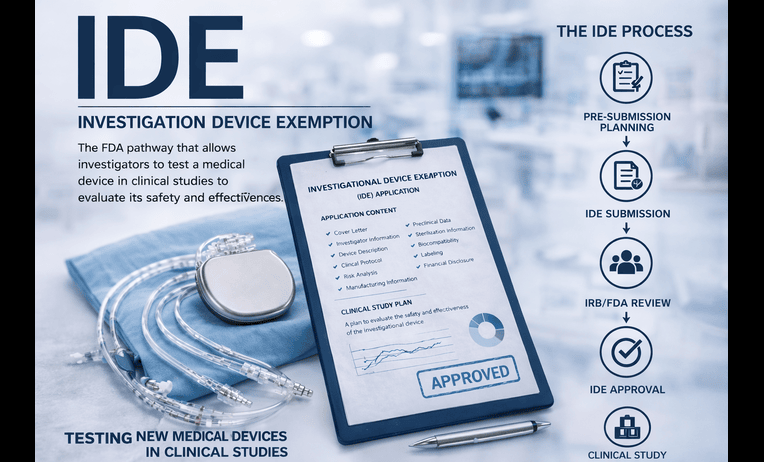
Before a novel device can be legally tested on humans, a sponsor must secure an Investigational Device Exemption. But what is the exact investigational device definition? Simply put, an investigational device is a medical device that is the subject of a clinical study designed to evaluate its safety and effectiveness.
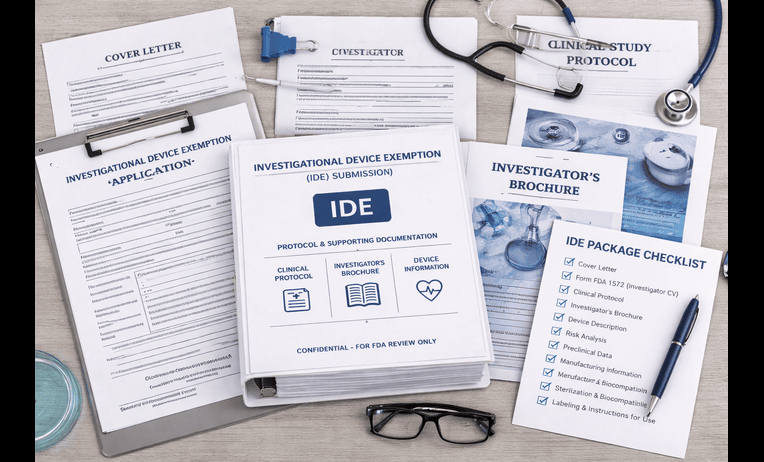
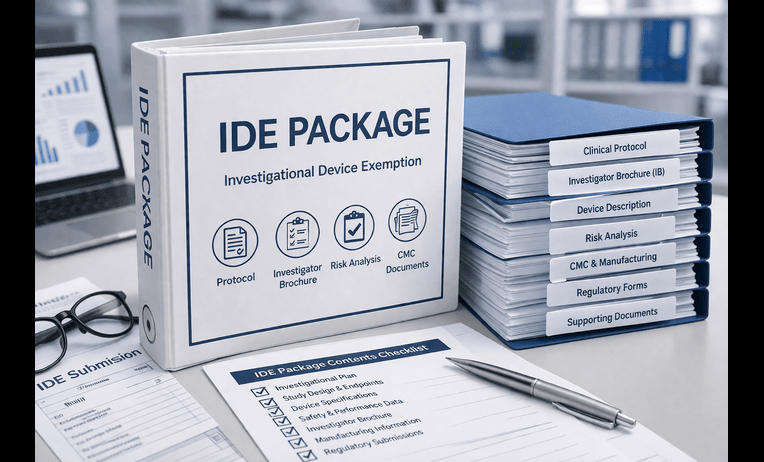
The IDE exemption allows the ide medical device to be shipped lawfully for the purpose of conducting clinical investigations. Once the FDA approves an ide application (or ide submission), sponsors can legally initiate an ide clinical study.
Securing this exemption requires consulting fda ide guidance to ensure that your ide study aligns with federal standards. A well-designed ide trial (or ide clinical trial) prioritizes patient safety while gathering the robust ide data necessary for eventual market approval.
The Regulatory Framework: FDA, ICH, and Global Standards
Developing an ide device requires more than just meeting domestic criteria; it involves navigating a web of global regulatory guidelines.
Understanding ICH Guidelines
If you are developing a combination product (device plus drug), you might ask: what is ich guidelines? The International Council for Harmonisation (ICH) provides unified standards for pharmaceutical development.
To break it down, ich topics and guidelines fall into four main categories: Quality, Safety, Efficacy, and Multidisciplinary. Furthermore, a primary purpose of the ich e6 guideline is to: ensure ethical and scientific quality standards for designing, conducting, and recording trials. This forms the bedrock of good clinical practice gcp guidelines (or gcp guidelines).
For products involving pharmaceuticals, stability is paramount. Sponsors must adhere to ich guidelines for stability testing (often referred to as stability guidelines ich, ich guidelines stability, ich stability guidelines, or ich guidelines for stability). A quick review of an ich q1b photostability guideline summary can help teams understand light exposure limits. Keeping up with ich pharmaceutical guidelines and upcoming updates—like the anticipated ich guideline news november 2025—is crucial.
Manufacturing and Safety Standards
During the production of your investigational product, adherence to good manufacturing practices guidelines and gxp guidelines is mandatory. Laboratory testing must follow strict glp guidelines (good laboratory practice guidelines).
Safety testing is equally rigorous. For example, sponsors must evaluate toxicity using methods like the oecd test guideline 471 bacterial reverse mutation test ames, and screen for chemical risks to prevent adverse phthalates side effects. Global material bans also impact device manufacturing. Recent shifts, such as the eu ban titanium dioxide e171 2022 regulation (including the eu ban titanium dioxide e171 food additive 2022 regulation and eu ban titanium dioxide e171 food 2022 regulation), highlight the increasing scrutiny on excipients and materials.
Sterilization is another key hurdle. Manufacturers must adhere to iso guidelines for medical devices, specifically the iso 10993-7 ethylene oxide residuals limits medical devices. Industry watchers are already anticipating the ethylene oxide sterilization news december 2025 for updated sterilization protocols. If your device involves sterile compounding, adherence to usp 797 guidelines (and the updated usp 797 guidelines 2023) is essential.
Process Validation and Out-of-Specification (OOS)
The FDA requires absolute consistency. You must follow fda guidelines for process validation (also known as us fda process validation guidelines). If a batch fails, teams must immediately reference oos fda guidelines (or fda oos guidelines) to investigate the failure appropriately.
Mastering Clinical Operations and Data Integrity
Running an ide fda trial requires meticulous operations. A vice president clinical operations usually spearheads these efforts, relying on robust operational guidelines.
Every trial site needs a comprehensive sop guide or ops guide. Understanding your standard operating procedure guidelines (or sop guidelines) is non-negotiable. For clarity, a standard operating guidelines definition typically refers to documented instructions to achieve uniformity of performance. A well-written standard operating procedure guide (or standard operating guidelines) prevents costly protocol deviations.
Real-World Evidence and Clinical Data
Today, trials go beyond traditional clinical settings, heavily incorporating real-world evidence. The fda guidance real world evidence encourages the use of rwe real world evidence to support regulatory decision-making. Utilizing real world evidence fda guidance (also known as fda real world evidence guidance, fda real world evidence, or real world evidence fda) allows sponsors to gather data from electronic health records and wearables.
Handling this data strictly follows the data integrity guideline usfda. Statisticians analyze this data meticulously, often relying on precise confidence interval notation to prove device efficacy.
Leveraging Service Providers
To manage this complexity, companies turn to clinical data management service providers and an fsp functional service provider (or functional service provider). You may also need etmf providers to maintain trial master files, and pharmacovigilance service providers to monitor adverse events.
When searching for support, many executives ask: who provides the best fda consulting services for device companies? Partnering with the best rated life sciences tech solutions providers or top medical device testing providers can streamline your IDE journey. A dedicated digital transformation service provider can digitize your entire clinical workflow, while outsourced help desk providers offer real-time tech support to clinical sites.
The “Other” IDE: Software Development in MedTech
In the modern landscape, an investigational device is often powered by complex software, bringing us to the “other” IDE: the Integrated Development Environment. Developing Software as a Medical Device (SaMD) requires developers to make a crucial choice: code editor vs development environment.
When building medical software, developers must evaluate what features to look for in a programming tool and how to choose a development workspace.
Here are key considerations for your software engineering team:
- Lightweight text editors versus full software suites: Determine if your team needs a simple editor or a comprehensive suite.
- Programming environment features for beginners: Look for intuitive interfaces if onboarding junior developers.
- Syntax highlighting and code completion benefits: These features drastically reduce coding errors in medical algorithms.
- Built-in debugger and compiler tools: If you wonder why use a debugger for software development, it is vital for catching life-threatening bugs before clinical deployment.
- Graphical interface for source code management: This aids in visualizing complex clinical software architecture.
- Version control system workflow integration: Critical for maintaining FDA-compliant audit trails of software changes.
- Managing project dependencies and libraries: Ensures that third-party code meets cybersecurity standards.
- Source code editor extensions and plugins: Customize tools to align with medical data encryption standards.
- Cross-platform coding tool options: Essential for apps that run on both iOS and Android patient wearables.
Ultimately, choosing the right digital tools is about improving developer productivity through automation and streamlining the software development lifecycle, ensuring your medical software is ready for its IDE submission.
Device Identification, Labeling, and Patient Communication
Clear labeling is a massive component of FDA compliance. But what is a device identifier? A device identifier is a mandatory, unique sequence of numbers and letters used to track medical products. Utilizing proper pharmaceutical identifiers and device trackers ensures traceability. Engineers often ask: regulatory and informational markers are identified through which features? Typically, this is achieved through standardized barcodes and Unique Device Identification (UDI) labels.
Labeling must follow the standard of identity fda guidelines. For example, if your device includes a skin prep component, you must adhere to the fda monograph statement of identity skin protectant labeling requirements. Providing clear med guides ensures patients know how to use the device safely.
When communicating with patients, user experience matters. Implementing pharma dtc website video library navigation best practices ensures patients can easily access instructional videos. Furthermore, providing a direct point of contact, like a simply health care provider phone number, enhances patient support.
Post-trial, sites might need to access a rems provider login for risk evaluation, or consult guides like understanding health insurance a guide to billing and reimbursement to help patients navigate post-market care costs. Staff training is equally important; knowing simple administrative tasks, like how to duplicate slides for a clinical investigator presentation, keeps operations moving smoothly.
Staying Ahead: Conferences and Industry Insights
The medical device industry evolves rapidly. To stay compliant, leaders must keep their finger on the pulse of the market. Subscribe to industry publications like the insider newsletter (or just the insider newsletter) to get the latest medical device quality regulatory updates fda guidelines 2025.
Networking is also key. Industry pioneers, such as jeffrey leiden, have long emphasized the importance of cross-industry collaboration. Looking ahead, professionals should plan to attend major events like cphi worldwide 2025 or various medical product conferences outside las vegas 2025. You might even find specialized regulatory workshops spanning from Boston to Liden, Netherlands.
Conclusion
Securing an Investigational Device Exemption is a monumental milestone for any medical device company. From understanding the core ide application process and navigating gcp guidelines, to leveraging real-world evidence and optimizing your software development lifecycle, success requires a multi-disciplinary approach.
By staying informed on everything from global material bans to the latest fda ide guidance, and by partnering with the right service providers, you can safely and efficiently bring life-saving technologies from the laboratory to the patients who need them most.