
Before a new medicine ever reaches a pharmacy shelf, it has to pass a critical, invisible test. Simply proving a compound works in a laboratory petri dish does not mean a scientist can immediately give it to a patient. To bridge that gap, researchers must file an Investigational New Drug (IND) Application. In practice, an IND stands for medical permission, it is the FDA’s green light allowing a laboratory discovery to be safely tested in human volunteers.
According to federal law, it is strictly illegal to transport unapproved medicines across state lines. Therefore, the true IND meaning medical professionals rely on is actually a legal exemption to this rigid rule. By approving the IND application, the government legally permits a pharmaceutical company to ship experimental doses to hospitals and research clinics across the country.
Think of this regulatory hurdle like learning to drive. This initial application acts as a learner’s permit, granting researchers the right to conduct clinical trials under strict FDA supervision to ensure volunteer safety. It remains entirely different from a New Drug Application (NDA), which serves as the final, unrestricted driver’s license granting permission to sell the medicine to the public.
The Essential Homework: Proving a Drug is Safe Before the First Patient
Imagine discovering a promising compound that could treat the flu. Before handing that potential medicine to a human volunteer, the FDA demands proof it will not cause harm. Scientists gather this proof through pre-clinical data, which is the foundational testing performed in laboratory cells or animals. These IND-enabling studies serve as mandatory homework, ensuring researchers understand the drug’s basic behavior before anyone takes a single dose.
To get the government’s green light, developers must present specific, well-documented evidence. The FDA strictly evaluates the pharmacology and toxicology data requirements, which ultimately boils down to three pre-clinical essentials:
- Safety data (Toxicology): Proving the compound isn’t toxic to living tissues and establishing a safe starting dose for humans.
- Mechanism of action (Pharmacology): Through IND pharmacology, scientists map out exactly how the drug affects the body to fight the disease.
- Manufacturing plan (CMC): A highly reliable “recipe” demonstrating the company can make the drug consistently every time.
Because a slight error in heating or mixing a chemical can dramatically change how it works in a patient’s body, proving consistent laboratory production is just as critical as the initial animal tests. These early safety hurdles establish the foundation for the IND package and the three pillars of your submission.
Decoding the IND Package: The Three Pillars of Your Submission
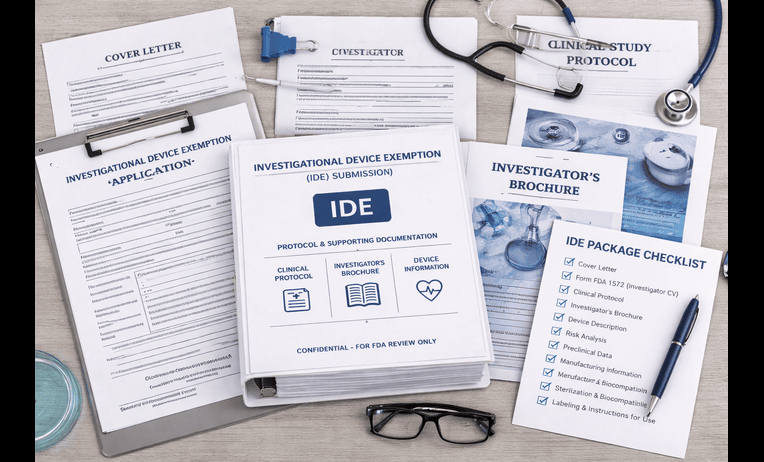
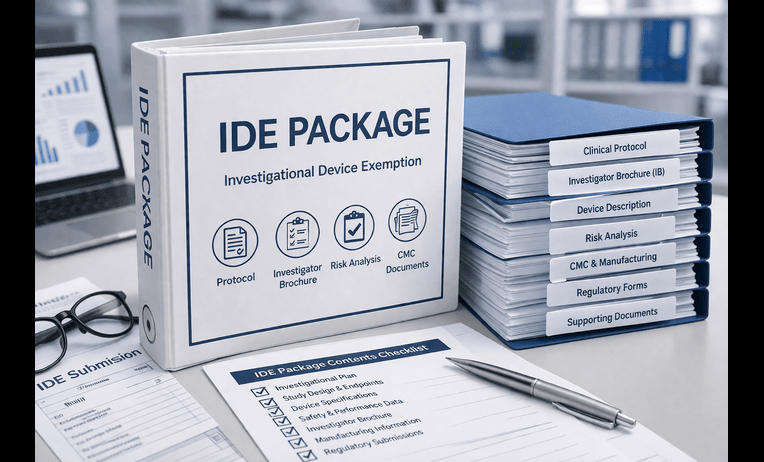
An official IND package organizes laboratory homework into specific IND modules for government review. Bound by a legal cover sheet known as FDA Form 1571, the submission introduces its first pillar: Chemistry, Manufacturing, and Controls (CMC) documentation. Think of CMC as the master recipe. It proves the drug is produced with absolute purity, ensuring the exact same pill is made every single time without any dangerous contaminants.
Equipping the medical professionals running the human study is the next crucial step. Companies create an Investigator Brochure, functioning as a vital safety handbook for doctors. The Investigator Brochure contents share the drug’s complete story, detailing past animal safety data, potential side effects, and emergency instructions. This manual ensures doctors at the testing clinics know exactly how to protect their volunteers.
Finally, researchers present a strict blueprint for the actual human testing. Proper clinical trial protocol development guarantees the study remains scientifically valid and highly ethical. This Clinical Protocol dictates exactly who can volunteer, the specific doses they will receive, and how their health is continually monitored. Once these three pillars—the manufacturing recipe, the doctor’s handbook, and the testing blueprint—are submitted, a ticking clock begins. Compiling this massive amount of safety data perfectly sets the stage for why the FDA takes exactly 30 days to review an application.
Why the FDA Takes Exactly 30 Days to Review Your Application
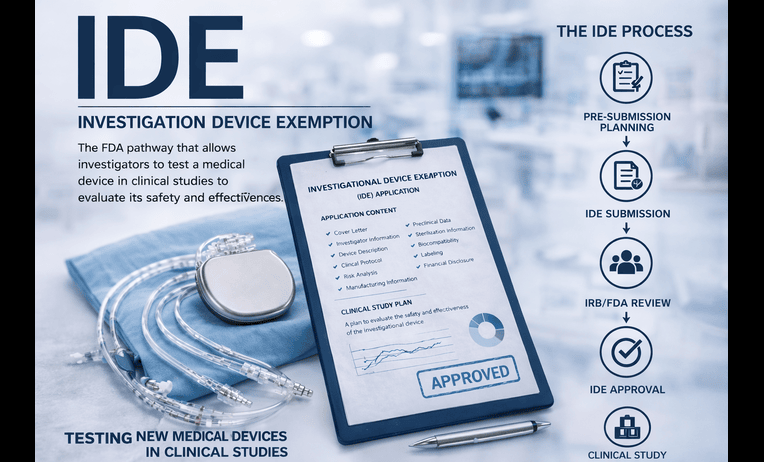
Sending off your package doesn’t result in an immediate answer. Instead, an official FDA IND application triggers a mandatory safety pause. During the strict FDA 30-day review period timeline, toxicologists and doctors scrutinize the research for any red flags that might endanger human volunteers. This critical firewall protects public health before a single dose is administered.
Unlike a standard permit, an IND approval often comes in the form of silence. If the agency does not object by day 30, the company earns an automatic green light to begin human trials on day 31. However, if reviewers spot a safety hazard, they will issue a Clinical Hold. This action legally pauses the study until researchers fix the problem and prove their testing blueprint is safe.
Every successful IND submission receives a permanent IND Number, acting like a lifelong passport that tracks the medicine through all future testing. With permission granted and a tracking number in hand, scientists can safely move their research forward. Yet, before any volunteers can actually swallow a new tablet, the agency must first verify the precise methods used to create it.
Ensuring Every Pill is Identical: Quality Standards in the Pharma Kitchen
Imagine baking a batch of cookies; a pinch of salt is delicious, but a whole cup ruins the recipe. When creating experimental medicines, this exact consistency is documented through Chemistry, Manufacturing, and Controls (CMC). If a company slightly alters how they heat or mix a pill, regulators must know, because minor manufacturing changes can drastically alter how the medicine behaves inside a patient’s body. To prevent dangerous mix-ups, companies rely on Quality Assurance teams. These internal watchdogs enforce strict quality compliance in pharmaceutical industry laboratories, ensuring the thousandth capsule is perfectly identical to the very first one tested.
Beyond the recipe itself, the FDA enforces broader safety regulations known as GxP in the pharmaceutical industry. Think of these as the fundamental “rules of the road” for drug developers. Navigating GxP compliance in the pharmaceutical industry requires mastering three specific pillars:
- GLP (Good Laboratory Practice – safety first)
- GMP (Good Manufacturing Practice – consistency always)
- GCP (Good Clinical Practice – human safety)
Adhering to these rigorous standards proves a laboratory can reliably and safely mass-produce their new treatment. Yet, perfectly translating these rules onto paper often sparks complex scientific debates between scientists and regulators. When researchers need clarity on these manufacturing expectations, they must prepare to negotiate directly with the agency to shape the drug’s future.
Negotiating with the FDA: How Formal Meetings Shape Drug Development
Before starting the 30-day safety clock, drug developers often want a gut check. They can request a Pre-IND meeting, acting like showing a blueprint to an inspector before pouring a foundation. Instead of viewing regulators as strict test proctors, companies use these FDA formal meetings as collaborative whiteboard sessions. Scientists ask if their planned animal studies and manufacturing recipes are on the right track, saving years of wasted effort.
Walking into these discussions requires meticulous preparation, anchored by a comprehensive file called the Briefing Document. This essential guidebook contains every piece of early data, serving as the conversation’s script. Following specific FDA meeting guidance, developers submit this packet weeks in advance. By the time everyone sits at the table, regulators already know the drug’s story, ensuring the meeting focuses on solving problems rather than just presenting raw facts.
The urgency of these conversations dictates how quickly they happen throughout development. A Type C FDA meeting handles routine advice, while an FDA Type B meeting marks major clinical milestones. If a severe safety issue halts testing entirely, the company urgently requests a Type A meeting to resolve the crisis. What triggers that kind of emergency stop before trials begin? The answer lies in what happens when regulators spot a dangerous red flag.
What Happens if the FDA Says Wait? Understanding Clinical Holds
When regulators review an application, their absolute priority is volunteer safety. If they spot a red flag during that 30-day window, they withhold IND approval. Instead, the IND FDA review team issues a “Clinical Hold.” Think of this not as a permanent red light, but a protective caution sign that pauses testing until those concerns are addressed.
Regulators might issue a “full hold” halting everything, or a “partial hold” restricting a specific high dose. To evaluate IND study safety, reviewers closely scrutinize the early lab work known as IND-enabling studies. If that scientific foundation seems shaky, trials stop. The top three reasons for a Clinical Hold include:
- Risk to human volunteers.
- Unqualified investigators running the IND clinical trial.
- Incomplete safety data.
Fortunately, a pause rarely ruins a promising medicine’s future. By law, regulators must provide specific reasons for the delay within 30 days, allowing companies to resolve issues by tweaking protocols or providing missing data. Overcoming these hurdles prepares developers for clinical innovation and public safety.
Your Roadmap to Clinical Innovation and Public Safety
Investigational New Drug (IND) applications act as the crucial gateway where laboratory promises prove they are safe enough for human trials. This milestone bridges early research and Phase 1, 2, and 3 clinical studies. The distinction between an NDA vs IND reveals that the IND is not permission to sell a medication—it is the vital permission to begin testing it on people.
The IND process requires an ongoing commitment to public safety, demanding strict monitoring and annual updates to the FDA. This invisible, highly protective system of checks and balances is exactly why patients can confidently reach into their medicine cabinets, knowing treatments were fiercely scrutinized before human trials ever began.
Understanding IND drug development provides a clearer lens for evaluating daily medical news. The next time a sensational headline announces a promising laboratory breakthrough, the most important question to ask is: “Have they filed an IND yet?” This single metric separates genuine medical progress from early-stage hype, revealing a regulatory system specifically designed to put human lives first.