Innovation Alone Does Not Bring Therapies to Market
Every year, pharmaceutical companies, biotechnology startups, and medical device innovators invest billions of dollars into research and development. Breakthrough discoveries emerge from laboratories around the world, yet only a small percentage successfully navigate the path to regulatory approval and commercialization.
The difference between a promising scientific concept and a successful product often comes down to execution.
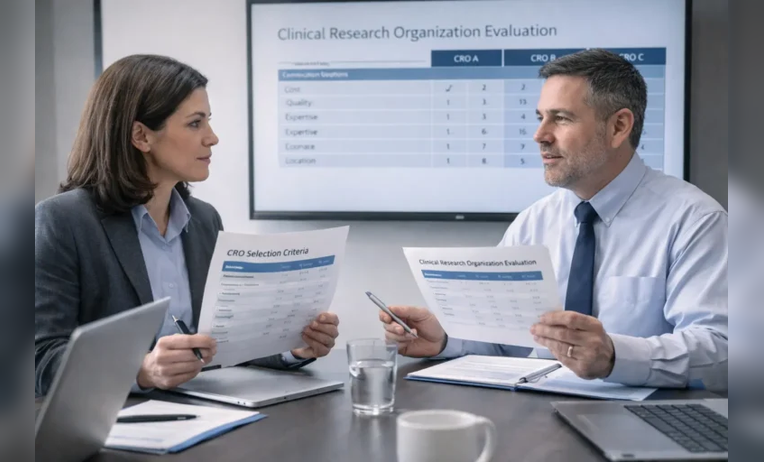
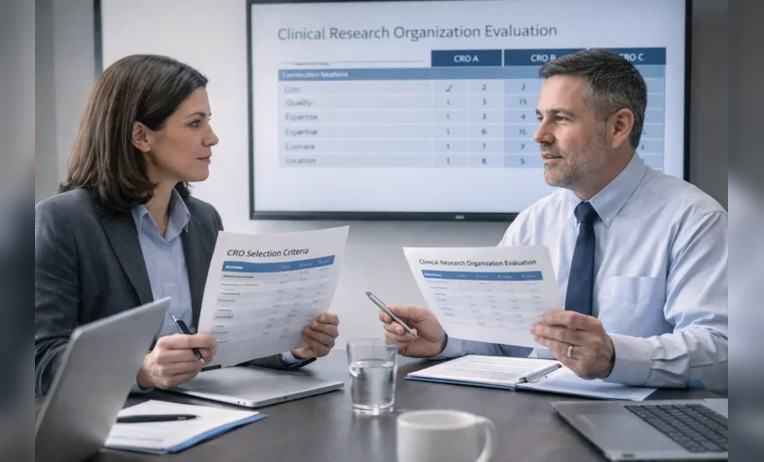
This is where CRO Selection and Qualification plays a pivotal role.
A Contract Research Organization can help transform clinical development from a complex operational challenge into a structured and efficient process. Sponsors that select the right CRO often experience faster study execution, stronger compliance, improved data quality, and more predictable development timelines.
Many organizations begin their journey by searching online for a clinical research organization near me, clinical research companies near me, or contract research organizations near me. While these searches help identify available vendors, selecting the right partner requires a strategic evaluation of expertise, scalability, and long-term value.
In today’s competitive life sciences landscape, CRO selection has become a critical growth decision.
The Race to Bring New Therapies to Patients
Speed matters in clinical development.
The longer a therapy remains in development, the greater the costs and risks associated with commercialization.
Delays can affect:
- Market opportunities
- Investor confidence
- Competitive positioning
- Revenue forecasts
- Patient access
Organizations increasingly rely on CROs because they provide specialized resources capable of accelerating clinical programs.
An experienced CRO can help sponsors:
Launch Studies Faster
Efficient startup processes reduce delays.
Optimize Site Performance
Well-managed sites often enroll patients more effectively.
Improve Study Visibility
Real-time reporting supports informed decision-making.
Enhance Operational Efficiency
Streamlined processes help reduce unnecessary costs.
These advantages highlight why CRO Selection and Qualification has become a key business priority.
Clinical Development Is No Longer a Solo Effort
Modern clinical research depends on collaboration.
Sponsors now work with networks of:
- CROs
- Investigative sites
- Technology providers
- Regulatory consultants
- Data management specialists
As development ecosystems become more interconnected, selecting the right CRO becomes increasingly important.
Organizations conducting a cro company search should focus on identifying partners capable of integrating seamlessly into broader development networks.
Successful CROs act as collaborators rather than contractors.
Why Expertise Creates Competitive Advantage
Not all CROs deliver the same value.
The most successful organizations combine operational excellence with deep scientific expertise.
Sponsors should evaluate experience in areas such as:
Oncology
Rapid innovation and evolving regulatory expectations.
Rare Diseases
Specialized recruitment strategies and global patient identification.
Medical Devices
Unique compliance and validation requirements.
Advanced Therapies
Cell therapies, gene therapies, and precision medicine programs.
Relevant expertise often contributes directly to faster execution and stronger outcomes.
The Growth Challenges Facing Biotech Startups
Biotechnology companies often face a unique challenge.
They possess innovative science but may lack extensive operational infrastructure.
Many entrepreneurs begin by researching:
- biotech lab near me
- biotechs near me
- bioengineering companies near me
These searches frequently represent the first stage of building a development support network.
For many startups, CROs provide access to capabilities that would otherwise require years of internal investment.
These capabilities may include:
Clinical Operations
Regulatory Affairs
Project Management
Data Management
Quality Assurance
The right CRO allows emerging companies to focus on innovation while leveraging external expertise.
Building Development Programs That Can Scale
A common challenge in clinical research is transitioning from a single study to a broader development portfolio.
Sponsors should evaluate whether a CRO can support:
Additional Studies
Future programs may require expanded resources.
Global Expansion
International studies introduce new operational requirements.
Larger Patient Populations
Scaling enrollment efforts requires additional infrastructure.
Regulatory Complexity
Advanced development stages often involve greater scrutiny.
Organizations evaluating clinical research organizations near me should consider future scalability rather than focusing solely on immediate project needs.
Why Operational Agility Matters
Clinical development rarely follows a predictable path.
Unexpected challenges may include:
- Recruitment delays
- Protocol amendments
- Regulatory requests
- Site performance issues
- Supply chain disruptions
The ability to respond quickly can determine whether timelines remain on track.
Sponsors evaluating a contract research organization near me should assess how potential partners manage change and adapt to evolving circumstances.
Agility has become a critical competitive differentiator.
Data Quality Is a Business Asset
Clinical data serves multiple purposes beyond regulatory submissions.
High-quality data supports:
Investor Communications
Reliable results strengthen stakeholder confidence.
Strategic Planning
Better data enables stronger decision-making.
Regulatory Interactions
Accurate information improves submission quality.
Commercial Readiness
Clinical evidence influences market adoption.
Sponsors should therefore evaluate how CROs collect, manage, analyze, and protect data throughout the study lifecycle.
Technology Is Transforming Clinical Development
The future of clinical research is increasingly digital.
Leading CROs invest heavily in technologies such as:
Electronic Data Capture Systems
Improving efficiency and accessibility.
Artificial Intelligence
Supporting predictive analytics and operational planning.
Remote Monitoring Tools
Enhancing oversight while reducing burden.
Advanced Reporting Platforms
Providing actionable insights in real time.
Organizations searching for clinical trial companies near me should consider technology capabilities a core component of qualification activities.
The Business Value of Long-Term CRO Relationships
The most successful sponsor-CRO relationships often extend beyond individual projects.
Long-term partnerships provide:
Faster Startup Times
Teams already understand expectations and processes.
Greater Operational Consistency
Experience improves coordination and efficiency.
Better Knowledge Transfer
Institutional knowledge supports future studies.
Reduced Risk
Established partnerships often require less onboarding and oversight.
Organizations searching for cro near me, cros near me, or cro’s near me should consider whether potential partners can support future growth objectives.
Creating a Sustainable Development Ecosystem
The strongest clinical development organizations do not view CROs as temporary vendors.
Instead, they build ecosystems of trusted partners capable of supporting long-term innovation.
These ecosystems typically emphasize:
Collaboration
Transparency
Shared Objectives
Continuous Improvement
Strategic Alignment
Strong partnerships contribute to more resilient development programs and stronger business performance.
Preparing for the Next Generation of Clinical Research
The future of life sciences will be shaped by:
Artificial Intelligence
Decentralized Clinical Trials
Precision Medicine
Real-World Evidence
Global Development Networks
As these trends accelerate, sponsors will require CRO partners capable of adapting to rapidly changing environments.
This makes CRO Selection and Qualification increasingly important for organizations seeking sustainable growth and competitive advantage.
Conclusion
Successful clinical development requires more than scientific innovation. It requires operational excellence, strategic execution, and strong partnerships.
Whether organizations are searching for a clinical research organization near me, comparing clinical research companies near me, evaluating clinical research organizations near me, assessing a contract research organization near me, researching contract research organizations near me, performing a detailed cro company search, or exploring options for clinical trial companies near me, the ultimate goal remains the same: identify a partner capable of accelerating development while maintaining quality and compliance.
A thoughtful CRO Selection and Qualification strategy helps sponsors move beyond vendor selection and build partnerships that support innovation, growth, and long-term market success.
Frequently Asked Questions
What is CRO Selection and Qualification?
CRO Selection and Qualification is the process of evaluating, approving, and monitoring Contract Research Organizations before outsourcing clinical development activities.
Why is CRO selection important for drug development?
The selected CRO influences study execution, timelines, quality, compliance, and overall development success.
How do companies identify CRO partners?
Organizations often start with searches such as clinical research companies near me, clinical research organization near me, and contract research organizations near me before conducting detailed evaluations.
Why do biotech startups use CROs?
Many startups rely on CROs for expertise, infrastructure, regulatory guidance, and operational support.
How does a CRO help accelerate development timelines?
Experienced CROs improve study startup, site activation, patient recruitment, data management, and project oversight.
What role does technology play in CRO evaluation?
Technology supports efficient trial management, monitoring, reporting, analytics, and data quality.
Why is scalability important during CRO selection?
Sponsors should choose partners capable of supporting future studies, larger programs, and global expansion.
What is a CRO company search?
A cro company search is the process of identifying and comparing Contract Research Organizations based on capabilities, expertise, and strategic fit.
How should CRO performance be monitored?
Sponsors should use performance metrics, governance reviews, audits, and quality assessments.
How does effective qualification support market success?
Qualification helps sponsors identify reliable partners capable of delivering efficient, compliant, and high-quality clinical trial execution that supports successful commercialization.