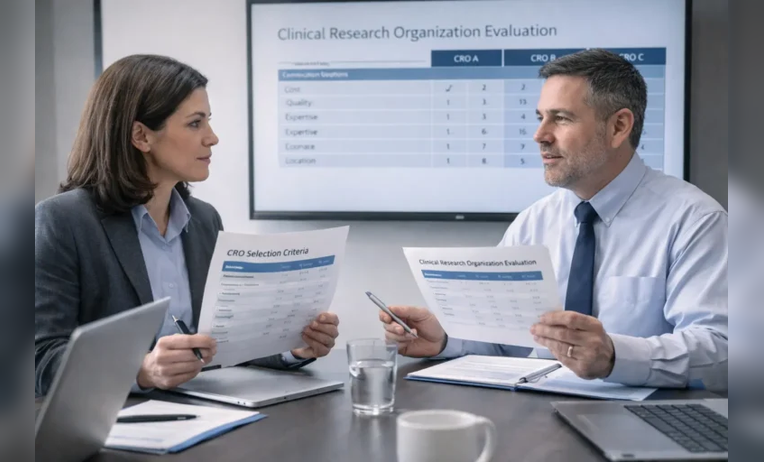

Clinical Excellence Starts with Choosing the Right Partner
In today’s highly competitive life sciences environment, developing a successful therapy requires more than scientific innovation. Clinical research organizations have become essential partners in helping sponsors navigate complex regulatory requirements, manage global studies, accelerate timelines, and maintain quality throughout the development process.
As clinical programs become increasingly sophisticated, CRO Selection and Qualification has emerged as one of the most influential decisions in the entire product development lifecycle.
Many sponsors begin their evaluation journey by searching for a clinical research organization near me, clinical research companies near me, or contract research organizations near me. While these searches can identify potential service providers, selecting a CRO capable of supporting long-term success requires a deeper understanding of operational excellence, quality culture, strategic alignment, and performance consistency.
The organizations that consistently achieve successful clinical outcomes recognize that choosing the right CRO is not simply about outsourcing work—it is about establishing a trusted partnership that can support innovation from development through commercialization.
The Expanding Expectations Placed on CROs
The role of Contract Research Organizations has evolved dramatically.
Years ago, CROs were primarily responsible for operational support. Today, sponsors expect CROs to contribute across multiple strategic functions, including:
- Clinical trial management
- Regulatory strategy
- Patient recruitment
- Data management
- Safety reporting
- Risk mitigation
- Quality oversight
- Vendor coordination
- Program execution
Because CROs now influence critical business and regulatory outcomes, sponsors must adopt more comprehensive approaches to CRO Selection and Qualification.
Moving Beyond Vendor Lists and Online Searches
Organizations often begin with searches such as:
- clinical research companies near me
- clinical research organization near me
- clinical research organizations near me
- contract research organization near me
- contract research organizations near me
While these searches generate potential candidates, they rarely provide sufficient information to support strategic decision-making.
Sponsors should move beyond basic vendor identification and focus on evaluating:
Organizational Strength
Clinical Expertise
Compliance History
Quality Infrastructure
Long-Term Partnership Potential
The objective is not simply to find a CRO, but to identify the right CRO.
What High-Performing Sponsors Evaluate First
Experienced sponsors often prioritize several key indicators when assessing potential CRO partners.
Organizational Consistency
Successful clinical programs require predictable execution.
Sponsors should evaluate whether the CRO demonstrates:
- Standardized processes
- Consistent performance
- Reliable governance
- Clear accountability
Resource Availability
Adequate staffing is essential for maintaining timelines and quality standards.
Strategic Vision
Sponsors benefit from CROs that contribute meaningful insights rather than simply following instructions.
Leadership Engagement
Strong executive involvement often supports faster decision-making and improved problem resolution.
These factors frequently reveal more about future performance than marketing materials or sales presentations.
Trust as a Qualification Criterion
Trust is not typically listed in qualification checklists, yet it plays a significant role in successful CRO relationships.
Sponsors should consider:
Transparency
Does the CRO communicate openly about challenges and risks?
Responsiveness
How quickly are issues addressed?
Reliability
Does the organization consistently deliver on commitments?
Accountability
Are responsibilities clearly defined and actively managed?
Trust becomes increasingly important as studies grow in complexity and duration.
Why Quality Culture Matters More Than Quality Documents
Many CROs can provide extensive documentation during qualification.
However, sponsors should focus on how quality is practiced rather than how it is described.
Indicators of a strong quality culture include:
Continuous Learning
Organizations invest in employee development and training.
Proactive Risk Management
Potential issues are identified before they affect study outcomes.
Corrective Action Effectiveness
Problems are resolved systematically rather than repeatedly.
Management Commitment
Leadership actively supports quality initiatives.
Organizations conducting a cro company search should evaluate cultural indicators alongside procedural documentation.
The Challenge of Scaling Clinical Development
As development programs expand, operational demands increase.
Sponsors need CRO partners capable of supporting growth across:
Geographic Regions
Therapeutic Areas
Study Phases
Patient Populations
Regulatory Jurisdictions
Scalability is particularly important for sponsors planning multiple studies or global development programs.
A CRO that performs well on a small project may not always possess the infrastructure required for larger initiatives.
The Outsourcing Reality for Emerging Biotech Companies
Startup biotechnology organizations often operate with limited internal resources.
Many founders begin their research by searching for:
- biotech lab near me
- biotechs near me
- bioengineering companies near me
These searches frequently represent the first step toward building a broader development ecosystem.
For many emerging companies, CROs provide access to:
- Clinical expertise
- Regulatory knowledge
- Operational infrastructure
- Study management capabilities
- Industry experience
The right CRO can significantly reduce execution risk while helping young organizations advance programs more efficiently.
Why Technology Has Become a Qualification Priority
Technology now influences nearly every aspect of clinical research.
Sponsors evaluating clinical trial companies near me should assess a CRO’s ability to leverage:
Clinical Data Platforms
Supporting efficient information management.
Electronic Trial Master Files
Facilitating inspection readiness.
Monitoring Technologies
Improving study oversight.
Predictive Analytics
Helping anticipate operational challenges.
Digital maturity increasingly differentiates leading CROs from their competitors.
Creating a Partnership Built on Shared Goals
The strongest CRO relationships are built around shared objectives.
Sponsors and CROs should align on:
Study Timelines
Quality Expectations
Regulatory Goals
Communication Standards
Performance Metrics
Alignment helps reduce misunderstandings and promotes collaboration throughout the development process.
Sponsor Oversight Does Not End After Qualification
Qualification is not a one-time event.
Effective sponsor oversight continues throughout the partnership.
Common oversight activities include:
Performance Monitoring
Evaluating key operational indicators.
Governance Reviews
Assessing progress against agreed objectives.
Risk Assessments
Identifying emerging concerns.
Quality Audits
Verifying ongoing compliance and effectiveness.
Organizations searching for cro near me, cros near me, or cro’s near me should recognize that long-term oversight is just as important as initial qualification.
Future-Proofing CRO Relationships
The clinical research industry continues to evolve rapidly.
Future-ready CROs are investing in:
Artificial Intelligence
Enhancing forecasting and operational planning.
Decentralized Trial Models
Expanding patient access and engagement.
Advanced Analytics
Providing real-time operational visibility.
Global Collaboration Networks
Supporting international development strategies.
Sponsors that consider future capabilities during qualification often build stronger long-term partnerships.
The Competitive Advantage of Strategic CRO Selection
Organizations that approach CRO Selection and Qualification strategically often gain advantages beyond individual clinical trials.
Benefits may include:
- Faster study execution
- Improved regulatory readiness
- Better operational visibility
- Reduced outsourcing risk
- Stronger quality outcomes
- Enhanced development efficiency
Whether evaluating a clinical research organization near me, comparing clinical research companies near me, researching clinical research organizations near me, assessing a contract research organization near me, reviewing contract research organizations near me, or conducting a detailed cro company search, sponsors should focus on identifying partners capable of supporting both current and future development goals.
The most successful clinical programs are rarely the result of luck. They are built through informed decisions, disciplined oversight, and strong partnerships from the very beginning.
Frequently Asked Questions
What is CRO Selection and Qualification?
CRO Selection and Qualification is the process of evaluating, approving, and monitoring a Contract Research Organization before outsourcing clinical research activities.
Why is CRO selection important?
The chosen CRO influences study quality, timelines, regulatory compliance, operational efficiency, and overall clinical success.
How do sponsors find CRO partners?
Many organizations begin by searching for clinical research organization near me, clinical research companies near me, and contract research organizations near me before conducting detailed evaluations.
What factors should be assessed during qualification?
Sponsors should review quality systems, operational capabilities, technology infrastructure, staffing models, compliance history, and organizational stability.
Why is quality culture important?
A strong quality culture supports proactive risk management, continuous improvement, and regulatory compliance.
How does technology affect CRO performance?
Technology improves study management, monitoring, reporting, oversight, and data quality.
Why do biotech startups rely on CROs?
Many startups depend on CROs for expertise, infrastructure, regulatory guidance, and operational support.
What is a CRO company search?
A cro company search is the process of identifying and evaluating Contract Research Organizations based on expertise, capabilities, and strategic fit.
How should sponsors oversee CRO performance?
Sponsors should use governance reviews, audits, risk assessments, KPI monitoring, and quality evaluations.
How does effective qualification improve clinical trial success?
Effective qualification helps sponsors identify partners capable of delivering reliable, compliant, and high-quality clinical trial execution.