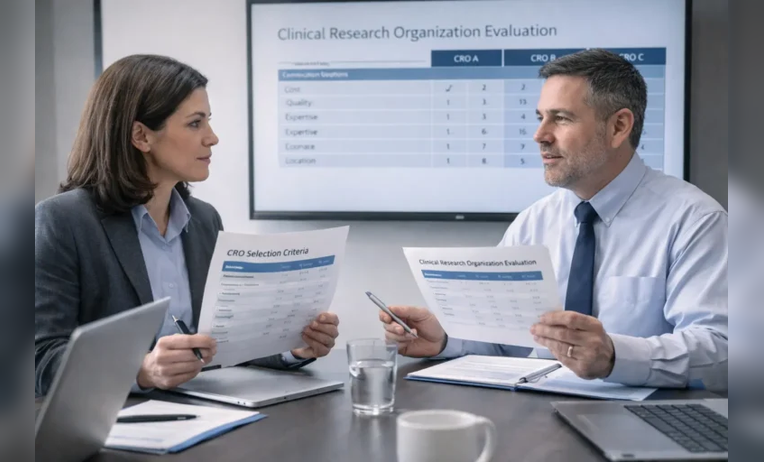
Clinical Outsourcing Is More Than Vendor Management
Clinical development organizations face a simple reality: very few companies possess all the internal resources needed to manage modern clinical trials independently. As studies become more global, technologically advanced, and operationally complex, outsourcing has become a necessity rather than an option.
However, outsourcing success is determined long before a contract is signed. It begins with CRO Selection and Qualification, a process that establishes the foundation for quality, compliance, operational efficiency, and long-term study success.
Many sponsors start by searching for a clinical research organization near me, clinical research companies near me, or contract research organizations near me. While these searches help identify potential vendors, selecting a CRO requires a much deeper evaluation of strategic fit, governance capabilities, and performance potential.
The organizations that consistently achieve successful clinical outcomes understand that CRO qualification is not simply about finding a service provider—it is about building a strategic partnership.
The New Era of Clinical Outsourcing
Outsourcing models have evolved dramatically.
In the past, CROs were often hired to perform specific operational tasks. Today, they are trusted with critical responsibilities that directly affect:
- Patient safety
- Data integrity
- Regulatory compliance
- Development timelines
- Budget performance
- Commercial readiness
As responsibilities increase, sponsors must ensure that their outsourcing partners can meet both operational and strategic expectations.
This is why CRO Selection and Qualification has become one of the most important functions within clinical governance programs.
Why Vendor Governance Begins Before Vendor Selection
Many organizations focus heavily on contract negotiations while overlooking governance planning.
Effective vendor governance starts during qualification.
Sponsors should establish expectations regarding:
Performance Accountability
Clear definitions of success help prevent misunderstandings later in the relationship.
Quality Oversight
Quality expectations should be communicated before study startup.
Communication Pathways
Defined escalation routes improve issue management.
Reporting Requirements
Performance visibility is essential for maintaining sponsor oversight.
Organizations conducting a cro company search should evaluate whether prospective vendors can support these governance expectations from the outset.
Understanding the True Cost of Outsourcing Risk
Clinical outsourcing introduces opportunities, but it also creates risk.
Without proper qualification, sponsors may face:
Operational Risk
Poor project management can disrupt study execution.
Compliance Risk
Regulatory deficiencies may result in findings or corrective actions.
Financial Risk
Unanticipated expenses can affect development budgets.
Reputational Risk
Clinical failures can impact investor confidence and stakeholder trust.
Strategic Risk
An underperforming CRO may prevent organizations from achieving long-term development objectives.
A structured qualification process helps identify and mitigate these risks before they impact study performance.
Beyond Credentials: Evaluating Organizational Readiness
A CRO’s marketing materials often highlight experience, capabilities, and success stories.
However, qualification should focus on organizational readiness rather than promotional messaging.
Key areas to assess include:
Leadership Structure
Strong leadership often correlates with stronger execution.
Workforce Stability
Frequent staff turnover can affect project continuity.
Resource Capacity
Sponsors should verify that adequate resources are available to support future demands.
Operational Scalability
A CRO should be capable of growing alongside the sponsor’s development program.
Organizations evaluating clinical research organizations near me should prioritize readiness indicators rather than relying solely on reputation.
Why Strategic Alignment Matters in CRO Partnerships
Successful outsourcing relationships depend on more than technical expertise.
Sponsors should assess whether a CRO aligns with their:
- Corporate culture
- Development philosophy
- Quality expectations
- Communication style
- Growth strategy
Misalignment in these areas often creates challenges even when technical capabilities are strong.
Organizations searching for a contract research organization near me frequently underestimate the importance of strategic compatibility during qualification.
The Role of Data in Modern CRO Evaluation
Clinical development is increasingly data-driven.
As a result, CRO evaluation should include a thorough review of:
Data Collection Processes
Ensuring consistency and reliability.
Data Management Capabilities
Supporting quality and compliance.
Analytics Infrastructure
Providing meaningful operational insights.
Reporting Frameworks
Delivering actionable information for sponsor decision-making.
Strong data capabilities enable sponsors to maintain greater visibility throughout the clinical lifecycle.
Emerging Biotech Companies Face Unique Outsourcing Challenges
For many emerging companies, clinical outsourcing is essential from the earliest stages of development.
Founders frequently search for:
- biotech lab near me
- biotechs near me
- bioengineering companies near me
These searches often represent the beginning of broader efforts to establish development ecosystems and strategic partnerships.
Because internal resources may be limited, biotech organizations often depend on CROs for:
- Clinical planning
- Regulatory support
- Operational management
- Vendor coordination
- Risk mitigation
This dependence makes qualification especially important.
The right CRO can significantly accelerate development progress.
How Technology Is Changing Sponsor Expectations
Digital transformation continues to reshape clinical operations.
Sponsors increasingly evaluate technology capabilities such as:
Electronic Trial Master Files
Supporting document control and inspection readiness.
Clinical Trial Management Systems
Providing operational oversight.
Electronic Data Capture Platforms
Improving data quality and accessibility.
Artificial Intelligence Tools
Supporting forecasting, monitoring, and recruitment planning.
Organizations searching for clinical trial companies near me should ensure prospective partners possess the technology infrastructure necessary to support future clinical models.
Creating Accountability Through Performance Metrics
Strong CRO partnerships are built on measurable outcomes.
Sponsors should establish metrics covering:
Timeline Performance
Achievement of planned milestones.
Enrollment Metrics
Patient recruitment and retention effectiveness.
Quality Outcomes
Deviation management and CAPA effectiveness.
Operational Efficiency
Resource utilization and productivity.
Stakeholder Satisfaction
Communication and collaboration performance.
These metrics create transparency and support continuous improvement.
Why Audits Remain Essential in Qualification
Despite advances in technology and remote assessments, audits continue to provide significant value.
Qualification audits help sponsors evaluate:
Process Compliance
Verification of documented procedures.
Operational Consistency
Assessment of real-world execution.
Quality Culture
Understanding how quality principles are applied in practice.
Inspection Readiness
Evaluating preparedness for regulatory scrutiny.
Sponsors reviewing contract research organizations near me should incorporate audit findings into final qualification decisions whenever possible.
The Future of CRO Selection and Qualification
Several trends will continue shaping CRO qualification strategies.
Decentralized Clinical Trials
Remote participation models are expanding globally.
Precision Medicine
Increasing specialization requires deeper expertise.
Artificial Intelligence
Advanced technologies are improving operational efficiency.
Global Collaboration
Cross-border studies continue to increase.
Real-Time Data Visibility
Sponsors demand faster access to actionable information.
These developments require CROs to demonstrate adaptability, innovation, and scalability.
Transforming CRO Qualification Into a Competitive Advantage
Many organizations view qualification as a regulatory requirement.
The most successful sponsors view it differently.
They see CRO Selection and Qualification as a business strategy capable of improving:
- Clinical quality
- Regulatory readiness
- Operational efficiency
- Budget management
- Development speed
- Commercial outcomes
Whether sponsors are researching a clinical research organization near me, evaluating clinical research companies near me, comparing clinical research organizations near me, assessing a contract research organization near me, reviewing contract research organizations near me, exploring cro near me, cros near me, cro’s near me, or conducting a detailed cro company search, qualification remains one of the most valuable investments they can make.
Strong CRO partnerships do not happen by chance. They are built through disciplined evaluation, thoughtful governance, and a commitment to selecting the right partner from the very beginning.
Frequently Asked Questions
What is CRO Selection and Qualification?
CRO Selection and Qualification is the process of evaluating and approving a Contract Research Organization before outsourcing clinical development activities.
Why is CRO qualification important in clinical outsourcing?
Qualification helps sponsors identify capable vendors while reducing operational, regulatory, and financial risk.
How do companies find potential CRO partners?
Organizations often begin with searches such as clinical research companies near me, clinical research organization near me, and contract research organizations near me.
What should sponsors evaluate during qualification?
Sponsors should review quality systems, operational capabilities, technology infrastructure, regulatory experience, and organizational stability.
Why are audits important during CRO qualification?
Audits provide direct insight into compliance practices, quality culture, and operational execution.
How do CROs support biotech companies?
CROs provide expertise in clinical operations, regulatory affairs, study management, quality assurance, and strategic planning.
What role does technology play in CRO selection?
Technology supports efficient trial execution, data integrity, reporting, monitoring, and sponsor oversight.
How can sponsors measure CRO performance?
Performance can be evaluated using timeline metrics, enrollment results, quality indicators, operational efficiency measures, and stakeholder feedback.
What risks result from poor CRO selection?
Potential risks include study delays, compliance findings, increased costs, poor data quality, and reduced operational performance.
How does effective qualification improve clinical development outcomes?
Effective qualification helps sponsors identify partners capable of delivering high-quality, compliant, and efficient clinical trial execution.