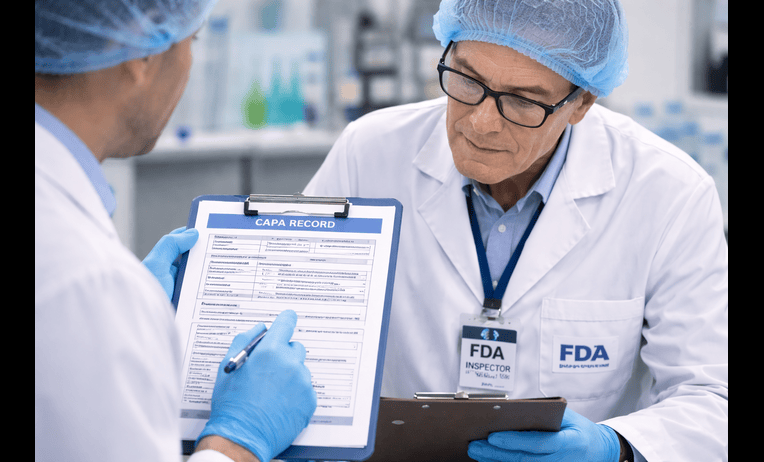

Reaching for daily ibuprofen relies heavily on a massive honor system where manufacturers promise to follow safety rules. Have you ever wondered who actually verifies those promises? In practice, a pharma auditor verifies those promises through an FDA Audit or broader pharmaceutical audit, ensuring companies meet federal expectations.
Think of an FDA Audit as a high-stakes health inspection for your medicine cabinet. According to public safety experts, physically testing every single pill is impossible, so inspectors rely on process auditing. They examine the factory’s “kitchen” itself, verifying that machinery is spotless and recipes are followed exactly. For regulated firms, these checks often align with gxp audits and gxp audit services designed to sustain day-to-day compliance.
Catching cut corners requires meticulous review across thousands of global facilities. During a regulatory audit particularly regulatory audits in pharma inspectors scrutinize the paper trail; if a facility didn’t write down that they cleaned a mixing vat, the government assumes it stayed dirty.
Consumer confidence ultimately depends on this behind-the-scenes oversight. To survive this intense scrutiny, factories frequently hire healthcare auditing companies to run practice inspections, ensuring their operations are perfectly safe long before federal agents ever knock on the door. These firms often bundle typical outsourced compliance package components, ranging from internal mock checks to supplier audit services and hands-on guidance for software for preparing for FDA audits.
FDA audits verify that manufacturers consistently follow GxP/CGMP through document reviews, data integrity controls (e.g., audit trails per 21 CFR Part 11), and on-site floor checks. Inspections may be routine, for-cause, clinical/BIMO, or pre-approval, with deficiencies documented via Form 483 and potentially escalated to Warning Letters requiring CAPA. Oversight extends across global supply chains via supplier, distribution, virtual, and medical device (MDSAP) audits to maintain product quality end-to-end. This transparency supports recalls, public reporting, and ultimately consumer confidence.
Routine Check vs. Emergency Alarm: Why the FDA Knocks on a Factory Door
Imagine a federal inspector showing up unannounced at a massive peanut butter factory or painkiller manufacturing plant. Most of the time, this is simply a Surveillance Inspection, a standard health check-up to ensure daily operations are safe before a problem ever has a chance to start.
But sometimes, the stakes are much higher. When comparing routine vs. for-cause visits, the urgency shifts entirely based on what prompted the federal agents to knock on the door:
- Scheduled Cycles: Routine inspections performed every few years to monitor standard facility safety.
- Consumer Complaints: “For-Cause” investigations triggered immediately if people report getting sick from a batch of product.
- Clinical Trial Anomalies: Urgent reviews sparked by strange or questionable data when testing new medicines; this can include an FDA audit clinical trials review or a focused clinical trial audit.
- Pre-Approval Inspections (PAI audit): Pre-market reviews when a new product seeks approval, verifying readiness before commercial release.
Investigating those medical studies requires a very specialized approach. When conducting a targeted FDA audit, clinical trials are closely scrutinized through what is known as a BIMO audit (Bioresearch Monitoring). This specific investigation ensures human volunteers are protected and that scientists aren’t faking the test results of a brand-new medication. Related checks may also be described as a good clinical practice audit or GCP audit.
Whether the government arrives for a scheduled check or an emergency alarm, they never just take a company’s word that everything is fine. Instead, the inspector immediately demands physical proof, establishing a permanent record of safety protocols.
The ‘Paper Trail’ of Safety: Decoding Audit Trails and Data Integrity
When baking cookies at home, nobody double-checks if you actually washed your hands or set the oven correctly. In a medicine plant, however, the golden rule is simple: if it isn’t documented, it never happened. This naturally brings up what audit trails are in the context of consumer safety (or, more broadly, what is an audit trail in healthcare). Think of them as unchangeable digital receipts permanently recording who did an action, and exactly when they did it, an audit-trail that preserves history.
The transition from messy paper logs makes these receipts incredibly powerful. While someone could easily erase a mistake in a physical notebook, modern computer systems enforce strict audit trail requirements. If a factory worker tries to alter a failing temperature reading on a batch of baby formula, the software secretly timestamps both the original bad number and the cover-up attempt. In practice, audit trails of computer systems include user IDs, time stamps, and reasons for change, making edits traceable.
Federal agents rely on a specific rulebook, known as Title 21 CFR Part 11 requirements, to ensure this digital evidence remains completely tamper-proof. When reviewing a facility’s data integrity audit checklist, inspectors aren’t just looking for typos. They are actively hunting for deleted error messages or shared passwords that might hide dangerous manufacturing shortcuts. In pharmacy settings, audit in pharmacy procedures help ensure the same rigor at retail and hospital dispensaries.
Organizations often deploy specialized software for preparing for FDA audits, and software for audit-ready documentation medical device companies depend on to keep evidence organized. Even healthcare environments such as medical duress systems with audit trails companies follow similar controls to preserve incident histories and access logs.
Uncovering these invisible digital footprints ensures bad data cannot be swept under the rug before the government arrives. Once the inspector verifies this electronic history, they step away from the desk to compare those numbers against physical reality on the factory floor.
The Clipboard Walk-Through: What an Auditor Actually Sees on the Floor
Stepping away from computer screens, the inspector heads onto the factory floor to witness how things are actually made. Their standard for this physical check is Current Good Manufacturing Practices (CGMP) essentially the gold-standard rulebook ensuring every product is made safely. Proper GMP auditing ensures that daily reality on the floor matches those written rules. Many facilities prepare using a gmp audit checklist as part of a broader gmp compliance audit.
During a good manufacturing practices audit, inspectors treat the facility like a high-stakes kitchen. They look for cross-contamination risks, noting whether allergen-heavy peanut dust might accidentally blow into a vat of plain chocolate. They also review calibration logs, which are physical records proving that a factory thermometer reading 40 degrees isn’t actually sitting at a dangerous 50 degrees. In highly regulated sectors, gmp audits—sometimes called gmp audit pharmaceutical reviews—assess whether procedures align with expectations.
To spot these hidden dangers, government agents and private GMP audit services hunt for five specific physical red flags:
- Hygiene: Are workers wearing proper gloves and hairnets?
- Cross-contamination: Are different raw ingredients kept strictly separated?
- Calibration: Do equipment gauges have up-to-date accuracy stickers?
- Labeling: Are identical-looking chemical barrels clearly marked?
- Staff behavior: Are employees following the official rules or winging it?
Watching employees in real-time is the ultimate test of any GMP compliance audit. If a worker explains their daily cleaning process and it contradicts the official manual, the facility has a major problem. Uncovering these physical safety gaps triggers formal government demands and mandatory corrective actions. Put simply, the audit medical term translates to a very tangible, on-the-floor reality check.
The ‘Fix-It Ticket’: Navigating FDA Form 483 and Warning Letters
Imagine taking your car to a mechanic and receiving a checklist of failing parts. When an inspector spots a leaky pipe over a mixing vat or a missing cleaning log, they don’t always shut down the factory immediately. Instead, they issue an FDA Form 483, acting as a formal “fix-it ticket” for the facility.
These FDA 483 observations serve as initial warnings, giving the manufacturer an opportunity to correct their mistakes voluntarily. These are often referenced as FDA audit 483 observations or simply an FDA audit 483. However, if the business ignores this ticket or the initial safety hazard is severe—like shipping contaminated baby formula, the government escalates the situation by publishing a highly public Warning Letter.
The clock starts ticking the moment that formal document arrives. A company has exactly 15 days to respond and outline their complete Warning Letter remediation process, proving to regulators how they plan to eliminate the dangerous conditions before facing a forced shutdown or product seizure.
Slapping a temporary bandage on the problem will not satisfy the inspectors. Facilities must rely on Corrective and Preventive Action management, commonly called CAPA, which forces factory leadership to dig into the underlying root cause of the error so it physically cannot happen again.
While domestic facilities face these rigorous penalties to keep American consumers safe, tracking international ingredients requires proactive supply chain management.
From Overseas to Your Table: Auditing the Global Supply Chain
Look closely at your morning vitamins. Even if the bottle proudly claims “Made in the USA,” the raw ingredients likely traveled thousands of miles across international borders. To prevent contaminated goods from ever reaching American shelves, companies are required to police their own global networks through strict supplier audits.
Before a manufacturer buys a single ton of imported cocoa or medicinal powder, they must perform a comprehensive vendor audit. These standardized GxP audits (Good Practice audits) act as international stress tests, evaluating several critical safety checkpoints. Many organizations also run vendor audits in parallel with auditing suppliers to confirm upstream controls:
- Ingredient purity checks to ensure raw materials aren’t laced with dangerous fillers.
- Shipping conditions to verify proper temperature controls during weeks at sea.
- Third-party labs auditing food chemical compliance for unbiased, independent verification.
- Distribution checks via a distribution audit or wholesale and distribution audit to confirm safe handling in transit and at depots.
Flying inspectors to every corner of the globe isn’t always practical. Fortunately, technology has introduced virtual audits, allowing quality experts to inspect overseas factories using live wearable cameras, digital document sharing, and remote interviews to catch safety violations from a desk in Washington. Many employ a virtual auditor or engage remote audit & virtual audit services for continuous coverage. Alongside these checks, teams may audit supplies, packaging, and labels, and document how to create audit trails for vendor selection decisions so procurement remains defensible.
Similar principles apply to complex product sectors. Medical device auditing including medical device audits and a formal medical device audit often follows the MDSAP audit model (the medical device single audit program), and companies may conduct MDSAP mock audits to prepare. Specialized medical device audit services help align global requirements efficiently.
This interconnected web of physical and digital check-ups ensures that a product’s global journey doesn’t compromise its quality.
The Safety Net: How Audit Transparency Empowers You as a Consumer
That medicine bottle in your cabinet is no longer just a product; it represents the relentless scrutiny required to reach your home. An FDA audit isn’t just bureaucratic paperwork, it is a vital stress test keeping companies honest. Thanks to these strict regulatory audits in pharma and food, daily essentials remain consistently safe.
Consumers can actively engage with this oversight system. When public notices announce a product recall, the Establishment Inspection Report proves the safety net worked by catching flaws before they escalated. The FDA’s online public inspection database remains openly accessible, allowing anyone to verify the safety records of household brands.
By understanding the rigorous protocols behind manufacturing, consumers can make informed choices, knowing that comprehensive inspections and constant vigilance protect the products they rely on every day.
Q&A
Question: What is an FDA audit, and why do regulators audit processes instead of testing every pill?
Short answer: An FDA audit is a high-stakes inspection that verifies manufacturers consistently follow GxP/CGMP rules through document reviews, data integrity checks, and on-site observations. Because physically testing every single unit is impossible, inspectors assess the “kitchen” where products are made confirming equipment is clean, procedures are followed, and records prove it so quality is built into the process rather than inspected into each pill.
Question: What prompts the FDA to show up and how do routine, for-cause, clinical/BIMO, and pre-approval inspections differ?
Short answer: Inspectors visit for different reasons, each with a distinct goal:
- Routine surveillance: Scheduled, periodic “check-ups” to ensure day-to-day compliance.
- For-cause: Rapid response to red flags like consumer complaints or reported illness.
- Clinical/BIMO (GCP-focused): Targeted reviews of clinical trials to protect participants and verify data integrity.
- Pre-Approval Inspection (PAI): Pre-market verification that a facility and process are ready to reliably make a new product.
Question: What are audit trails, and how does 21 CFR Part 11 uphold data integrity during an FDA audit?
Short answer: Audit trails are tamper-evident digital “receipts” that capture who did what and when recording user IDs, timestamps, and reasons for changes. Under 21 CFR Part 11, electronic records must be secure, traceable, and trustworthy. Inspectors examine data integrity controls to spot issues like deleted error messages or shared passwords, and organizations often use specialized software to keep documentation audit-ready. After verifying the electronic history, inspectors compare it to what’s happening on the factory floor.
Question: What do auditors look for on the manufacturing floor during a GMP audit?
Short answer: Using CGMP as the standard, auditors confirm the real-world process matches written procedures. They review calibration logs and watch employees work, then focus on five common red flags:
- Hygiene: Proper use of gloves, gowns, and hairnets.
- Cross-contamination: Physical and procedural separation of ingredients.
- Calibration: Up-to-date accuracy checks on gauges and sensors.
- Labeling: Clear, correct identification of look-alike materials.
- Staff behavior: Operators actually following approved SOPs (not improvising).Mismatches between practice and procedures trigger findings and required corrective actions.
Question: What happens if an inspector finds deficiencies, what are Form 483s, Warning Letters, and CAPA?
Short answer: Inspectors document problems on FDA Form 483, a “fix-it ticket” that gives the company a chance to correct issues. Serious or unaddressed deficiencies can escalate to a public Warning Letter. Firms then have 15 days to submit a remediation plan, typically built on CAPA (Corrective and Preventive Action) to address root causes so problems don’t recur. Failure to fix issues can lead to tougher actions, including shutdowns or product seizures.