This article explains what an investigational device is and how early evaluations and clinical trials guided by FDA, ISO, and SOP frameworks assess safety and effectiveness before public use. It details the IDE “permission slip,” IRB oversight, informed consent, and data integrity/GCP practices that safeguard participants. It distinguishes cleared devices from those under study (including tracking, SR vs. NSR determinations, and limited exemptions) and shows how real-world evidence and manufacturing controls translate study results into everyday care. It concludes with key questions patients should ask and practical resources to navigate early access safely.
Imagine a contact lens that not only corrects vision but monitors blood sugar without a single needle prick. While this sounds like science fiction, experts at leading research centers are currently evaluating this exact technology. These futuristic tools are known as an investigational device, a medical invention actively being studied to see if it works safely. In early evaluations, teams follow clear regulatory guidelines and ISO guidelines for medical devices to frame safe, ethical progress.
Wondering exactly how new medical technologies are tested before reaching the public? They must pass through a rigorous proving ground known as a clinical trial phase. Think of this period as a mandatory test drive, where the FDA acts as a strict safety guard rather than a roadblock. According to standard health protocols and standard operating procedure guidelines (SOPs), researchers use this structured time to carefully evaluate every risk before a product ever reaches a doctor’s office.
Naturally, the idea of relying on unproven technology can spark a very real fear of the unknown. By demystifying this testing process, we want to help you confidently navigate the world of innovative healthcare. These heavily monitored studies serve as the essential bridge between a brilliant idea and tomorrow’s life-saving treatment.
Is It a Gadget or a Cure? Defining the Investigational Device
Consider a new wireless pacemaker designed to monitor your heart without bulky patches. Before reaching your doctor’s office, it must undergo a strict “test drive” to prove its efficacy meaning how well it actually improves your health. This testing phase outlines the basic investigational device definition: a medical tool currently being studied in human volunteers to ensure it performs exactly as promised.
Recognizing the boundary between a fully cleared product and a proving-ground tool is essential for your peace of mind. Here are three key differences between standard hospital equipment and an IDE device (a tool legally approved for clinical testing):
- Availability: Standard tools are widely prescribed by doctors, whereas investigational ones exist exclusively within tightly controlled trials.
- Tracking: A device identifier is a unique digital barcode strictly used to track where experimental tools go and how they are used (people often ask, “what is a device identifier?”think UDI codes that link models, lots, and versions). Regulatory and informational markers are identified through which features? Labels, UDI symbols, and traceability logs all work together for accountability.
- Oversight: Trial participants receive intensely focused, ongoing medical check-ups compared to standard patients.
Earning this experimental label is a badge of rigorous safety checking, not a sign of poor quality. Occasionally, a highly familiar, harmless tool like a basic digital thermometer might receive an IDE exemption, which is a regulatory rule allowing low-risk devices to skip complex paperwork while keeping patients perfectly safe. Such strict testing boundaries guarantee that volunteers are never exposed to unnecessary hazards. Depending on materials and sterilization methods, teams may also consider ISO 10993-7 ethylene oxide residuals limits medical devices to keep post-sterilization residues within safe thresholds.
The ‘Permission Slip’ for Innovation: Understanding Investigational Device Exemptions (IDE)
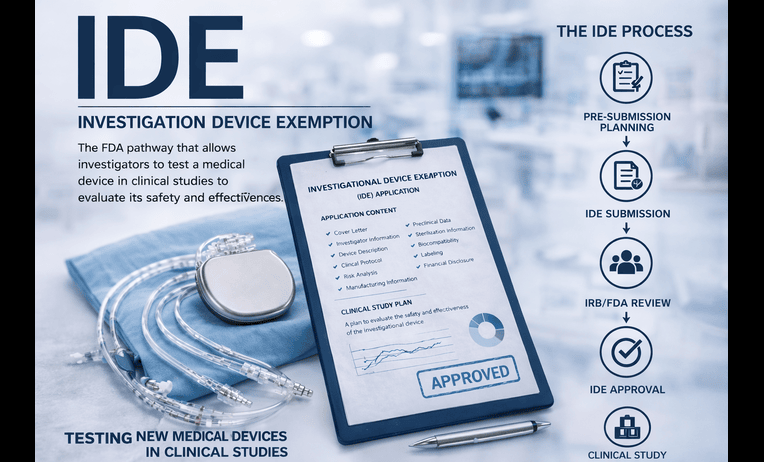
Before a groundbreaking tool like a robotic prosthetic arm can be tested on human volunteers, creators must secure a very specific type of permission slip. This legal gateway is an FDA IDE, or investigational device exemption, which functions as a strict safety contract between researchers and the government. Under standard rules, unproven medical tools cannot be shipped or used freely, but this exemption legally permits these devices to be evaluated in tightly controlled clinical settings.
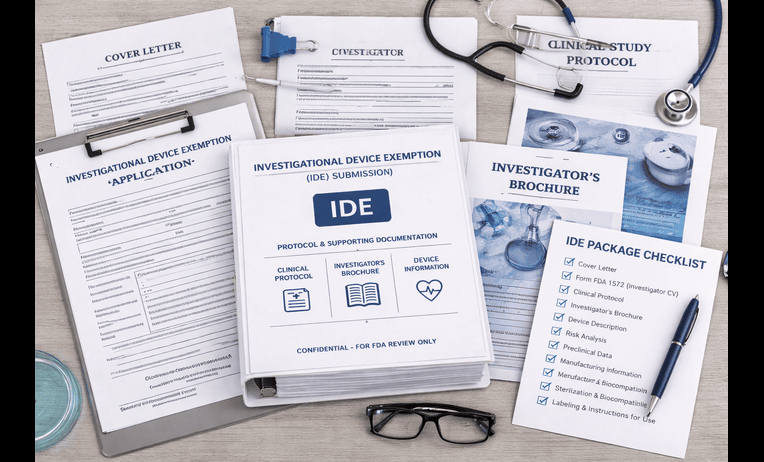
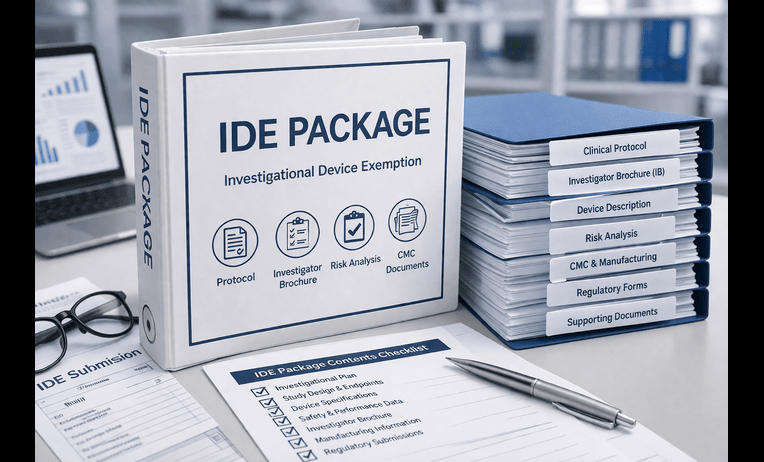
Earning this special permission is never a quick process or an easy shortcut. To begin, scientists must prepare an IDE submission often a substantial application that details exactly how the device is built, how it works, and what potential risks exist for the patient. Throughout this preparation, researchers rely heavily on official FDA IDE guidance (also described as IDE FDA guidance), a detailed instruction manual for proving that the potential benefits to human health outweigh the unknown hazards of the new technology.
Once a trial actually begins, verifying the results is just as important as the initial approval. Regulators monitor the study by following the specific data integrity guideline USFDA enforces to check every piece of health information so the results are honest and accurate. Study statisticians may describe findings with confidence interval notation to transparently show uncertainty around effect sizes. Think of this like a financial audit, but instead of tracking money, officials are making sure no one alters patient health scores or hides a sudden side effect.
Because this safety contract requires such careful documentation and transparency, the government relies on local teams of independent experts at every hospital to serve as the daily eyes and ears of the trial. This layered protection ensures that volunteers are always the top priority, not just the technology.
Who Watches the Watchmen? How Safety Referees Protect You During Medical Studies
Even with initial FDA permission, hospitals running trials need local “safety referees” on the ground. This independent watchdog group is called an Institutional Review Board (IRB). Following strict institutional review board oversight procedures, these ethics experts and community members review every detail to prevent unnecessary patient risks. They rely on a universal rulebook known as good clinical practice gcp guidelines. These global standards guarantee that human rights always remain the top priority during testing.
If you are offered a chance to try an unproven device, like a new wireless pacemaker, these referees ensure you hold all the power. Before participating, doctors must provide informed consent for experimental treatments. This is not just a quick signature on a legal form, but a mandatory conversation where you must be told four fundamental things:
- The exact medical purpose of the new device.
- All known physical risks or potential side effects.
- How the experimental tool compares to your standard treatment options.
- Your absolute right to quit the study at any time without penalty.
Behind the scenes, sites and sponsors follow GxP guidelines and good manufacturing practices guidelines; clinical data management service providers and eTMF providers help maintain records and data quality, and some organizations use an FSP functional service provider (functional service provider) model to scale operations efficiently.
Empowered by these strong protections, patients can safely help researchers test life-changing medical tools. Once a device clears these closely watched clinical hurdles, scientists must evaluate how it actually performs outside hospital walls.
From Lab Results to Life Results: The Power of Real-World Evidence
If a car were only tested on an indoor track, you would naturally wonder how it handles real potholes. Medical tools face a similar reality check. Once a device leaves the hospital, researchers begin collecting Real-World Evidence (RWE), which is everyday health information gathered from patients living their normal lives. Many publications refer to this as RWE real world evidence.
Tracking how a wearable monitor performs while you jog helps regulators understand its true value. Following real world evidence FDA guidance—and the broader FDA real world evidence and FDA RWE frameworks experts use these daily experiences to refine how tools are safely used. To guarantee every monitor works consistently, makers also follow FDA guidelines for process validation and the complementary US FDA process validation guidelines; if manufacturing results fall outside limits, teams address issues using applicable FDA OOS guidelines. For single-use sterile products, teams also stay current on ethylene oxide sterilization news December 2025 to anticipate regulatory updates.
Gathering this FDA real-world evidence transforms promising experiments into trusted, everyday solutions. Watching how a device actually improves someone’s quality of life outside the clinic is the ultimate safety standard.
Your Innovation Checklist: 5 Vital Questions to Ask Before Using an Experimental Tool
Stepping into an IDE clinical study—a formal test run for unapproved tools—is a big decision that requires weighing potential breakthroughs against unknown outcomes. While the benefits of joining a medical study often include early access to cutting-edge care and closer monitoring by specialists, you are still acting as a pioneer.
Before volunteers ever test a new tool, an independent safety referee makes a crucial significant risk vs. non-significant risk determination. This simply means deciding if a device, like an experimental heart valve, poses a serious potential harm to your health, or if something like a new smart-watch skin sensor is unlikely to cause serious injury. This process helps determine whether the investigation proceeds as a non-significant-risk pathway or a higher oversight IDE trial.
Protecting your health during an IDE trial requires clear communication with your doctor. Always ask these five vital questions before signing your informed consent paperwork:
- What is the specific goal of testing this device on me?
- Has this tool been labeled as a high or low risk to my health?
- Who pays for my medical bills if I experience a side effect?
- How often will I need to visit the clinic for extra monitoring?
- What are my standard treatment options if I choose not to participate?
Gathering these answers empowers you to take control of your health journey with complete confidence.
Your Roadmap to New Medical Tech: Navigating the Path of Early Access Safely
You now understand that the word “investigational” represents a phase of careful discovery, not a lack of safety. Instead of feeling intimidated by experimental technology, you can view these tools as innovations undergoing a closely monitored test drive. The intense oversight from independent safety referees, combined with strict FDA IDE exemptions allowing for careful testing, ensures your physical protection always comes before medical progress.
If you are exploring new treatment avenues, your first simple step is to search a public database like ClinicalTrials.gov for conditions affecting you. When you find a promising tool, discuss the specific clinical study participation requirements with your doctor to see if you safely qualify. Each time you ask these informed questions, you build confidence in evaluating your healthcare options.
To stay informed, many patients review med guides for related medications, read an ops guide or study handbook provided by the research site, and follow reputable insider newsletter sources. Patient-education hubs that follow pharma DTC website video library navigation best practices can make complex topics (like what is ICH guidelines, ICH pharmaceutical guidelines, and ICH guidelines for stability or ICH guidelines for stability testing more common in drug development) easier to understand. While not always device-specific, these resources sit alongside labeling norms such as standard of identity FDA policies and the FDA monograph statement of identity skin protectant labeling requirements for certain product categories.
Finally, device innovators and clinicians often learn and network at medical product conferences outside Las Vegas 2025 and similar meetings. Digital infrastructure partners such as a digital transformation service provider can also help sponsors modernize study operations.
The medical breakthroughs of tomorrow rely on the empowered volunteers of today. By staying informed on how these incredible devices safely move from the laboratory into the real world, you are fully equipped to explore the future of healing without fear.
Q&A
Question: What is an investigational device, and how is it different from standard medical equipment?
Short answer: An investigational device is a medical tool being tested in human volunteers to evaluate safety and effectiveness before it’s available for routine care. Unlike cleared products you can get in a clinic, investigational devices are available only within tightly controlled clinical trials, are closely tracked with unique device identifiers (think UDI codes linked to models, lots, and versions), and come with intensified medical oversight. Labels, UDI symbols, and traceability logs work together for accountability. The “investigational” label signals rigorous safety checking not lower quality and some very low‑risk tools (like a basic thermometer) may qualify for limited IDE exemptions while still protecting patients.
Question: What is an IDE (Investigational Device Exemption) and why is it required?
Short answer: An IDE is the FDA’s “permission slip” that legally allows an unapproved device to be shipped and used in a clinical study. To obtain it, sponsors submit a detailed application describing how the device is built, how it works, the study plan, and potential risks—guided by FDA IDE guidance and SOPs. Once a study starts, data integrity practices (auditable records, transparent statistics like confidence intervals) help ensure honest, accurate results. Oversight is layered: regulators review compliance while local Institutional Review Boards (IRBs) serve as on‑the‑ground ethics monitors.
Question: Who protects participants during these studies, and what must informed consent include?
Short answer: Independent IRBs act as “safety referees,” applying Good Clinical Practice (GCP) to keep participant rights and welfare paramount. Before joining, you must receive informed consent a real conversation, not just a form covering: the device’s medical purpose, known risks/side effects, how it compares to standard care, and your unconditional right to withdraw at any time. Behind the scenes, teams follow GxP and Good Manufacturing Practices, and use clinical data management and eTMF systems to preserve data quality and documentation.
Question: What does “significant risk (SR) vs. non‑significant risk (NSR)” mean, and why does it matter?
Short answer: SR vs. NSR is an early determination of how much potential harm a device might pose. High‑risk tools (e.g., an experimental heart valve) may require greater oversight and a full IDE pathway, while low‑risk tools (e.g., a smartwatch‑style skin sensor) may proceed via an NSR pathway with different regulatory requirements. This call helps match the study’s safeguards to the device’s risk profile before any participants enroll.
Question: How do trial results turn into everyday care, and what is Real‑World Evidence (RWE)?
Short answer: After tightly controlled trials, RWE captures how devices perform in daily life jogging with a wearable, recovering at home, and more. Using FDA RWE frameworks, these data refine safe use and support broader adoption. Consistent, safe performance also depends on manufacturing controls: process validation (with actions for out‑of‑spec results), appropriate sterilization (e.g., monitoring ethylene oxide residuals per ISO 10993‑7), and staying current on evolving sterilization guidance. Together, clinical evidence plus real‑world performance and reliable manufacturing translate promising prototypes into trusted, routine tools.
Question: How can I safely explore early access to a new device?
Short answer: Start by searching ClinicalTrials.gov for your condition and discuss any study you find with your doctor to confirm eligibility and safety. Before consenting, ask five essentials: the study’s specific goal for you, whether the device is high or low risk, who covers costs if side effects occur, how often you’ll be monitored, and your standard treatment alternatives. Supplement your understanding with site study handbooks and reputable patient‑education resources.