
In a five-person dev shop, quality usually lives entirely inside the founder’s head. Yet, as that tight-knit crew expands to fifteen people, the dynamic changes. According to common industry experience, precious “brain-share” inevitably leaks during this growth phase, leading to botched deployments and frantic Monday morning firefighting.
Many technical leaders mistakenly assume hiring another tester solves these growing pains, confusing standard Quality Assurance (QA) with a Quality Management System (QMS). In practice, QA is just testing the code itself, whereas a QMS acts as the overarching “operating system” for your company’s workflow. Finding the best quality management systems for small software firms allows your team to build reliably, even when you aren’t in the room.
Landing bigger clients often forces this realization, since enterprise companies expect to see your standardized processes before signing a contract. Rather than viewing this documentation as useless bureaucracy, successful startups treat it as a vital sales asset. Applying proven quality management tips will help you implement the exact guardrails required to accelerate developer onboarding and confidently secure those larger deals.
Beyond Bug Tracking: What a Software QMS Actually Does
Most dev teams think passing unit tests means they have quality under control. But catching a software bug before deployment is only half the battle. Think of software quality management systems as highway guardrails; they don’t dictate how fast engineers code, but they prevent the operation from driving off a cliff when a process fails. So, what is qms software going to change about your workflow?
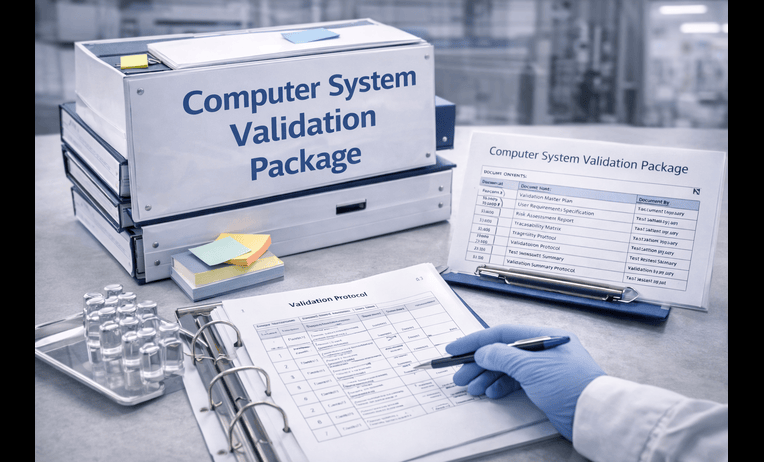
Instead of relying on scattered spreadsheets, this platform becomes your operational backbone. When asking what does qms software do, look at its four foundational pillars:
- Document Control: Automates versioning so no one works off outdated specs, saving hours of manual prep during audits.
- CAPA (Corrective and Preventive Actions): A structured way to ensure a repeating issue—like a broken API connection—is fixed permanently.
- Training Management: Verifies that developers actually read and understand your latest security protocols.
- Audit Trails: Acts as a time machine showing exactly who changed a specific feature and why.
By automating these manual compliance steps, your team spends less time firefighting and more time shipping reliable code. Without this infrastructure, your operating procedures exist entirely in people’s heads, creating a hidden risk of “tribal knowledge” within small dev teams.
The Hidden Risk of ‘Tribal Knowledge’ in Small Dev Teams
Have you ever had a lead engineer take a vacation, only for a deployment to fail because they alone knew the server configuration? That undocumented expertise is called “tribal knowledge,” and it creates a dangerous single point of failure for growing software firms. When daily operations rely entirely on what lives in a few developers’ heads, you are directly ignoring quality management best practices that keep businesses stable.
Standardizing these mental checklists into formal workflows shifts the burden from human memory to a reliable system. Instead of guessing how a previous integration was handled, junior developers can follow clear audit trails that explain exactly what happened and why. This proactive documentation is critical for reducing technical debt, as it stops teams from applying quick, temporary fixes to repetitive bugs that a senior developer would have caught intuitively.
Ultimately, a structured knowledge base transforms your operations into a powerful onboarding engine. New hires get up to speed in days rather than months because the reasoning behind your processes is permanently recorded. If a quick quality management system review reveals that losing one key employee would stall your pipeline, it is time for an upgrade. Selecting the right QMS requires balancing structured compliance with your existing agile velocity.
How to Choose a QMS Without Killing Your Agile Velocity
Balancing a formal quality system with fast agile sprints feels like trying to run a marathon in work boots. However, the true return on investment (ROI) of quality comes from drastically reducing rework hours. When you stop pulling developers off active sprints to fix preventable bugs, velocity naturally increases. Instead of overhauling your workflow, establish invisible guardrails that connect seamlessly to your existing Jira or GitHub boards.
Navigating this space requires comparing open-source versus proprietary solutions. Open-source platforms offer deep customization, but they demand internal maintenance that distracts from shipping your own product. Alternatively, proprietary systems deliver out-of-the-box workflows and support, though you must carefully evaluate qms software pricing against your budget. Your decision ultimately depends on whether you have the bandwidth to manage another internal tool.
Learning how to choose qms software involves a simple three-step evaluation framework: map your stack, determine license preferences, and score your shortlist. To identify the best quality management system software, test options against this five-point checklist:
- Integration: Does it sync with current issue trackers?
- Scalability: Will it support your team as headcount grows?
- UI: Is the interface intuitive for developers?
- Compliance: Does it capture the audit trails enterprise clients expect?
- Cost: Do subscription tiers align with your budget?
Applying these criteria reveals several highly-rated QMS platforms suitable for small software firms in 2026.
Top-Rated QMS Platforms for Small Software Firms in 2026
Translating your checklist into real-world options requires looking at today’s SaaS landscape. Modern qms management software eliminates the need for complex internal servers to achieve enterprise-grade compliance. Instead, these cloud-based tools offer pre-built workflows that help small software shops effortlessly produce the robust audit logs and process documentation that massive corporate clients expect.
To speed up your evaluation, consider these top contenders recognized as the best quality management systems for small software firms based on their specific industry focus:
- Jira Service Management (Best for General SaaS): Highly affordable and seamlessly bridges customer tickets directly to your existing developer workflows.
- Arena (Best for High Compliance): The heavy hitter for strict environments, providing the ironclad audit trails necessary for medical quality management systems compliance or FDA tracking.
- Intellect (Best for Flexibility): Features a “no-code” foundation designed for teams with unique internal processes that still want structured, automated tracking.
Current 2026 pricing trends show a major shift toward modular subscriptions, making it easier to budget effectively. Rather than paying a massive upfront fee for a monolithic quality management platform, modern vendors let you pay per user or per feature. You can easily start with basic document control for a few hundred dollars a month and add advanced corrective action modules only when your client demands grow.
Securing this foundational system transforms how your business operates, shifting your engineers from reactive bug-hunting to proactive feature building. Integrating this platform directly into your CI/CD pipeline ensures automated compliance without slowing down daily deployments.
Automating the Audit: Integrating QMS with Your CI/CD Pipeline
Pushing code to production shouldn’t require an afternoon of updating spreadsheets just to keep compliance stakeholders happy. By integrating QMS with CI/CD pipelines, you transform a tedious bureaucratic chore into an invisible background process. Every time your developers merge a pull request or trigger an automated deployment, the continuous quality loop captures the exact details of who, what, and why. This seamless handoff ensures your automated documentation becomes a natural extension of how you already ship software, rather than a frustrating operational bottleneck.
Think of modern iso audit software as an automatic flight data recorder for your entire development cycle. Instead of scrambling to gather fragmented release notes when an enterprise client requests a sudden review, your pipeline instantly generates a fully “Audit-Ready” environment. Because your existing testing frameworks push their pass/fail results directly into your official records, you can confidently satisfy strict ISO 9001 traceability requirements without ever forcing an engineer to perform manual data entry.
Beyond just surviving compliance checks, this deep integration unlocks true real-time code quality monitoring to protect your product’s reputation. Development teams can glance at centralized dashboards to spot failing test trends or structural bottlenecks long before they trigger customer bug reports. Turning these automated insights into a lasting operational habit requires a structured, lean implementation roadmap.
Your 30-Day Roadmap: Implementing a Lean QMS
Rolling out a new system shouldn’t mean freezing feature development. Instead of aiming for corporate perfection on day one, small software firms should focus on “Minimum Viable Quality” (MVQ)—the exact amount of process needed to prevent critical bugs without bogging down engineers. Figuring out how to implement qms software effectively means treating it like an agile sprint rather than a massive administrative overhaul.
To keep momentum high, structure your rollout as a lean, 30-day timeline. This phased approach guarantees a smooth, disruption-free transition:
- Week 1: Internal Audit – Identify current bottlenecks and define your MVQ.
- Week 2: Tool Selection/Setup – Configure the platform to match existing dev workflows.
- Week 3: Document Migration – Solve how to migrate to new qms software by moving only your active, essential standard operating procedures.
- Week 4: Team Training – Run a targeted workshop focused purely on time-saving benefits.
Getting developers on board requires framing compliance as a productivity booster rather than a policing mechanism. Effective quality management system training skips dense regulatory lectures and directly shows the team how the tool eliminates repetitive manual documentation. When everyone understands how these guardrails speed up daily tasks, your culture naturally shifts from firefighting to high-performance engineering.
From Firefighting to High-Performance Engineering
Relying on reactive firefighting creates unnecessary bottlenecks for growing teams. You can now wield a QMS as a strategic growth tool rather than bureaucratic red tape. Start today by identifying your biggest workflow constraint, mapping that exact process, and documenting just one core deployment procedure this week. These essential quality management routines will begin transforming your software firm from chaotic to brilliantly consistent.
Pro-Tip: If enterprise clients request an iso 9001 quality management system, treat it as an eventual milestone rather than an immediate hurdle. Earning a formal quality management systems certification becomes the natural byproduct of running a well-documented, highly efficient team. Ultimately, quality isn’t just about catching software bugs; it’s the reliable operating system that successfully scales your entire business.