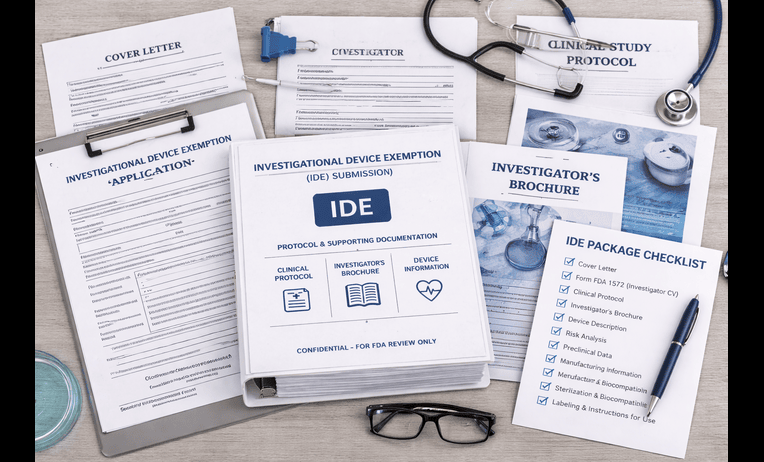
Gap Assessment for Medical Devices
Bringing a medical device to market is a complex journey fraught with rigorous regulatory hurdles, ever-changing standards, and strict quality control demands. In this highly regulated landscape, hoping your Quality Management System (QMS) is compliant isn’t enough, you need absolute certainty. This is where a qms gap assessment medical device strategy becomes your most valuable asset.
Whether you are a startup preparing for your first product launch or an established manufacturer navigating the shift to new international regulations, evaluating your QMS against current standards is non-negotiable.
Let’s dive into everything you need to know about navigating quality gaps, optimizing your regulatory strategy, and ensuring your medical devices are safe, effective, and market-ready.
What is a Gap Assessment?
If you are new to the regulatory sphere, you might be wondering: what is a gap assessment? Simply put, a gap assessment (or gap analysis) is a proactive, systematic evaluation of your current Quality Management System against a specific set of regulatory requirements or industry standards.
Think of it as a diagnostic check-up for your company’s compliance health. It identifies the “gaps” between where your processes currently stand and where they need to be to pass regulatory scrutiny. A thorough qms gap assessment medical device audit highlights missing documentation, inadequate procedures, and unmitigated risks before an official inspector finds them.
The Strategic Importance of QMS Assessments
Achieving continuous regulatory readiness for medical device manufacturers is not a one-time event; it is an ongoing culture of quality. Conducting regular assessments provides a roadmap for resource allocation and process improvement.
While many organizations rely solely on internal reviews, there are profound benefits of third party regulatory assessment. External auditors bring objective, unbiased perspectives. They are immune to internal company politics and often possess a broader industry view, having seen how dozens of other manufacturers solve similar compliance issues.
Furthermore, a proactive assessment directly aids in preparing for a notified body audit. When the official auditors arrive, you will already know your weak points, have mitigation plans in place, and demonstrate a culture of proactive compliance a trait highly favored by regulatory bodies.
Navigating Complex Regulatory Frameworks
Before you begin identifying gaps, you must clearly define the standards you are measuring against. Global manufacturers often juggle multiple frameworks simultaneously.
FDA vs. ISO Standards
A common challenge for global manufacturers is understanding the nuances of FDA 21 CFR 820 vs ISO 13485. While both share the ultimate goal of ensuring device safety and efficacy, their structures and specific requirements differ.
- ISO 13485 is the internationally recognized standard emphasizing risk management and QMS effectiveness.
- FDA 21 CFR Part 820 is the US Quality System Regulation (QSR), heavily focused on strictly documented procedures and continuous compliance.
The European Transition
For companies selling in Europe, the quality system transition from MDD to MDR (Medical Device Directive to Medical Device Regulation) has been a seismic shift. The EU MDR demands significantly more rigorous clinical evidence, stricter post-market surveillance, and comprehensive supply chain traceability. Using a reliable EU MDR gap analysis template can streamline this complex transition by breaking the regulation down into manageable, auditable sections.
How to Conduct a Successful QMS Gap Assessment
If you are wondering what are the steps for a QMS audit or a gap assessment, the process generally follows a structured, phased approach. Understanding how to perform a medical device internal audit provides a great foundation for this process.
Step 1: Planning and Document Review
Begin by gathering your current QMS documentation. Utilizing a comprehensive ISO 13485 compliance checklist helps ensure no clause is overlooked. During this phase, focus on mapping document control procedures to ensure that all document creation, approval, and revision processes meet regulatory standards.
Additionally, review your technical files. Ensuring that your medical device technical file requirements are fully met is critical, as these files contain the essential design, manufacturing, and clinical data of your device.
Step 2: Execution and Data Gathering
This is the active phase where auditors interview staff, observe manufacturing processes on the floor, and review historical records. They look for evidence that the written procedures match the actual day-to-day operations.
Step 3: Pinpointing Deficiencies
The core of the assessment is identifying non-conformities in quality management. Is there a lapse in employee training records? Are design controls properly documented? Is risk management integration in QMS apparent at every stage of the product lifecycle, from design to post-market surveillance? Identifying these issues early is the primary goal of the assessment.
Step 4: Reporting and Remediation
Once the evaluation is complete, the findings are compiled into a formal gap assessment report. This document should clearly categorize gaps by risk level (e.g., critical, major, minor).
The next step is remediating quality system deficiencies. This requires implementing a compliant CAPA process (Corrective and Preventive Action). A robust CAPA system doesn’t just put a band-aid on the problem; it investigates the root cause, implements a permanent fix, and verifies that the solution was effective.
Modern Challenges: Digital Health and Data Integrity
As the MedTech industry evolves, so do the regulations surrounding software, cloud computing, and digital records. Modern QMS gap assessments must look beyond physical manufacturing and scrutinize digital infrastructure.
GxP Compliance in the Cloud
With more companies moving their QMS to software-as-a-service (SaaS) platforms, achieving gxp compliance in the cloud has become a top priority. A gxp compliant cloud environment must guarantee security, data segregation, and disaster recovery. During your gap assessment, ensure your software vendor meets all regulatory requirements and that you have documented validation of the system.
Regulatory standards like annex 11 gxp (from the EU guidelines for computerized systems) mandate strict controls over digital records and electronic signatures.
The Imperative of Data Integrity
If you follow recent gxp compliance news or gxp data integrity news, you know that regulatory bodies are cracking down heavily on data manipulation and poor digital record-keeping. The integrity of your gxp data is fundamental to patient safety.
During a gap assessment, auditors will look closely at how you manage data. A vital benchmark is the mhra gxp data integrity guidance 2018. Specifically, organizations must apply the mhra gxp data integrity guidance alcoa+ principles. ALCOA+ dictates that all data must be:
- Attributable (Who created it?)
- Legible (Can it be easily read and understood?)
- Contemporaneous (Was it recorded at the time the activity occurred?)
- Original (Is it the first capture of the data?)
- Accurate (Is it correct and truthful?)
- + Complete, Consistent, Enduring, and Available.
The Rise of Artificial Intelligence
Finally, as AI tools begin integrating into manufacturing and quality processes, keeping an eye on gxp ai news is essential. If your company uses AI for quality sorting, predictive maintenance, or clinical data analysis, your gap assessment must evaluate how these algorithms are validated, controlled, and monitored for drift over time.
Actionable Tips for Remediation and Readiness
Once your gap assessment is complete, the real work begins. Here are actionable tips to ensure your remediation efforts are successful:
- Prioritize by Risk: Not all gaps are created equal. Focus your resources on high-risk compliance issues that directly impact product safety or could trigger a severe regulatory warning.
- Engage Leadership: Remediation often requires time and money. Ensure executive leadership understands the findings of the gap assessment report so they can champion and fund the necessary changes.
- Train Your Team: A QMS is only as effective as the people using it. If your gap assessment reveals non-conformities due to human error, invest in comprehensive, role-specific training.
- Embrace Technology: If mapping document controls manually is causing errors, consider upgrading to an electronic QMS (eQMS). Just ensure it offers a GxP compliant cloud environment.
- Conduct Mock Audits: After implementing your CAPAs, run a mini internal audit to verify that the gaps are truly closed before the official notified body arrives.
Conclusion
The medical device industry leaves no room for guesswork. A comprehensive gap assessment is the bridge between your current operations and a state of unshakeable regulatory compliance.
By understanding complex framework shifts, prioritizing data integrity through ALCOA+ principles, integrating robust risk management, and committing to thorough remediation, you protect more than just your bottom line. You protect the end-users the patients whose lives depend on the quality, safety, and efficacy of your medical devices.
Treat your next gap assessment not as a burdensome regulatory chore, but as a strategic business advantage that drives continuous improvement and market success.