FDA’s New Software Validation Requirements Explained
When a medicine bottle has a child-proof cap, we instantly know it is there to protect us. But what keeps you safe when your “medicine” is just a piece of computer code? Millions of people rely on health apps to track heart rhythms or manage insulin, trusting these digital tools will work flawlessly every time.
Digital tools can break exactly like mechanical ones, making a frozen screen on a medical monitor highly dangerous. According to consumer safety advocates, software errors in healthcare devices can easily lead to incorrect treatments or missed alerts. Developers must provide actual proof of performance, a process known as computerized system validation, to show their code operates safely under real-world pressure before reaching patients.
Stepping in as the ultimate safety inspector, the government recently updated its digital playbook. Regulators designed the FDA’s new software validation requirements as a rigorous reliability check for modern medical technology. By improving FDA software validation in their 2023 guidelines, officials are ensuring that as healthcare apps get smarter, your safety net grows stronger.
The Digital Safety Inspector: What Software Validation Actually Does for You
You probably have a health app on your phone right now. While a simple step-counter is harmless if it glitches, a program calculating your insulin dose is a completely different story. The FDA calls these critical tools Software as a Medical Device (SaMD). They treat this code with the exact same seriousness as a physical surgical scalpel.
To keep you safe, the government acts like a strict building inspector for healthcare technology. When people ask what is computerised system regulation all about, it simply means making sure digital tools do exactly what they promise. This safety check process is officially called Computerized System Validation. Industry experts use the csv full form to describe the rigorous testing required before a medical app reaches your hands.
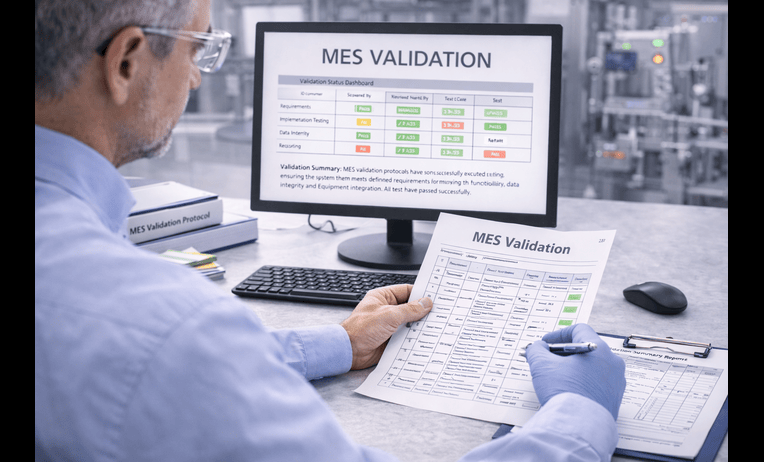
Nobody wants their medical treatment delayed by a frozen computer screen. That is why system validation serves as the ultimate proof of performance. Instead of just taking a company’s word that their app works, the FDA demands receipts. Developers must provide actual test results proving their software will accurately detect an irregular heartbeat every single time.
Knowing these safety nets exist gives us peace of mind when relying on modern digital medicine. However, technology moves incredibly fast, and the traditional methods of proving safety often involved mountains of printed documents. To keep pace with innovation, regulators have modernized their approach to prioritize active testing over administrative paperwork.
Out with the Old Paperwork: Why the FDA is Moving Toward ‘Computer Software Assurance’
Imagine taking your car to a mechanic who spends nine hours writing reports and only one hour actually checking your brakes. For years, medical software developers faced a similar problem. The old rules forced companies to generate mountains of paperwork just to prove they followed guidelines. When comparing computer software assurance vs computer system validation, the older method heavily focused on printing screenshots and checking boxes instead of actively hunting for dangerous glitches.
To fix this, regulators created a smarter approach: fda computer software assurance (CSA). Instead of mindless documentation, the government now asks developers to use “critical thinking.” In plain English, builders must figure out exactly where a health app is most likely to fail and spend their energy aggressively testing those specific weak spots. It completely shifts the focus from writing about safety to actually testing for it.
The difference between the old paperwork method and the new testing method is night and day. Looking at csv vs csa in action, the shift from checking boxes to testing for real-world failures looks like this:
- Before: Developers spent countless hours documenting that a harmless hospital scheduling app loaded correctly, treating it with the exact same caution as a heart monitor.
- After: Developers skip the low-risk paperwork and spend their time actively trying to break life-support software to ensure it never fails on a real patient.
Reducing this documentation chore means developers can finally focus on what truly matters: your safety. By spending less time filing forms and more time catching glitches before they reach hospitals, digital medicine becomes incredibly reliable.
The Knife Analogy: How the FDA Prioritizes Software That Matters
Think about your kitchen drawer for a moment. You wouldn’t handle a dull butter knife with the same extreme caution you use for a razor-sharp chef’s knife. The FDA looks at healthcare technology the exact same way through a risk-based approach to software quality assurance. Instead of treating every piece of code like a potential hazard, safety inspectors focus their heaviest testing requirements on the digital tools that could actually cause physical harm.
Because modern healthcare relies on everyday, behind-the-scenes programs just as much as patient monitors, smart software lifecycle management for medical device manufacturers means sorting these digital tools by their danger level. This simple three-tier system separates the harmless software from the critical technology:
- Low Risk (The Butter Knife): Basic hospital billing or scheduling software. A glitch here is annoying but harmless to your health.
- Medium Risk (The Paring Knife): Patient medical record databases. An error might cause prescription confusion, so moderate safety checks are required.
- High Risk (The Chef’s Knife): Life-support machines, insulin pumps, or pacemaker apps. These receive aggressive, intense testing because a failure could be fatal.
Grouping technology like this saves everyone time and keeps the focus entirely on patient safety. By adopting this least burdensome approach for software verification, regulators ensure that harmless administrative apps can launch quickly without getting stuck in unnecessary red tape. Meanwhile, developers can dedicate all their energy to making sure critical, life-saving programs never freeze or fail.
Beyond the Script: How ‘Unscripted Testing’ Catches the Bugs Developers Miss
You have probably experienced the frustration of a smartphone app freezing when you tap the wrong button. To prevent those glitches in medical devices, companies run basic safety checks using automated testing tools for FDA compliance. This “scripted” testing follows a strict checklist, ensuring the software performs its core job perfectly when used exactly as intended.
However, real people rarely use technology perfectly. The difference between scripted and unscripted validation comes down to preparing for the unexpected. While a robotic script might check if a digital heart monitor turns on correctly, it cannot predict what happens if a patient accidentally presses three buttons at once while their phone battery is dying.
That unpredictability is why human-centric testing is absolutely vital. Using unscripted testing methods in regulated environments, real human testers play the role of a confused or panicked user. This “exploratory” testing allows developers to deliberately try and break the software on purpose, wandering off the standard digital path to find hidden bugs before the app ever reaches a patient’s hands.
Finding these hidden flaws ultimately gives you peace of mind that your medical tools will just work, no matter the situation. But catching the glitches is only half the battle; safety inspectors also require companies to strictly document and prove they actually fixed them.
Ensuring a Clear Paper Trail: Why Audit Trails and Digital Security Keep Companies Honest
Imagine a bank erasing a withdrawal from your account history without leaving a trace. To prevent similar disasters in medicine, safety inspectors enforce strict rules like 21 CFR Part 11 compliance for digital health. This regulation acts as a mandatory digital security camera, ensuring companies cannot hide software errors or tamper with your health data. Whenever developers fix bugs or update medical devices, the law requires them to keep permanent, unchangeable electronic records of every action they take.
Holding these companies accountable relies on an unerasable digital fingerprint. Specifically, the audit trails of computer systems include:
- Who: The exact person making the change.
- What: The specific data or code that was altered.
- When: The precise time and date.
- Why: The reason for the update.
Because these logs cannot be secretly deleted, your medical tools remain transparent, safe, and fully accountable.
Your Tech, Your Health: Navigating the Future of Digital Medicine
By modernizing quality systems with CSA principles, the focus finally shifts from endless paperwork to your physical safety. You now know that the FDA’s new software validation requirements act as a strict safety net. As medical AI gets smarter, these rules ensure your digital tools remain completely reliable.
This entire playbook exists solely for your protection. Next time you use a medical app or smart monitor, check for the “FDA Cleared” label. Finding this mark provides immediate peace of mind, proving the software has undergone rigorous testing to work reliably when you need it most.