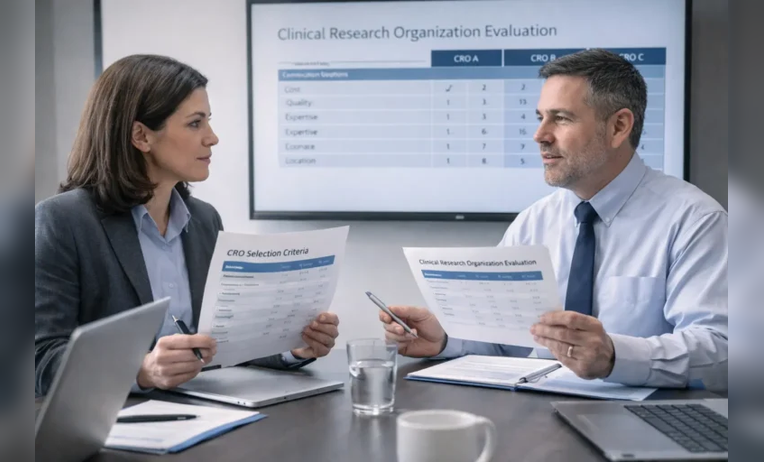
Introduction
Clinical development is one of the most resource-intensive and highly regulated activities within the life sciences industry. Whether a company is developing a novel therapeutic, medical device, diagnostic product, or advanced biologic, successful execution often depends on selecting the right external partners.
Among the most important decisions sponsors make is choosing a Contract Research Organization (CRO). This is why CRO Selection and Qualification has become a critical component of modern clinical development strategies.
Organizations frequently begin their search by looking for a clinical research organization near me, evaluating clinical research companies near me, or comparing contract research organizations near me. While these searches provide an initial list of potential partners, selecting the right CRO requires a comprehensive assessment of quality systems, operational capabilities, regulatory expertise, and long-term strategic fit.
A structured qualification framework helps organizations minimize risk, improve study performance, and establish partnerships that support successful clinical outcomes.
The Expanding Role of CROs in Clinical Development
The role of CROs has evolved significantly as clinical trials have become more complex and globally distributed.
Today, CROs support a wide range of services, including:
- Clinical trial management
- Site monitoring
- Regulatory affairs
- Data management
- Biostatistics
- Medical writing
- Pharmacovigilance
- Quality assurance
- Vendor oversight
Sponsors conducting a cro company search often encounter providers that specialize in specific therapeutic areas, geographic regions, or stages of development.
The challenge is determining which organization is best equipped to support the sponsor’s specific objectives.
Why CRO Selection Influences Trial Success
Selecting a CRO affects every phase of a clinical program.
An experienced and qualified CRO can help organizations:
- Accelerate development timelines
- Improve operational efficiency
- Strengthen regulatory compliance
- Enhance data quality
- Improve patient recruitment
- Reduce project risk
Conversely, selecting an unsuitable vendor can create delays, compliance concerns, budget overruns, and operational challenges.
Organizations searching for clinical research organizations near me should therefore focus on more than location. The primary goal should be identifying a partner with the capabilities necessary to support long-term success.
Developing a Structured Selection Strategy
A successful selection process begins before vendor outreach.
Sponsors should first define:
Development Goals
Understanding program objectives helps determine required expertise and resources.
Scope of Outsourcing
Organizations should clearly identify which activities will be delegated to the CRO.
Budget Parameters
Financial expectations influence vendor selection and contract negotiations.
Geographic Requirements
Some studies require local expertise, while others demand international reach.
Companies evaluating a contract research organization near me often prioritize regional knowledge, but broader capabilities may be necessary for larger clinical programs.
Key Evaluation Criteria for CRO Selection
Every CRO should be evaluated against objective criteria.
Therapeutic Expertise
Relevant experience can significantly improve execution quality.
Important therapeutic areas may include:
- Oncology
- Neurology
- Rare diseases
- Cardiovascular medicine
- Medical devices
- Cell and gene therapy
Regulatory Experience
Sponsors should assess familiarity with:
- FDA requirements
- Global regulations
- Good Clinical Practice standards
- Inspection readiness
Operational Capabilities
Operational reviews should include:
- Monitoring resources
- Project management expertise
- Site management capabilities
- Data management infrastructure
Technology Platforms
Modern clinical trials increasingly depend on digital solutions that improve efficiency and oversight.
CRO Qualification: Moving Beyond Vendor Selection
Selection identifies potential vendors. Qualification confirms they can deliver.
A structured qualification process typically includes:
Vendor Questionnaires
Questionnaires provide insight into organizational capabilities and processes.
Documentation Reviews
Sponsors evaluate:
- Standard operating procedures
- Training programs
- Quality manuals
- Compliance documentation
Risk Assessments
Risk-based evaluations help prioritize qualification efforts.
On-Site or Remote Audits
Audits provide direct visibility into operational practices and quality systems.
Qualification helps sponsors verify that a CRO can consistently meet performance expectations.
Assessing Quality Management Systems
Quality management systems are among the most important elements of CRO qualification.
Sponsors should evaluate:
SOP Governance
Well-controlled procedures support operational consistency.
Training Programs
Comprehensive training ensures employees remain qualified for assigned responsibilities.
CAPA Systems
Effective corrective and preventive action programs demonstrate commitment to continuous improvement.
Audit Programs
Internal audits provide evidence of proactive quality oversight.
Organizations searching for contract research organizations near me should prioritize quality system maturity when comparing providers.
Why Vendor Audits Matter
Qualification audits remain one of the most valuable tools available to sponsors.
Audits provide opportunities to assess:
Compliance Practices
Evaluating adherence to applicable regulations and standards.
Operational Processes
Reviewing study execution workflows and controls.
Data Integrity Measures
Assessing systems designed to protect clinical data.
Technology Controls
Reviewing validation practices and security measures.
Audit findings frequently influence final vendor selection decisions.
CRO Selection for Emerging Biotechnology Companies
Many early-stage organizations operate with limited internal resources.
As a result, startup teams often search for:
- biotech lab near me
- biotechs near me
- bioengineering companies near me
These searches help identify potential collaborators and development partners.
Because emerging companies frequently outsource substantial portions of clinical development, CRO selection becomes particularly important.
A strong CRO can provide:
- Clinical expertise
- Regulatory guidance
- Project management support
- Strategic recommendations
The right partner can significantly improve development efficiency while reducing organizational burden.
Risk-Based Qualification Approaches
Modern vendor management programs increasingly rely on risk-based methodologies.
Risk assessments typically consider:
Service Criticality
Activities with direct impact on patient safety and data quality receive greater scrutiny.
Regulatory Exposure
Higher-risk services require more extensive qualification efforts.
Geographic Complexity
International studies often require enhanced oversight.
Operational Scope
The breadth of outsourced activities influences vendor risk classification.
Risk-based qualification allows organizations to focus resources where they are most needed.
Managing CRO Performance After Qualification
Qualification is only the beginning of the sponsor-CRO relationship.
Ongoing oversight helps maintain performance standards throughout the engagement.
Important monitoring activities include:
KPI Reviews
Tracking measurable performance indicators.
Governance Meetings
Providing opportunities to review progress and address challenges.
Quality Reviews
Monitoring deviations, findings, and corrective actions.
Resource Assessments
Evaluating staffing continuity and project support.
Strong oversight supports accountability and continuous improvement.
Technology Considerations During CRO Evaluation
Technology has become a major differentiator among CROs.
Sponsors should assess:
Electronic Data Capture Systems
Supporting efficient data collection and management.
Clinical Trial Management Systems
Improving project visibility and operational control.
Risk-Based Monitoring Platforms
Enhancing oversight while optimizing resource utilization.
Reporting Capabilities
Providing timely access to actionable information.
Organizations searching for cro near me, cros near me, or cro’s near me should carefully evaluate digital capabilities as part of the qualification process.
Industry Trends Shaping CRO Qualification
Several emerging trends continue to influence CRO selection strategies.
Decentralized Clinical Trials
Remote participation models are becoming increasingly common.
Artificial Intelligence
AI technologies are supporting operational efficiency and predictive analytics.
Real-World Data
Additional data sources are expanding research opportunities.
Global Collaboration
Clinical programs increasingly require international expertise and coordination.
Sponsors evaluating clinical trial companies near me should ensure potential partners can adapt to evolving industry requirements.
Building Sustainable CRO Partnerships
Successful CRO relationships are built on more than contractual agreements.
Long-term success depends on:
- Trust
- Transparency
- Communication
- Accountability
- Shared objectives
Organizations that invest in comprehensive CRO Selection and Qualification processes establish stronger foundations for collaboration and long-term value creation.
Whether evaluating a clinical research organization near me, comparing clinical research companies near me, reviewing clinical research organizations near me, assessing a contract research organization near me, exploring contract research organizations near me, searching for cro near me, or conducting a detailed cro company search, a structured approach helps identify partners capable of supporting successful clinical development.
The right CRO partnership can improve efficiency, strengthen compliance, enhance quality, and accelerate the path to commercialization.
Frequently Asked Questions
What is CRO Selection and Qualification?
CRO Selection and Qualification is the process of evaluating, auditing, and approving a Contract Research Organization before outsourcing clinical development activities.
Why is CRO qualification important?
Qualification helps ensure that a CRO has the expertise, systems, resources, and quality controls needed to support clinical research programs effectively.
How do organizations find CROs?
Many companies begin by searching for clinical research companies near me, clinical research organization near me, or contract research organizations near me, followed by formal evaluations.
What factors should be evaluated during CRO selection?
Sponsors should review therapeutic expertise, quality systems, regulatory experience, technology infrastructure, operational capabilities, and financial stability.
Are qualification audits necessary?
Yes. Audits provide valuable insights into compliance practices, operational controls, and organizational maturity.
How often should CRO performance be reviewed?
Performance should be monitored continuously through KPI reviews, governance meetings, audits, and quality assessments.
Why do biotech startups rely on CROs?
Many startups lack extensive internal infrastructure and depend on CROs for specialized expertise, execution support, and regulatory guidance.
What are the risks of poor CRO selection?
Risks may include project delays, compliance findings, increased costs, data quality issues, and missed development milestones.
How does technology influence CRO evaluation?
Technology supports data integrity, project visibility, operational efficiency, and regulatory compliance, making it an important qualification criterion.
How does CRO qualification improve clinical trial success?
Qualification helps ensure that selected CROs possess the capabilities, expertise, and quality systems necessary to support successful study execution and regulatory outcomes.