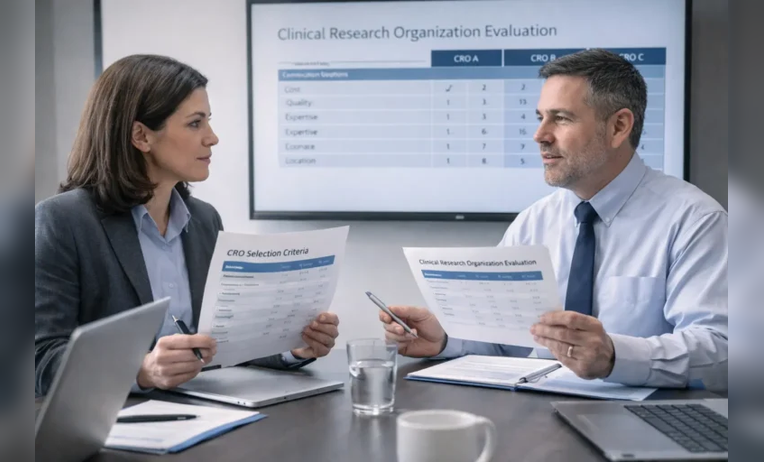

Introduction: Why CRO Selection Has Become a Strategic Priority
The pharmaceutical, biotechnology, and medical device industries are operating in an environment where speed, quality, compliance, and innovation must coexist. Clinical trials are becoming increasingly complex, regulatory expectations continue to evolve, and competition to bring products to market is greater than ever.
In this landscape, CRO Selection and Qualification is no longer simply a vendor management activity. It is a strategic process that directly influences clinical trial outcomes, regulatory success, patient safety, and overall development timelines.
Many organizations begin their search by looking for a clinical research organization near me, clinical research companies near me, contract research organization near me, or clinical trial companies near me. While these searches can help identify potential vendors, true qualification requires a much deeper assessment of operational capabilities, quality systems, expertise, and long-term partnership value.
Organizations that implement a structured CRO qualification framework are often better positioned to achieve successful clinical and commercial outcomes.
The Growing Importance of CRO Partnerships
Over the past decade, outsourcing has become a cornerstone of clinical development.
Contract Research Organizations now support virtually every stage of product development, including:
- Clinical operations
- Site management
- Patient recruitment
- Data management
- Regulatory affairs
- Medical writing
- Pharmacovigilance
- Biostatistics
- Quality assurance
As sponsors perform a cro company search, they often encounter hundreds of potential providers with varying levels of expertise and specialization.
Selecting the right partner requires more than comparing proposals—it requires understanding which CRO can best support the organization’s strategic goals.
Step 1: Define Clinical Program Requirements
The first stage of effective CRO selection begins internally.
Sponsors should establish:
Development Objectives
Clearly define regulatory and clinical goals.
Study Scope
Consider:
- Trial phase
- Number of sites
- Patient population
- Geographic coverage
Outsourcing Strategy
Determine which activities will be outsourced and which will remain in-house.
Organizations evaluating clinical research organizations near me often achieve better results when they clearly define requirements before initiating vendor discussions.
Step 2: Identify Potential CRO Candidates
After defining requirements, sponsors can begin identifying potential vendors.
Common searches include:
- clinical research companies near me
- clinical research organization near me
- contract research organizations near me
- contract research organization near me
- cro near me
- cros near me
- cro’s near me
While location can provide certain advantages, expertise and operational capabilities should remain the primary selection criteria.
A local CRO is not always the most qualified CRO.
Step 3: Evaluate Therapeutic and Scientific Expertise
One of the strongest indicators of future performance is prior experience.
Sponsors should assess expertise in relevant therapeutic areas such as:
Oncology
Complex study designs and specialized patient populations.
Rare Diseases
Global recruitment and regulatory considerations.
Neurology
Long-duration studies and complex assessments.
Medical Devices
Unique compliance and regulatory pathways.
A CRO with relevant therapeutic expertise often requires less onboarding and delivers stronger operational performance.
Step 4: Assess Quality Systems and Compliance Programs
Quality systems form the foundation of successful clinical execution.
Sponsors should review:
Standard Operating Procedures
Well-documented procedures support consistency and compliance.
Training Programs
Employees should receive role-specific and ongoing training.
CAPA Systems
Corrective and preventive action programs demonstrate organizational maturity.
Inspection Readiness
Preparation for regulatory inspections should be embedded within operational processes.
Organizations conducting a cro company search should prioritize quality system assessments during qualification activities.
Step 5: Conduct Detailed CRO Qualification Audits
Audits provide direct insight into how a CRO operates.
Qualification audits often evaluate:
Clinical Operations
Study management practices and monitoring procedures.
Data Management
Controls supporting data quality and integrity.
Regulatory Affairs
Submission processes and compliance programs.
Information Technology
Validation, cybersecurity, and system controls.
Vendor Oversight
Management of subcontractors and third-party suppliers.
Audits help sponsors verify that documented procedures are effectively implemented in practice.
Step 6: Evaluate Technology and Digital Capabilities
Technology now plays a central role in clinical trial execution.
Sponsors should assess:
Clinical Trial Management Systems
Providing project visibility and operational control.
Electronic Data Capture Platforms
Supporting efficient data collection.
Risk-Based Monitoring Solutions
Improving oversight efficiency.
Analytics and Reporting Tools
Enabling informed decision-making.
Technology capabilities can significantly influence study performance and sponsor oversight effectiveness.
Step 7: Establish Ongoing Performance Monitoring
Qualification should continue throughout the partnership.
Effective oversight includes:
Performance Reviews
Evaluating operational performance against expectations.
Governance Meetings
Supporting communication and issue resolution.
Quality Metrics
Monitoring deviations, CAPAs, and audit findings.
Resource Management
Assessing staffing stability and continuity.
Continuous monitoring helps maintain accountability and improve long-term outcomes.
Why CRO Qualification Matters for Biotechnology Companies
Emerging biotechnology organizations face unique challenges.
Many startup teams begin by searching:
- biotechs near me
- biotech lab near me
- bioengineering companies near me
Because these organizations often have limited internal resources, selecting the right CRO becomes especially important.
An experienced CRO can provide:
- Clinical expertise
- Regulatory guidance
- Strategic planning
- Vendor coordination
- Project management
For many biotech companies, CROs become trusted extensions of internal development teams.
Common CRO Selection Mistakes to Avoid
Even experienced sponsors can encounter challenges during vendor selection.
Selecting Based on Cost Alone
Lower-cost proposals do not always represent better value.
Ignoring Quality Systems
Weak quality programs can create significant compliance risks.
Failing to Perform Audits
Incomplete due diligence increases uncertainty.
Overlooking Cultural Alignment
Strong partnerships depend on effective communication and collaboration.
Prioritizing Geography Over Expertise
Organizations searching for a contract research organization near me should ensure expertise remains the primary decision factor.
Emerging Trends Influencing CRO Selection
The future of clinical research continues to evolve rapidly.
Several trends are reshaping qualification strategies.
Artificial Intelligence
AI is improving analytics, forecasting, and operational efficiency.
Decentralized Clinical Trials
Remote participation technologies are expanding patient access.
Real-World Evidence
Additional data sources are influencing clinical development strategies.
Global Clinical Programs
Sponsors increasingly require CROs capable of supporting multinational studies.
Organizations evaluating clinical trial companies near me should consider whether vendors possess the capabilities necessary to support future industry trends.
How Risk-Based Qualification Improves CRO Oversight
Risk-based qualification focuses resources on vendors and activities with the greatest potential impact.
Assessment criteria often include:
Service Criticality
Impact on patient safety and data quality.
Regulatory Exposure
Potential compliance implications.
Operational Complexity
Scope and complexity of outsourced activities.
Geographic Reach
Multi-country operations may require additional oversight.
Risk-based methodologies improve efficiency while maintaining strong governance and compliance controls.
The Long-Term Value of Effective CRO Selection and Qualification
Organizations that invest in robust CRO Selection and Qualification programs often experience significant long-term benefits.
These include:
- Faster clinical timelines
- Reduced operational risk
- Improved study quality
- Better regulatory readiness
- Enhanced sponsor oversight
- Stronger vendor accountability
Whether sponsors are evaluating a clinical research organization near me, researching clinical research companies near me, comparing clinical research organizations near me, assessing a contract research organization near me, reviewing contract research organizations near me, searching for cro near me, or conducting a comprehensive cro company search, a structured qualification process remains essential.
The right CRO partnership can become a competitive advantage that supports successful development programs from first patient enrollment through regulatory approval.
Frequently Asked Questions
What is CRO Selection and Qualification?
CRO Selection and Qualification is the process of identifying, evaluating, auditing, approving, and monitoring a Contract Research Organization before outsourcing clinical development activities.
Why is CRO qualification important?
Qualification helps ensure that a CRO possesses the expertise, quality systems, resources, and compliance controls necessary for successful clinical trial execution.
How do organizations identify CRO partners?
Many companies begin by searching for clinical research organization near me, clinical research companies near me, or contract research organizations near me, followed by structured vendor evaluations.
What should be included in a CRO qualification audit?
Audits should evaluate clinical operations, data integrity, regulatory compliance, quality systems, technology infrastructure, and vendor management practices.
Why are quality systems important during CRO selection?
Quality systems help ensure consistency, compliance, patient safety, and reliable clinical data.
How often should CRO performance be reviewed?
Performance should be monitored continuously through governance meetings, KPI reviews, audits, and quality assessments.
Why do biotech companies depend heavily on CROs?
Many biotech organizations lack extensive internal infrastructure and rely on CROs for operational expertise and regulatory support.
What risks can result from poor CRO selection?
Potential risks include delays, compliance findings, increased costs, poor-quality data, and unsuccessful clinical outcomes.
How does technology influence CRO qualification?
Technology supports efficient trial management, data integrity, reporting, oversight, and regulatory compliance.
What is the biggest benefit of structured CRO qualification?
Structured qualification helps sponsors identify CRO partners capable of delivering high-quality, compliant, and efficient clinical trial execution.