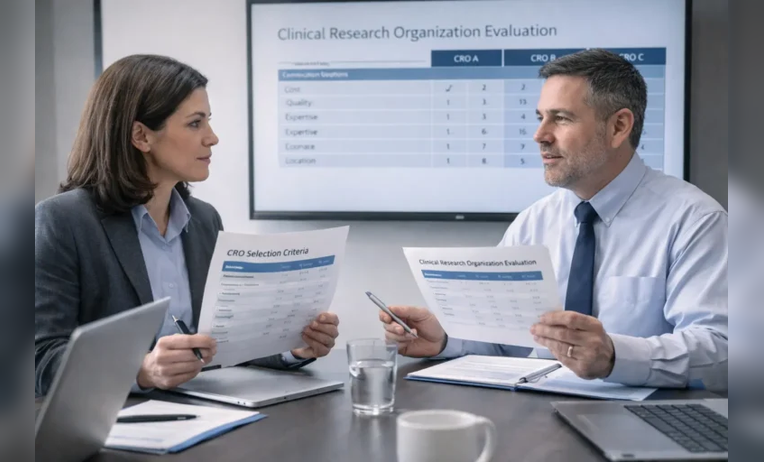

Why CRO Selection Can Make or Break a Clinical Development Program
The clinical research industry continues to evolve at an unprecedented pace. Sponsors face increasing pressure to reduce development timelines, control costs, ensure regulatory compliance, and bring innovative therapies to patients faster than ever before. In this environment, selecting the right Contract Research Organization (CRO) is no longer a procurement activity, it is a strategic business decision.
This is where CRO Selection and Qualification becomes critical. A well-qualified CRO can improve operational efficiency, strengthen compliance, support patient recruitment, and help sponsors achieve successful clinical outcomes. Conversely, an unsuitable CRO can contribute to delays, quality issues, budget overruns, and regulatory findings.
Organizations often begin their evaluation process by searching for clinical research companies near me, clinical research organization near me, contract research organizations near me, or clinical research organizations near me. While these searches provide an initial list of potential vendors, a structured qualification framework is essential for identifying the best long-term partner.
The Growing Demand for Qualified CRO Partners
The outsourcing market has expanded dramatically as pharmaceutical and biotechnology companies seek specialized expertise and operational flexibility.
Today’s CROs provide support across:
- Clinical operations
- Regulatory affairs
- Data management
- Medical writing
- Biostatistics
- Pharmacovigilance
- Quality assurance
- Site monitoring
- Vendor oversight
When organizations perform a cro company search, they often discover hundreds of potential providers. The challenge lies in determining which CRO possesses the experience, infrastructure, and quality systems necessary to support a specific clinical development program.
The most successful sponsors focus on qualification rather than simply vendor selection.
Strategy 1: Define Clinical Development Objectives Before Evaluating CROs
Many organizations rush into vendor evaluations before clearly defining project requirements.
Before searching for a contract research organization near me, sponsors should identify:
Development Goals
- Regulatory milestones
- Product development objectives
- Commercial timelines
Clinical Scope
- Phase of development
- Number of sites
- Patient population
- Geographic regions
Internal Resources
Understanding internal capabilities helps determine which activities should be outsourced.
Clear objectives create a more effective and objective selection process.
Strategy 2: Prioritize Expertise Over Location
Local searches remain common.
Organizations frequently look for:
- cro near me
- cros near me
- cro’s near me
- clinical research companies near me
While geographic proximity can improve communication and collaboration, expertise should remain the primary selection criterion.
The best CRO may not be the closest CRO.
Sponsors should prioritize:
- Therapeutic knowledge
- Regulatory experience
- Quality systems
- Clinical capabilities
These factors have a greater impact on study success than physical location.
Strategy 3: Evaluate Therapeutic Area Experience
Every therapeutic area presents unique operational and regulatory challenges.
Sponsors should verify experience in:
Oncology
Complex protocols and specialized site requirements.
Rare Diseases
Patient recruitment challenges and global enrollment strategies.
Neurology
Long study durations and specialized assessments.
Medical Devices
Unique regulatory pathways and compliance requirements.
Relevant experience often translates into faster startup times and improved execution.
Strategy 4: Assess Quality Management Systems Thoroughly
Quality systems remain one of the strongest indicators of CRO performance.
During qualification, sponsors should review:
Standard Operating Procedures
Documented procedures demonstrate operational consistency.
Training Programs
Employees should maintain role-specific qualifications.
CAPA Processes
Effective corrective and preventive actions support continuous improvement.
Internal Audits
Routine audits indicate proactive quality oversight.
Organizations evaluating clinical research organizations near me should place significant emphasis on quality system maturity.
Strategy 5: Conduct Comprehensive Vendor Audits
Audits provide insight that cannot be obtained through proposals or marketing presentations.
A qualification audit may evaluate:
Clinical Operations
Study management processes and monitoring practices.
Regulatory Compliance
Inspection readiness and compliance controls.
Data Integrity
Systems that protect data accuracy and reliability.
Vendor Management
Oversight of subcontractors and third-party suppliers.
Audit results often influence final qualification decisions.
Strategy 6: Evaluate Technology Infrastructure
Clinical research is becoming increasingly technology-driven.
Sponsors should assess:
Electronic Data Capture Systems
Supporting accurate and efficient data collection.
Clinical Trial Management Systems
Providing operational visibility and reporting.
Risk-Based Monitoring Platforms
Improving oversight while reducing unnecessary effort.
Data Analytics Capabilities
Supporting real-time decision-making.
Technology maturity often differentiates high-performing CROs from average providers.
Strategy 7: Implement Risk-Based Qualification
Regulatory agencies encourage sponsors to focus qualification activities on higher-risk vendors and services.
Risk assessments typically consider:
Service Criticality
Impact on patient safety and data quality.
Regulatory Exposure
Potential compliance implications.
Operational Complexity
Complex activities often require additional oversight.
Geographic Reach
Global studies introduce additional challenges and risks.
Risk-based qualification improves efficiency while strengthening compliance.
Strategy 8: Evaluate Financial and Organizational Stability
A CRO relationship often spans several years.
Sponsors should assess:
- Financial performance
- Leadership experience
- Growth trends
- Employee retention
- Strategic direction
Stability helps ensure continuity throughout the clinical development lifecycle.
Organizations conducting a cro company search should include financial due diligence as part of qualification activities.
Strategy 9: Consider the Needs of Emerging Biotech Companies
Startup and emerging biotechnology companies often face unique challenges.
Many founders search for:
- biotech lab near me
- biotechs near me
- bioengineering companies near me
These organizations frequently require partners capable of providing strategic guidance in addition to operational execution.
An effective CRO can support:
- Development planning
- Regulatory strategy
- Study management
- Vendor coordination
- Clinical oversight
For many biotech companies, CROs function as extensions of internal teams.
Strategy 10: Establish Ongoing CRO Performance Monitoring
Qualification should continue throughout the relationship.
Performance monitoring may include:
Enrollment Metrics
Tracking recruitment progress and patient retention.
Timeline Performance
Measuring milestone achievement.
Quality Indicators
Monitoring deviations, CAPAs, and audit findings.
Communication Effectiveness
Assessing responsiveness and issue resolution.
Continuous oversight supports accountability and continuous improvement.
Emerging Trends Influencing CRO Selection
The future of clinical research is rapidly changing.
Several industry trends are reshaping CRO qualification practices.
Artificial Intelligence
AI is improving forecasting, analytics, and operational efficiency.
Decentralized Clinical Trials
Remote participation technologies are transforming study execution.
Real-World Evidence
Expanded data sources are supporting more informed decisions.
Global Clinical Development
Sponsors increasingly require CROs capable of supporting multinational programs.
Organizations evaluating clinical trial companies near me should ensure potential partners possess the flexibility to adapt to these evolving requirements.
The Competitive Advantage of Structured CRO Qualification
Organizations that invest in robust CRO Selection and Qualification programs consistently experience better outsourcing outcomes.
Benefits include:
- Reduced operational risk
- Improved study quality
- Stronger compliance
- Faster timelines
- Better vendor accountability
- Increased stakeholder confidence
Whether sponsors are evaluating a clinical research organization near me, researching clinical research companies near me, comparing clinical research organizations near me, reviewing a contract research organization near me, assessing contract research organizations near me, or performing a comprehensive cro company search, structured qualification remains one of the most valuable investments a life sciences organization can make.
The right CRO partnership can accelerate innovation, improve clinical trial performance, and support long-term business growth.
Frequently Asked Questions (FAQs)
What is CRO Selection and Qualification?
CRO Selection and Qualification is the structured process of identifying, evaluating, auditing, and approving a Contract Research Organization before outsourcing clinical research activities.
Why is CRO qualification important?
Qualification helps ensure that a CRO possesses the expertise, systems, resources, and compliance controls necessary to support successful clinical development.
How do companies find CRO partners?
Organizations commonly search for clinical research organization near me, clinical research companies near me, or contract research organizations near me, then conduct detailed evaluations and audits.
What should sponsors evaluate during CRO selection?
Sponsors should assess therapeutic expertise, quality systems, regulatory experience, technology infrastructure, operational capabilities, and financial stability.
Are CRO audits required?
While not always mandatory, qualification audits are considered a best practice because they provide direct visibility into quality systems and operational controls.
How often should CRO performance be reviewed?
Performance should be monitored continuously throughout the engagement using KPIs, governance reviews, audits, and quality metrics.
Why do biotech startups rely heavily on CROs?
Many startups lack extensive internal infrastructure and depend on CROs for clinical expertise, regulatory guidance, and operational execution.
What are the risks of selecting the wrong CRO?
Risks include delayed timelines, budget overruns, compliance findings, poor data quality, and unsuccessful clinical outcomes.
How does technology affect CRO qualification?
Technology influences data integrity, operational efficiency, reporting capabilities, and regulatory compliance, making it a critical evaluation factor.
How can structured CRO qualification improve clinical trial success?
Qualification helps sponsors select partners that possess the expertise, quality systems, and operational maturity needed to execute clinical programs successfully.