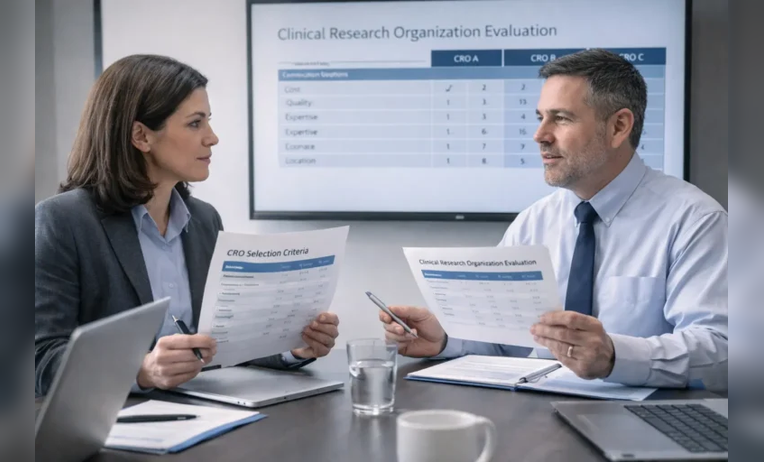

Introduction: Why the Right CRO Partnership Matters
Clinical research has become increasingly sophisticated, requiring sponsors to manage complex regulatory expectations, global operations, emerging technologies, and growing patient recruitment challenges. To navigate this environment effectively, many pharmaceutical, biotechnology, and medical device companies rely on Contract Research Organizations (CROs) for specialized expertise and operational support.
However, outsourcing alone does not guarantee success. Organizations must establish a structured CRO Selection and Qualification process to ensure that the chosen partner can deliver quality, compliance, and operational excellence throughout the clinical development lifecycle.
Many sponsors begin their search using terms such as clinical research companies near me, clinical research organization near me, contract research organization near me, or clinical research organizations near me. While these searches help identify potential providers, selecting the best CRO requires a comprehensive evaluation of capabilities, experience, quality systems, and long-term partnership potential.
A strategic qualification process helps organizations reduce risk, improve study execution, and support successful regulatory outcomes.
The Evolving Role of CROs in Clinical Research
The role of CROs has expanded significantly over the past two decades. What began primarily as outsourced monitoring and operational support has evolved into full-service partnerships that contribute to nearly every aspect of clinical development.
Today’s CROs may support:
- Clinical strategy
- Protocol development
- Site management
- Patient recruitment
- Regulatory submissions
- Data management
- Biostatistics
- Pharmacovigilance
- Quality assurance
Organizations conducting a cro company search are often evaluating providers that offer highly specialized expertise across different stages of product development.
As clinical programs become more complex, selecting the right CRO becomes increasingly important.
Understanding the Business Value of CRO Qualification
Many organizations focus heavily on vendor selection but underestimate the importance of qualification.
Qualification provides assurance that the selected CRO can consistently perform according to sponsor expectations and regulatory requirements.
Benefits of qualification include:
Improved Regulatory Compliance
Qualified CROs maintain systems designed to support compliance with applicable regulations and industry standards.
Better Operational Performance
Thorough evaluations help identify providers capable of delivering consistent project execution.
Reduced Risk Exposure
Qualification activities help uncover potential operational, quality, and compliance risks before study initiation.
Stronger Vendor Relationships
A structured process establishes expectations and accountability from the beginning of the partnership.
Starting the CRO Selection Process
A successful selection process begins with understanding organizational needs.
Before evaluating vendors, sponsors should define:
Clinical Objectives
Clear development goals guide vendor selection decisions.
Study Complexity
The level of complexity influences the expertise required from a CRO partner.
Geographic Scope
Organizations searching for contract research organizations near me may initially prioritize local providers, while multinational studies may require global capabilities.
Resource Requirements
Sponsors should determine which activities will be outsourced and which will remain internal.
Defining these requirements helps narrow the list of potential vendors.
What to Look for During CRO Evaluation
A comprehensive evaluation examines multiple dimensions of organizational capability.
Therapeutic Expertise
Relevant experience within a specific therapeutic area can improve efficiency and reduce learning curves.
Sponsors should assess experience in areas such as:
- Oncology
- Neurology
- Rare diseases
- Infectious diseases
- Medical devices
- Cell and gene therapy
Regulatory Knowledge
The selected CRO should demonstrate familiarity with:
- FDA requirements
- Global clinical regulations
- GCP guidelines
- Inspection readiness expectations
Operational Infrastructure
Organizations should evaluate:
- Project management systems
- Monitoring capabilities
- Data management resources
- Technology platforms
Organizational Stability
Long-term financial and operational stability is particularly important for multi-year clinical programs.
Why Local CRO Searches Continue to Grow
Many companies begin the selection process with local searches.
Common search terms include:
- cro near me
- cros near me
- cro’s near me
- clinical research companies near me
- clinical research organization near me
These searches often reflect a desire for:
- Easier communication
- Local expertise
- Regional regulatory knowledge
- Faster response times
While proximity may provide certain advantages, sponsors should prioritize expertise, quality systems, and operational capability over location alone.
The most suitable CRO is not always the closest one.
Quality Systems: The Foundation of CRO Qualification
One of the most important aspects of qualification is assessing the CRO’s quality management system.
Quality systems provide assurance that processes are controlled, documented, and continuously improved.
Critical areas include:
Standard Operating Procedures
Well-developed SOPs support consistency across operations.
Training Programs
Employees should receive ongoing training appropriate to their responsibilities.
CAPA Management
Effective corrective and preventive action programs demonstrate organizational maturity.
Internal Audits
Routine audits help identify and address issues proactively.
Strong quality systems often correlate with stronger project performance and regulatory readiness.
The Importance of Vendor Audits
Audits provide direct insight into a CRO’s operational environment.
Qualification audits commonly assess:
Clinical Operations
Reviewing study management processes and monitoring practices.
Data Integrity
Evaluating controls surrounding data collection, management, and reporting.
Regulatory Affairs
Assessing compliance practices and inspection preparedness.
Information Technology
Reviewing system validation, cybersecurity, and access controls.
Audit findings help sponsors make informed vendor selection decisions.
CRO Selection Challenges for Emerging Biotech Organizations
Early-stage companies often face unique challenges when selecting clinical partners.
Many founders begin by researching:
- biotechs near me
- biotech lab near me
- bioengineering companies near me
These searches help build industry networks and identify potential collaborators.
Because startups typically operate with smaller teams and limited resources, CRO partnerships become particularly important.
A qualified CRO can provide:
- Strategic guidance
- Regulatory expertise
- Operational execution
- Risk management support
For many biotechnology companies, CROs effectively serve as extensions of internal development teams.
Creating a Risk-Based Qualification Strategy
Risk-based approaches have become a central component of modern vendor oversight.
Sponsors evaluate risk according to:
Service Criticality
How significantly the service affects patient safety and data quality.
Regulatory Impact
The degree of regulatory exposure associated with outsourced activities.
Operational Complexity
The complexity of processes being managed by the CRO.
Geographic Considerations
Multi-country studies often introduce additional oversight requirements.
Risk assessments help organizations prioritize qualification activities and allocate oversight resources effectively.
Essential Performance Metrics for CRO Oversight
Qualification should continue throughout the partnership.
Organizations should monitor performance using measurable indicators.
Important metrics include:
Enrollment Success
Tracking recruitment and retention performance.
Timeline Adherence
Evaluating milestone achievement and project delivery.
Quality Indicators
Reviewing deviations, findings, CAPAs, and audit outcomes.
Communication Effectiveness
Measuring responsiveness and issue resolution.
Resource Stability
Assessing staff turnover and project continuity.
Continuous performance monitoring helps maintain accountability and support long-term success.
Global Trends Affecting CRO Selection
The CRO industry continues to evolve in response to new scientific and technological developments.
Several trends are reshaping qualification strategies.
Decentralized Clinical Trials
Remote participation models are expanding access to research.
Artificial Intelligence
AI is helping improve forecasting, monitoring, and operational efficiency.
Real-World Evidence
Additional data sources are influencing study design and decision-making.
Digital Transformation
Advanced technologies continue to improve data collection and analysis.
Organizations evaluating clinical trial companies near me increasingly assess digital capabilities alongside traditional operational expertise.
Building Long-Term CRO Partnerships
The most successful clinical programs are often supported by strong sponsor-CRO relationships.
Effective partnerships are built on:
- Transparency
- Trust
- Communication
- Accountability
- Continuous improvement
Sponsors that invest in comprehensive CRO Selection and Qualification processes establish stronger foundations for long-term collaboration.
Whether evaluating a clinical research organization near me, comparing clinical research companies near me, reviewing clinical research organizations near me, assessing contract research organizations near me, researching a contract research organization near me, searching for cro near me, or conducting a detailed cro company search, a disciplined qualification process remains essential.
The right CRO can accelerate development, strengthen compliance, improve study quality, and contribute significantly to clinical and commercial success.
Frequently Asked Questions
What is CRO Selection and Qualification?
CRO Selection and Qualification is the process of identifying, evaluating, auditing, and approving a Contract Research Organization before outsourcing clinical development activities.
Why is CRO qualification important?
Qualification helps ensure that a CRO has the systems, expertise, resources, and compliance controls necessary to support successful clinical research programs.
How do companies identify potential CRO partners?
Organizations often start with searches such as clinical research companies near me, clinical research organization near me, or contract research organizations near me before conducting formal evaluations.
What should be reviewed during CRO qualification?
Sponsors typically review quality systems, operational capabilities, regulatory history, staffing, technology infrastructure, and financial stability.
Are qualification audits necessary?
Yes. Audits provide valuable insight into operational practices, compliance controls, and overall organizational maturity.
How often should CRO performance be monitored?
Performance should be monitored throughout the relationship using predefined metrics and periodic reviews.
Why do biotech startups rely heavily on CROs?
Many startups lack extensive internal clinical resources and depend on CROs for specialized expertise and operational support.
What risks are associated with poor CRO selection?
Potential risks include delays, quality issues, compliance findings, increased costs, and unsuccessful study outcomes.
Can local CROs support international trials?
Some local CROs have global capabilities, while others focus primarily on regional operations. Sponsors should evaluate capabilities based on project requirements.
How does CRO qualification support clinical trial success?
Qualification helps ensure that selected CROs possess the expertise, systems, and operational maturity necessary to execute clinical programs effectively and compliantly.