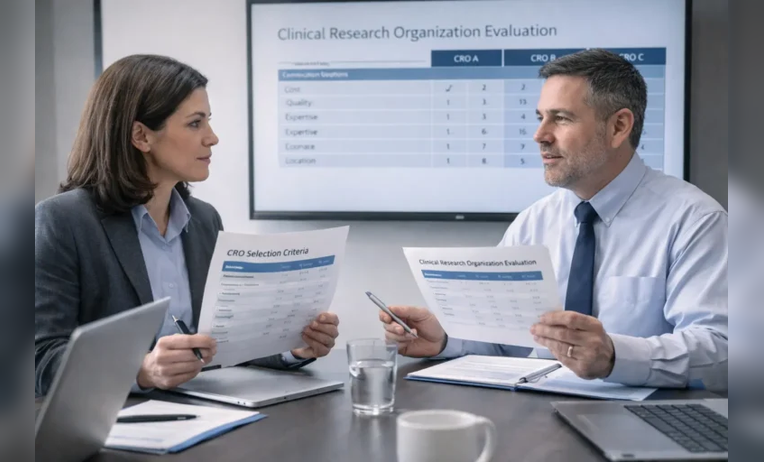

Clinical Development Success Starts with the Right Partner
In today’s competitive life sciences environment, organizations face mounting pressure to bring innovative therapies, medical devices, and healthcare solutions to market faster while maintaining regulatory compliance and operational excellence. One of the most important decisions sponsors make during this process is selecting the right Contract Research Organization (CRO).
A structured CRO Selection and Qualification process helps pharmaceutical companies, biotechnology firms, and medical device manufacturers identify research partners capable of delivering high-quality clinical services while minimizing operational and regulatory risks.
Organizations often begin their search using terms such as clinical research companies near me, clinical research organization near me, contract research organization near me, or clinical trial companies near me. While these searches provide an initial starting point, successful CRO selection requires a much deeper evaluation of capabilities, quality systems, expertise, and long-term partnership potential.
The organizations that invest in thorough CRO qualification processes are often better positioned to achieve successful clinical trial outcomes and regulatory milestones.
Understanding the Role of a Contract Research Organization
A CRO serves as a strategic extension of a sponsor’s internal team. These organizations provide specialized services that support clinical development activities from early planning through study completion.
Typical CRO services may include:
- Clinical trial management
- Site monitoring
- Data management
- Biostatistics
- Medical writing
- Regulatory support
- Pharmacovigilance
- Quality assurance
- Vendor management
Companies conducting a cro company search often discover a broad range of service providers, from boutique specialist firms to global organizations managing multinational clinical programs.
Selecting the right CRO depends on matching organizational capabilities with project-specific requirements.
Why CRO Selection Has Become More Complex
The clinical research industry has changed dramatically over the past decade.
Several factors contribute to the growing complexity of CRO selection:
Global Clinical Trials
Modern studies frequently involve multiple countries, languages, and regulatory authorities.
Regulatory Expectations
Health authorities continue to strengthen expectations around vendor oversight and sponsor accountability.
Advanced Technologies
Clinical programs increasingly rely on digital systems and data-driven decision-making.
Specialized Therapeutic Areas
Emerging treatment modalities require highly specialized expertise and infrastructure.
As a result, organizations searching for clinical research organizations near me must evaluate far more than proximity when selecting a CRO partner.
Building a Strategic CRO Selection Process
Successful vendor selection begins with careful planning.
Step 1: Define Program Objectives
Organizations should clearly identify:
- Clinical goals
- Regulatory objectives
- Study timelines
- Budget expectations
- Geographic requirements
Clear objectives create a stronger foundation for evaluating potential CRO partners.
Step 2: Develop Evaluation Criteria
Selection criteria should be aligned with project needs and business priorities.
Typical categories include:
- Quality systems
- Regulatory experience
- Therapeutic expertise
- Operational capabilities
- Technology infrastructure
- Financial stability
Step 3: Identify Potential CRO Candidates
Many sponsors begin by evaluating:
- clinical research companies near me
- contract research organizations near me
- clinical research organizations near me
- clinical trial companies near me
This initial screening process helps create a shortlist of qualified candidates.
The Importance of CRO Qualification
Selection identifies potential vendors. Qualification verifies that they can perform successfully.
Qualification activities typically include:
Documentation Review
Organizations evaluate:
- Standard operating procedures
- Quality manuals
- Training records
- Compliance programs
Capability Assessments
Sponsors review:
- Clinical expertise
- Staffing models
- Technology platforms
- Project management approaches
Vendor Audits
Audits provide direct visibility into operational practices and quality systems.
Risk Assessments
Organizations evaluate potential risks associated with outsourced activities.
These activities help ensure that selected CROs possess the capabilities necessary to support successful clinical execution.
Key Areas to Assess During CRO Qualification
A comprehensive qualification process examines multiple operational areas.
Quality Management Systems
Quality systems form the foundation of regulatory compliance.
Sponsors should review:
- SOP structures
- CAPA programs
- Internal audit processes
- Training systems
- Quality metrics
Clinical Operations
Operational assessments evaluate the CRO’s ability to manage clinical programs effectively.
Important considerations include:
- Site management experience
- Monitoring capabilities
- Patient recruitment support
- Project governance
Regulatory Affairs
Regulatory expertise remains a critical selection factor.
Organizations should assess experience with:
- FDA requirements
- EMA expectations
- Health authority interactions
- Submission support
Data Integrity Controls
Reliable clinical data is essential for successful development programs.
Sponsors should evaluate:
- Data management procedures
- System validation practices
- Security controls
- Reporting capabilities
Why Biotech Companies Need Strong CRO Partnerships
Emerging biotechnology companies often face significant resource limitations.
Many startups begin their industry research by searching for biotechs near me, biotech lab near me, or bioengineering companies near me as they build development networks and strategic partnerships.
Unlike larger pharmaceutical organizations, smaller companies frequently rely on CROs for:
- Clinical expertise
- Regulatory guidance
- Program management
- Quality oversight
Selecting the right CRO becomes particularly important because outsourced partners may handle a substantial portion of clinical development activities.
A strong CRO relationship can significantly improve operational efficiency while supporting long-term growth objectives.
Evaluating CRO Experience and Expertise
Experience should be assessed beyond years in operation.
Sponsors should evaluate:
Therapeutic Area Knowledge
Relevant experience often leads to more efficient trial execution.
Regulatory Track Record
Inspection histories and compliance outcomes provide valuable insights into organizational maturity.
Clinical Trial Experience
Reviewing previous studies helps assess operational capability.
Specialized Services
Some projects require expertise in:
- Rare diseases
- Oncology
- Medical devices
- Gene therapy
- Precision medicine
Organizations searching for a contract research organization near me should prioritize demonstrated expertise over simple geographic proximity.
Common Challenges During CRO Selection
Several challenges frequently arise during the vendor selection process.
Too Many Vendor Options
Sponsors evaluating cros near me or cro’s near me often encounter numerous providers with similar marketing claims.
Inconsistent Evaluation Methods
Without standardized criteria, vendor comparisons become difficult.
Resource Constraints
Internal teams may lack the time required for comprehensive evaluations.
Limited Visibility into Quality Systems
Quality issues are not always apparent during early discussions.
A structured qualification framework helps address these challenges.
Risk-Based Approaches to Vendor Qualification
Regulatory agencies increasingly encourage risk-based oversight models.
Risk-based qualification focuses attention on activities that could significantly impact:
- Patient safety
- Product quality
- Data reliability
- Regulatory compliance
Vendor Classification
Organizations may categorize vendors as:
- High risk
- Moderate risk
- Low risk
Oversight Strategies
Different risk categories require different levels of oversight.
High-risk vendors often require:
- On-site audits
- Frequent reviews
- Additional monitoring
This approach improves efficiency while maintaining strong compliance controls.
Measuring CRO Performance Throughout the Partnership
Qualification is not a one-time event.
Continuous oversight helps ensure that performance remains aligned with expectations.
Performance indicators may include:
Enrollment Performance
Tracking patient recruitment and retention.
Milestone Achievement
Monitoring schedule adherence.
Quality Outcomes
Reviewing deviations, findings, and corrective actions.
Communication Effectiveness
Evaluating responsiveness and issue resolution.
Ongoing performance reviews help strengthen sponsor-CRO relationships over time.
Future Trends in CRO Qualification
The clinical research industry continues to evolve rapidly.
Several trends are influencing CRO evaluation strategies.
Artificial Intelligence
AI-driven tools are improving forecasting, analytics, and operational planning.
Decentralized Trial Models
Remote technologies are expanding access to clinical research participation.
Advanced Data Analytics
Organizations increasingly rely on real-time data for decision-making.
Global Vendor Networks
Many sponsors now require CROs capable of supporting multinational development programs.
These trends are reshaping how sponsors evaluate and qualify clinical research partners.
Creating Long-Term Value Through Effective CRO Selection
Successful outsourcing begins long before a clinical trial starts. It begins with selecting the right partner.
Whether organizations are evaluating a clinical research organization near me, researching clinical research companies near me, comparing contract research organizations near me, assessing a contract research organization near me, reviewing clinical research organizations near me, exploring cro near me, analyzing cro’s near me, or conducting a comprehensive cro company search, a structured CRO Selection and Qualification strategy remains essential.
By focusing on quality, compliance, expertise, and operational excellence, sponsors can build partnerships that support successful clinical development and long-term business growth.
The right CRO does more than execute tasks—it becomes a trusted strategic partner that contributes directly to development success.
Frequently Asked Questions
What is CRO Selection and Qualification?
CRO Selection and Qualification is the structured process of evaluating, auditing, and approving a Contract Research Organization before outsourcing clinical development activities.
Why is CRO qualification important for clinical trials?
Qualification helps ensure that the selected CRO has appropriate expertise, quality systems, and regulatory controls to support successful clinical trial execution.
How do sponsors find CROs?
Many organizations begin by searching terms such as clinical research companies near me, clinical research organization near me, or contract research organizations near me before conducting formal evaluations.
What should be reviewed during a CRO audit?
Audits typically assess quality management systems, SOPs, training records, compliance processes, technology controls, and operational capabilities.
How often should CRO performance be reviewed?
Performance reviews should occur regularly throughout the partnership using predefined quality, timeline, and operational metrics.
What are the risks of selecting the wrong CRO?
Potential risks include project delays, compliance findings, increased costs, poor data quality, and missed development milestones.
Why do biotech startups rely heavily on CROs?
Many startups lack extensive internal clinical infrastructure and depend on CROs for expertise, execution, regulatory support, and operational management.
How does CRO qualification support regulatory compliance?
Qualification verifies that a CRO maintains appropriate systems, processes, and controls to operate in accordance with applicable regulations and industry standards.
What makes a CRO a strong long-term partner?
Strong CROs demonstrate quality, transparency, expertise, communication, scalability, and a commitment to continuous improvement.
How can sponsors improve CRO selection outcomes?
Organizations can improve outcomes by implementing structured evaluation criteria, conducting thorough qualification activities, and maintaining ongoing vendor oversight.