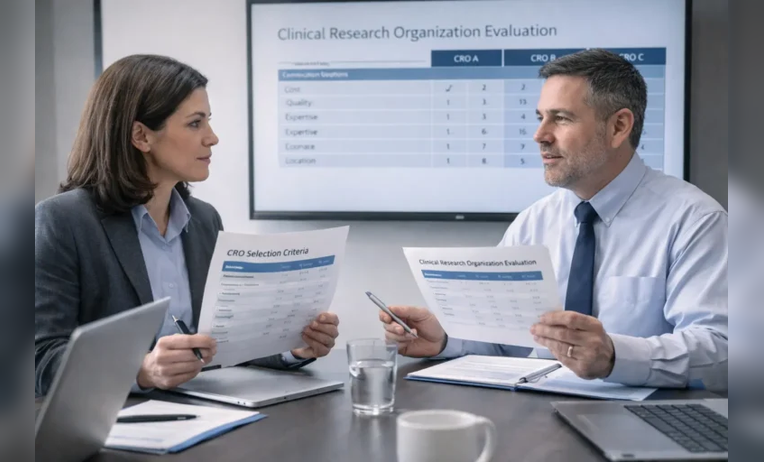

Introduction
Bringing a new therapy, biologic, medical device, or innovative healthcare solution to market requires years of research, substantial investment, and flawless execution. While scientific innovation often receives the most attention, one critical factor frequently determines whether a clinical program succeeds or fails: selecting the right Contract Research Organization (CRO).
This is why CRO Selection and Qualification has become one of the most important activities within modern clinical development. Sponsors that invest in a structured CRO qualification process are better positioned to reduce risk, improve trial efficiency, maintain regulatory compliance, and accelerate development timelines.
Today, organizations often begin their search by looking for a clinical research organization near me, clinical research companies near me, clinical research organizations near me, or a contract research organization near me. However, choosing a CRO requires far more than identifying nearby providers. It requires a strategic evaluation of expertise, operational maturity, quality systems, and long-term partnership potential.
As clinical trials become increasingly complex, the ability to identify and qualify the right CRO has become a competitive advantage for pharmaceutical companies, biotechnology firms, and life sciences organizations worldwide.
What Is CRO Selection and Qualification?
CRO Selection and Qualification is the structured process of identifying, evaluating, auditing, approving, and monitoring Contract Research Organizations before outsourcing clinical development activities.
The process helps sponsors answer several important questions:
- Can the CRO support our development goals?
- Does the CRO possess the required expertise?
- Are quality systems robust and compliant?
- Can the CRO scale as our program grows?
- Does the organization have a strong regulatory history?
Rather than selecting vendors based solely on cost or location, qualification focuses on objective evidence and risk-based decision-making.
Why the CRO You Choose Directly Impacts Trial Outcomes
Clinical research programs involve hundreds of interconnected activities.
The selected CRO may influence:
Patient Recruitment
Effective recruitment strategies can significantly reduce study timelines.
Data Quality
Accurate, reliable data supports regulatory submissions and product approvals.
Regulatory Compliance
Strong compliance systems reduce the likelihood of findings, observations, and delays.
Budget Performance
Efficient project execution helps control costs.
Study Timelines
Experienced CROs often deliver milestones more consistently.
When organizations conduct a cro company search, these factors should remain central to the evaluation process.
The Growing Demand for Experienced CRO Partners
The global CRO market continues to expand as sponsors outsource increasingly complex activities.
Several factors are driving this growth:
Increased Clinical Trial Complexity
Modern studies often involve:
- Multiple countries
- Advanced technologies
- Specialized therapies
- Large patient populations
Resource Constraints
Many sponsors lack sufficient internal resources to manage all development activities.
Faster Development Expectations
Competitive markets require accelerated timelines.
Specialized Expertise
Organizations increasingly seek partners with deep therapeutic and regulatory knowledge.
These factors have increased demand for qualified providers identified through searches such as contract research organizations near me and clinical trial companies near me.
Key Characteristics of a High-Performing CRO
Not every CRO delivers the same level of quality or expertise.
The most successful organizations share several common characteristics.
Strong Therapeutic Expertise
Experience within relevant disease areas improves operational efficiency and problem-solving capabilities.
Examples include:
- Oncology
- Rare diseases
- Neurology
- Immunology
- Medical devices
- Cell and gene therapy
Robust Quality Systems
Quality systems should support:
- Regulatory compliance
- Continuous improvement
- Data integrity
- Operational consistency
Proven Regulatory Experience
Sponsors should evaluate experience with:
- FDA inspections
- Global regulatory requirements
- Good Clinical Practice standards
- Submission support activities
Scalable Resources
A CRO should be capable of supporting future program expansion and increasing operational demands.
How to Evaluate Clinical Research Organizations Effectively
Organizations evaluating clinical research organizations near me should follow a structured assessment process.
Review Organizational Capabilities
Evaluate:
- Leadership experience
- Employee qualifications
- Operational infrastructure
- Financial stability
Assess Clinical Experience
Sponsors should review:
- Previous studies
- Therapeutic expertise
- Project outcomes
- Customer references
Evaluate Technology Platforms
Modern clinical research increasingly depends on:
- Electronic Data Capture systems
- Clinical Trial Management Systems
- Risk-based monitoring platforms
- Data analytics tools
Examine Quality Systems
Quality documentation often provides valuable insight into operational maturity.
Why Biotech Companies Need a Strategic CRO Selection Process
Emerging biotechnology companies often operate under significant resource constraints.
Many startup teams search for:
- biotechs near me
- biotech lab near me
- bioengineering companies near me
These searches help identify potential collaborators and development partners.
Because many biotech organizations outsource large portions of development activities, CRO selection becomes even more important.
A qualified CRO can provide:
- Regulatory expertise
- Strategic planning
- Clinical operations support
- Vendor management
- Quality oversight
For early-stage companies, the right CRO may serve as a critical extension of the internal team.
The Role of Vendor Audits in Qualification
Qualification audits remain one of the most effective methods for evaluating CRO capabilities.
Audits allow sponsors to verify:
Compliance Programs
Reviewing adherence to regulatory requirements and internal procedures.
Clinical Operations
Assessing monitoring, project management, and study oversight activities.
Data Integrity Controls
Ensuring systems protect data accuracy and reliability.
Technology Validation
Reviewing computerized systems and validation practices.
Audit findings often influence final qualification decisions.
Common Mistakes Sponsors Make During CRO Selection
Many organizations encounter avoidable challenges during the selection process.
Choosing Based Only on Cost
The lowest proposal may not deliver the greatest value.
Overlooking Quality Systems
Weak quality systems often create future compliance risks.
Failing to Conduct Audits
Incomplete due diligence increases uncertainty.
Ignoring Cultural Fit
Strong communication and collaboration contribute significantly to project success.
Prioritizing Location Over Expertise
Searching for a cro near me, cros near me, or cro’s near me can be useful, but expertise should remain the primary consideration.
Risk-Based CRO Qualification: A Modern Best Practice
Regulatory agencies increasingly encourage sponsors to adopt risk-based approaches.
Risk-based qualification focuses attention on activities with the greatest potential impact on:
- Patient safety
- Product quality
- Data integrity
- Regulatory compliance
High-Risk Vendors
Typically require:
- Detailed audits
- Enhanced oversight
- Frequent reviews
Moderate-Risk Vendors
Require periodic monitoring and performance assessments.
Low-Risk Vendors
May require simplified qualification processes.
Risk-based methodologies improve efficiency while maintaining strong oversight.
Measuring CRO Performance After Qualification
Qualification does not end when the contract is signed.
Sponsors should continuously monitor:
Recruitment Metrics
Evaluating enrollment progress and retention performance.
Timeline Achievement
Tracking milestone completion.
Quality Indicators
Reviewing deviations, CAPAs, and audit outcomes.
Communication Effectiveness
Monitoring responsiveness and issue resolution.
Resource Stability
Assessing project team continuity.
Ongoing oversight helps maintain performance and accountability.
Emerging Trends Reshaping CRO Selection
Several industry developments are influencing qualification strategies.
Artificial Intelligence
AI is improving forecasting, analytics, and operational efficiency.
Decentralized Clinical Trials
Remote participation technologies continue to expand.
Advanced Data Analytics
Real-time insights support better decision-making.
Global Development Programs
Many sponsors now require international operational capabilities.
Organizations evaluating clinical trial companies near me should consider whether potential partners can adapt to these evolving trends.
Why CRO Selection and Qualification Creates Long-Term Business Value
A structured CRO Selection and Qualification framework helps organizations make informed outsourcing decisions based on objective evidence rather than assumptions.
Benefits include:
- Faster development timelines
- Improved study quality
- Reduced compliance risk
- Better vendor accountability
- Stronger regulatory readiness
- Enhanced operational efficiency
Whether sponsors are evaluating a clinical research organization near me, reviewing clinical research companies near me, researching clinical research organizations near me, assessing a contract research organization near me, comparing contract research organizations near me, or conducting a detailed cro company search, the principles of qualification remain the same.
The organizations that invest in thorough CRO evaluation and qualification processes consistently position themselves for stronger clinical and commercial outcomes.
Frequently Asked Questions (FAQs)
What is CRO Selection and Qualification?
CRO Selection and Qualification is the process of evaluating, auditing, approving, and monitoring a Contract Research Organization before outsourcing clinical research activities.
Why is CRO qualification necessary?
Qualification helps verify that a CRO possesses the expertise, quality systems, resources, and compliance controls needed to support successful clinical development.
How do companies identify potential CRO partners?
Many sponsors begin with searches such as clinical research companies near me, clinical research organization near me, and contract research organizations near me, followed by structured evaluations.
What should sponsors assess during CRO qualification?
Key assessment areas include quality systems, therapeutic expertise, regulatory experience, technology infrastructure, financial stability, and operational capabilities.
How often should CROs be audited?
Audit frequency depends on vendor risk level, service criticality, and regulatory expectations.
Why are CROs important for biotech companies?
Many biotech organizations rely on CROs for clinical expertise, regulatory guidance, operational execution, and strategic support.
What risks result from poor CRO selection?
Potential risks include delays, increased costs, compliance findings, poor data quality, and unsuccessful clinical outcomes.
How does risk-based qualification improve oversight?
Risk-based qualification allows sponsors to focus resources on higher-risk vendors and critical activities.
Can a local CRO support international clinical trials?
Some local CROs have global capabilities, while others focus on regional operations. Sponsors should evaluate geographic reach based on study requirements.
What is the biggest benefit of effective CRO qualification?
Effective qualification helps sponsors select partners capable of delivering quality, compliance, efficiency, and long-term clinical success.