Imagine a scientist invents a smart contact lens that monitors blood sugar without needle pricks. It sounds life-changing, but doctors cannot simply prescribe it. According to basic federal law, companies cannot sell medical products until they pass strict human testing. How do inventors test a device on people if rules require prior approval to use it?
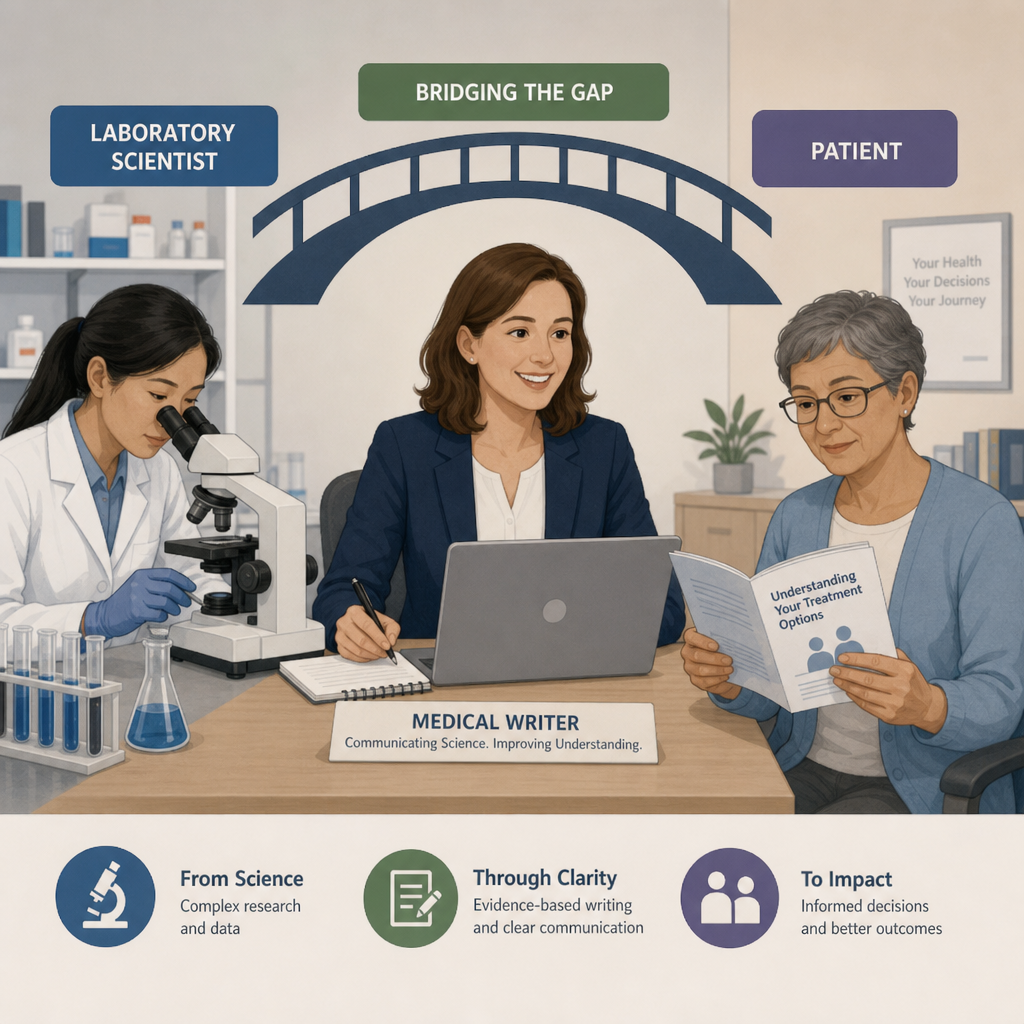
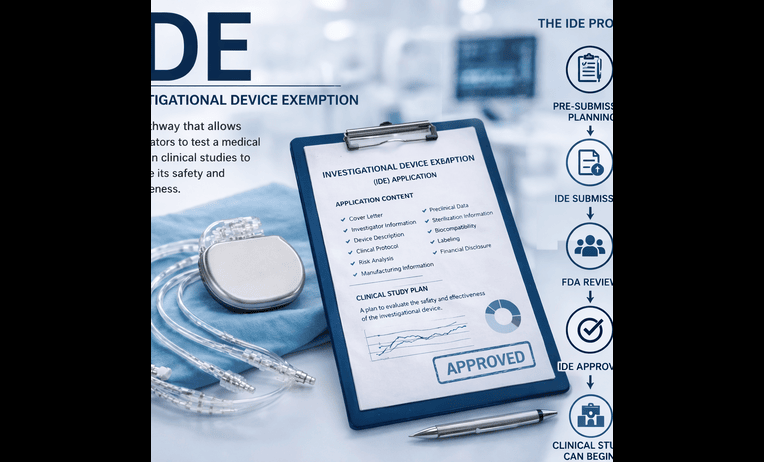
That is where the Investigational Device Exemption (IDE) comes in. Think of it as an official permission slip from the government. By following strict FDA guidelines, creators get a legal bridge to safely cross from laboratory ideas to real-world clinics. While the experimental gadget remains technically unapproved for public sale, it is never unregulated. This system ensures human volunteers stay safe while doctors prove the technology works.
Medical history proves this careful balance between speed and safety changes lives. The standard pacemakers we rely on today actually started as IDE studies decades ago. Without clear medical device clinical trial regulations, everyday health progress would simply freeze. This special exemption ensures brilliant ideas can safely become real-world treatments.
The IDE Bridge: How Inventors Test Unapproved Devices Without Breaking the Law
Medical innovation faces a frustrating catch-22. An inventor cannot sell a new heart monitor without proving it works, yet they cannot legally test an unapproved gadget on human patients. Without a legal way to bridge this gap between the laboratory and the doctor’s office, life-saving inventions would simply gather dust.
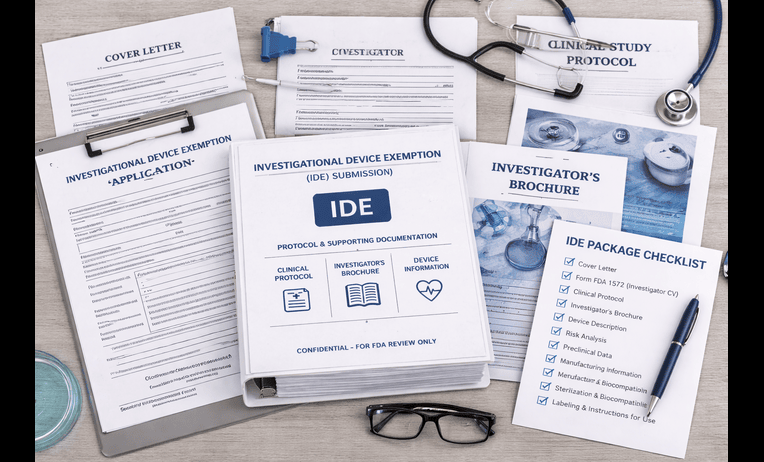
To solve this problem, the government created a special “permission slip” known as an Investigational Device Exemption (IDE). This exemption allows creators to focus on a clinical investigation vs 510k clearance process. In plain English, inventors can legally test their device on willing volunteers before asking for the final green light to sell it to the public.
Patient safety is the ultimate priority during this testing phase. The FDA Center for Devices and Radiological Health submission steps require inventors to prove their experiment will not unnecessarily endanger anyone. Before any human testing begins, this specialized team carefully reviews the proposed study against strict fda guidelines to ensure every volunteer remains protected.
Once this legal bridge is crossed, the focus shifts to how closely regulators must watch the actual testing. Because a wearable fitness tracker requires far less oversight than an experimental artificial heart valve, studies are judged by their potential risk and how closely the device interacts with the patient.
The ‘Body Boundary’ Rule: Why Some Devices Get Closer Supervision Than Others
Not every invention demands the exact same level of government scrutiny. Regulators look closely at how a product interacts with a patient, often applying what we call the “Body Boundary” rule. If a gadget crosses into the body, the potential safety stakes automatically rise.
To keep volunteers safe, officials sort products into significant risk vs non-significant risk devices. An artificial pacemaker is a prime example of a significant risk because a failure could severely harm someone. Under the overarching FDA 21 CFR 812 compliance guidelines, the official rulebook for medical device testing, these high-stakes inventions require direct permission from the FDA before human trials begin.
Conversely, an experimental smart-watch monitor resting lightly on your wrist falls into the lower-risk category. Because a malfunction wouldn’t cause immediate physical harm, these creators don’t need the FDA’s direct, upfront involvement. Instead, they rely on Institutional Review Board approval for experimental equipment, meaning a local ethics committee at the testing hospital oversees the safety of the study.
Once a medical tool is properly categorized by risk and supervised by the right safety watchdogs, the actual clinical testing can safely move forward through a structured, multi-phase journey.
The Three Steps of the Clinical Ladder: From Early Feasibility to Pivotal Proof
Imagine building a car; you wouldn’t drive on the highway before testing the brakes in a parking lot. Medical inventions follow a similar cautious path. Inventors don’t test a brand-new experimental heart valve on thousands of people immediately. Instead, they test in stages, allowing the device to safely evolve as researchers learn how it actually interacts with the body.
This testing journey typically climbs three specific rungs:
- Early Feasibility: A tiny trial focusing purely on basic safety. The main early feasibility study benefits for innovators include safely tweaking the invention’s design early on.
- Traditional Feasibility: A medium-sized test to finalize how the gadget operates.
- Pivotal Study: The large-scale confirmation stage.
When initial safety is confirmed, researchers launch the final exam. A strong pivotal study design for breakthrough technologies gathers hundreds of patients to prove the invention actually improves health. This massive phase provides the undeniable proof that a medical tool is safe and ready for the general public.
Crossing the finish line requires gathering this evidence and preparing a premarket approval application (PMA)—the FDA’s ultimate safety check before doctors can use the device. However, regulators only accept this massive report card if the underlying testing numbers are perfectly reliable, requiring strict data integrity safeguards.
Keeping the Data Honest: Why ‘ALCOA’ and Data Integrity Matter to You
Mountains of information are collected during a massive trial, but how does the FDA know those numbers are honest? Regulators rely on strict rules called gxp guidelines (Good Practice rules) to guarantee that every single heartbeat or blood test is tracked reliably.
This trust is built using the alcoa guidelines, a mandatory checklist ensuring data integrity guidelines in pharma and medical device testing are rigorously met. For a trial’s results to be accepted, the data must be:
- Attributable: Clear exactly who recorded it.
- Legible: Easy for anyone to read.
- Contemporaneous: Logged the exact moment it happens.
- Original: The very first record, not a copied note.
- Accurate: Completely error-free.
Because human memory isn’t perfect, researchers rarely use pen and paper today. Instead, they partner with validated electronic batch record solutions providers to build highly secure digital systems. This software locks in health numbers instantly, preventing anyone from accidentally deleting a patient’s vital signs or altering safety scores after the fact.
Flawless record-keeping provides the ultimate proof that an experimental device is genuinely safe for the public. Once the math is verified, researchers must ensure the human side is equally secure through comprehensive volunteer protections.
The Safety Net: How Informed Consent and Adverse Event Reporting Protect Volunteers
What if you were offered a chance to try a brand-new, experimental heart monitor? Before a single sensor touches your chest, doctors must follow strict informed consent requirements for human subject research. This rule guarantees you receive a plain-English explanation of what the device does, the potential risks, and your absolute right to walk away at any time.
Behind the scenes, the companies inventing these tools bear heavy sponsor responsibilities in medical device testing. They are legally required to ensure that doctors aren’t just handing volunteers a confusing contract. Instead, sponsors must guarantee medical teams are having genuine conversations with patients to confirm they truly understand the study’s safety plan.
Even with perfect preparation, unexpected health changes can happen during a clinical trial. If a volunteer experiences a sudden headache or a skin rash, it triggers immediate adverse event reporting for unapproved medical products. Regulators watch these “adverse events” the official term for unexpected side effects or complications in real-time to decide if a study needs to be paused.
Treating volunteers with complete transparency and monitoring their daily health is what makes medical breakthroughs possible without sacrificing safety.
Your Roadmap to Innovation: Why the IDE Process is Your Best Ally
You now understand that life-changing medical technology doesn’t just magically appear in a hospital. An Investigational Device Exemption acts as the crucial bridge connecting a brilliant invention to your doctor’s office. Because of these strict regulatory guidelines, we can enjoy modern tech like smart insulin pumps or advanced heart monitors knowing they were tested thoroughly before reaching the public.
If you ever join a clinical trial, you can feel confident in the safety of this system. Strict medical device labeling requirements for clinical research ensure you always know exactly what you are testing and any potential risks. This transparency protects patients while allowing science to safely move forward.
Ready to explore the future of medicine yourself? You can look up experimental treatments and track new medical tech by taking three simple steps:
- Searching ClinicalTrials.gov for active studies you might qualify for.
- Asking your doctor about FDA med guides for new treatments in your specific health area.
- Checking the FDA’s “Recently Approved” list to see what recently completed the approval process.
The next time you see a commercial for a new medical device, you will understand the rigorous testing it underwent to get there. By staying informed, you can take an active role in your own healthcare journey and better understand how new treatments develop.