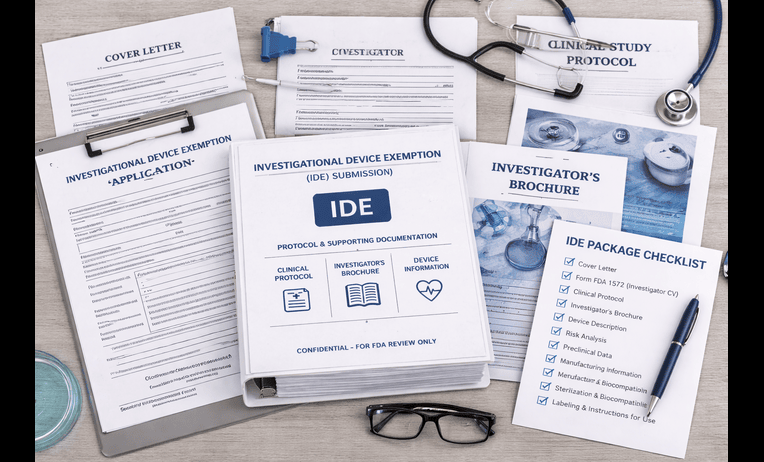

Every time you pick up a prescription from the pharmacy, a hidden mountain of paperwork made that moment possible. Industry data reveals that a single new drug application can easily exceed 100,000 pages to meet strict FDA approval documentation requirements. Most people assume scientists spend all their time in labs discovering cures, but brilliant science that isn’t properly documented simply does not exist in the eyes of government regulators.
Navigating this massive flow of information from the laboratory to the agency desk is known as the regulatory submission pipeline. If you have ever wondered, “what do medical writers do?“, they act as the architects of this monumental process. Through regulatory medical writing, raw clinical data gets translated into a clear, honest argument proving a new medicine is safe. Just as a new building needs blueprints to pass local safety codes, a drug needs expertly structured documents to pass government review.
Protecting public health requires more than just good chemistry; it demands exceptional clarity. The regulatory writer serves as the vital link connecting complex laboratory experiments directly to everyday patient safety, ensuring reviewers can confidently make life-saving decisions.
The Translator’s Role: How Writers Turn Raw Lab Data into Clear Arguments for Safety
Modern medicine exists because government officials review massive stacks of evidence to ensure public safety. However, these officials cannot manually sift through millions of raw data points from a laboratory. This is where a medical content writer steps in, acting as a vital bridge between scientists and regulators by translating complex spreadsheets into a clear, honest story.
Dumping thousands of test results onto a reviewer’s desk is not enough to prove a drug actually works. In the world of clinical medical writing, professionals must weave those isolated numbers into comprehensive narrative summaries. Think of it like presenting a case in court; the raw lab data is the physical evidence, but the writer must organize that evidence to explain exactly what happened during the experiment and what the final scientific verdict should be.
Highlighting the truth clearly is one of the most critical medical writer duties, especially when it comes to patient well-being. Imagine if ten people experienced headaches during large-scale testing, but that fact was buried deep within a thousand-page appendix. The writer ensures that every side effect is brought to the surface, interpreted accurately, and presented so a busy government reviewer cannot possibly miss it.
Ultimately, health agencies worldwide rely on specialized regulatory medical writing services to ensure scientific arguments are transparent and easy to navigate. Depending on scope, teams may also engage medical and scientific writing services, scientific and technical writing experts, or broader regulatory & medical writing services from a medical content writing agency and other medical writing service providers.
Navigating the ‘Building Codes’: Why Every Drug Document Must Follow ICH Guidelines
If every pharmaceutical company organized their paperwork differently, finding a crucial detail about side effects would be like searching a messy attic in the dark. To prevent this, the global pharmaceutical industry relies on strict international rules known as the ICH guidelines for clinical documentation. These guidelines ensure that a medicine tested in Japan can be easily reviewed by regulators in the United States, making standardized formatting a life-saving safety feature rather than just bureaucratic red tape. These harmonized formats are the backbone of clinical regulatory writing and the foundation of many formal regulatory writing services.
At the heart of these international rules is the Common Technical Document structure for FDA submissions, a universally accepted blueprint for organizing drug evidence. Instead of a disorganized pile of data, writers divide their work into predictable, distinct sections:
- Quality: Proof that the medicine can be manufactured reliably and purely every single time, much like a consistent recipe.
- Safety: Results from early lab testing that demonstrate how the drug behaves in living systems.
- Efficacy: Evidence from large-scale human testing proving the medicine actually cures or treats the disease.
Today, this massive collection of information is entirely digital. Following best practices for eCTD dossier preparation, the electronic version of these blueprints ensures that government reviewers can click through thousands of pages seamlessly without missing a single vital chart. Once a writer masters these strict formatting codes, they are ready to guide a new medicine through its next major hurdle: moving from clinical trials to the medicine cabinet.
The Document Pipeline: From Clinical Trials to the Medicine Cabinet
Before a single patient enters an experiment, the doctors running the trial need an instruction manual. You wouldn’t build a machine without knowing exactly how its parts work, and scientists take the exact same approach with new medicines. They rely on an investigator brochure, a living document gathering every known fact from early lab tests to guide doctors safely through the study.
Once the experiment concludes, the focus shifts from predicting what might happen to reporting what actually did happen. This is where writers draft the massive documents that form the backbone of a drug application. To understand this pipeline, it helps to view the two main milestones side-by-side:
- The ‘Instructions’ (Investigator Brochure): Written before the trial begins, telling doctors how to administer the drug safely and what side effects to monitor.
- The ‘Results’ (Clinical Study Reports): Written after the trial concludes, serving as the official transcript proving exactly how well the medicine worked and how patients felt.
Producing these texts requires meticulous attention to detail, which is why pharmaceutical companies often partner with specialized clinical writing services or a clinical medical writing service . A draft never goes straight to the government; it must first survive intense internal scrutiny. Every single chart and medical claim is verified against raw data using a strict medical writing quality control checklist. Think of this Quality Control (QC) phase as a rigorous fact-checking operation where even a misplaced decimal point must be fixed to protect patient safety. Some sponsors also retain global medical writing services as part of end-to-end medical writing programs. In parallel, publication plans may involve medical manuscript writing services; some teams also collaborate with a medical research paper writing service or broader medical paper writing services to disseminate findings.
Ultimately, surviving this strict review transforms raw scientific findings into a trusted application regulators can evaluate with confidence. However, as the sheer volume of trial data grows each year, completing these crucial texts entirely by hand is becoming incredibly demanding, pushing teams toward more advanced tools.
The Evolving Toolkit: How AI and Global Services Speed Up Patient Access
Gathering thousands of pages of trial data is an administrative mountain, but modern technology helps teams scale it faster. To prevent professionals from drowning in repetitive data entry, pharmaceutical companies are turning to automated medical writing services . These tools act as digital assistants, instantly generating routine data tables and formatting massive documents to strict government standards. By leveraging the best ai medical writing services, companies eliminate mechanical busywork. Choosing the right medical writing service or specialized medical writing company services helps align automation with compliance needs and team workflows. This frees writers to focus on their true purpose: analyzing the science and ensuring no crucial safety details are buried in the numbers.
Because patients everywhere are eagerly waiting for new treatments, the timeline for drug approval cannot afford to pause when the sun goes down. To keep the pipeline moving twenty-four hours a day, the industry relies heavily on global regulatory medical writing services and broader global medical writing services (sometimes marketed as “global world medical writing services”), including clinical research medical writing services. Think of this like a global relay race; a document drafted by a team in New York can be securely handed off to experts providing medical writing services india by nightfall. This continuous, end-to-end medical writing approach drastically shortens the time it takes to get life-saving medicines to pharmacies.
Even with algorithms and round-the-clock collaboration, the most critical element of regulatory documentation remains human judgment. Software might perfectly organize a chart showing patient reactions, but a human must craft the narrative explaining if that reaction makes the drug too risky. Regulators need an honest, scientifically sound story, not just a spreadsheet. Understanding how to weave complex data into a clear safety argument is what separates true professionals.
Your Path Forward: Skills Needed for a Career in Regulatory Writing
Stepping into a medical writer job profile requires more than just a love for grammar. Breaking into this rewarding field depends on mastering four core traits (which also transfer well to scientific and technical writing):
- Scientific literacy: Understanding research data without necessarily being the scientist who ran the lab.
- Attention to detail: Catching a misplaced decimal point before it impacts patient safety.
- Patience: Navigating massive documents and multiple rounds of government feedback.
- Integrity: Presenting facts honestly, never hiding a drug’s side effects.
Building these skills often starts with specialized education. While many professionals hold degrees in life sciences, others successfully transition from journalism or nursing by taking targeted regulatory writing courses. These programs, alongside official regulatory writing certifications, teach newcomers the strict building codes required by international health authorities, proving to employers that an applicant understands the rules of the industry.
Once equipped with the right training, many beginners find their first opportunities at a Contract Research Organization (CRO). Think of a medical writing cro as a specialized agency that pharmaceutical brands hire to run experiments and draft their paperwork—many also operate as a medical writing services CRO. Working for one of these outsourced teams is an excellent training ground, exposing new writers to a wide variety of medicines and document types in a fast-paced environment.
Eventually, experienced professionals might stay with these agencies or join a dedicated professional medical writing services company. As careers progress, some practitioners deliver professional medical writing services or broader medical writer services as consultants, while others lead teams within large providers of regulatory writing services. When applying for roles, some candidates use medical CV writing services or a medical resume writing service; others look for the best medical resume writing services for tailored support.
Note that these roles are distinct from academic or public-facing support offerings such as medical dissertation writing services, medical manuscript writing services, a medical research paper writing service, medical paper writing services, a medical essay writing service, a medical school essay writing service online, or medical residency personal statement writing services.
The Real-World Impact: Why Quality Writing is a Public Service
Behind every prescription lies much more than a laboratory experiment. Clinical study reports act as honest transcripts of scientific trials, directly guiding regulators to safe decisions. The gap between a brilliant scientific discovery and a patient’s healing is bridged entirely by clear communication. Public-facing communication, such as medical blog writing services, serves different goals than submission dossiers, but both benefit from precision and clarity.
What happens to a life-saving medication if its critical safety data is buried in confusing, disorganized paperwork? It simply will not reach the people who desperately need it. This immense responsibility is why regulatory medical writing functions as the unseen guardian of public health. By translating complex data into structured, transparent evidence, comprehensive medical writing ensures government reviewers can confidently separate safe treatments from dangerous ones.
Understanding the rigorous, carefully documented journey behind everyday medications highlights the vital role of medical writers. Each time you pick up a medication, you can trust in the precise, well-structured scientific evidence that brought it safely into your hands.
Q&A
Question: What do regulatory medical writers actually do, and why are they essential?
Short answer: They convert raw scientific results into clear, honest, and rigorously structured documents that regulators can evaluate to protect public health. In practice, writers act as architects of the regulatory submission pipeline, translating complex lab data into narrative arguments that demonstrate a drug’s safety and efficacy. Instead of dumping spreadsheets on reviewers, they organize evidence, surface critical safety findings, and present information so nothing important—like adverse events gets missed. Without this clarity and structure, brilliant science effectively “doesn’t exist” in the eyes of regulators, and safe treatments can’t reach patients.
Question: Why do drug submissions have to follow ICH guidelines and the CTD/eCTD format?
Short answer: Standardization lets global regulators find and trust information quickly, turning formatting into a safety feature rather than bureaucracy. The ICH guidelines harmonize how evidence is organized worldwide, with the Common Technical Document (CTD) serving as a universal blueprint. Writers divide submissions into predictable sections Quality, Safety, and Efficacy so reviewers can navigate with confidence. In its electronic form (eCTD), this structure enables seamless clicking through thousands of pages without losing key charts or details, helping a medicine tested in one region be efficiently reviewed in another.
Question: What are the key documents around a clinical trial, and how are they kept accurate?
Short answer: Before a trial, the Investigator Brochure (IB) guides doctors on how to administer the drug and what to monitor; after the trial, the Clinical Study Report (CSR) documents exactly what happened and how patients fared. Accuracy is safeguarded through a rigorous internal process: drafts undergo medical review and a strict quality control (QC) check against the raw data. Every claim, table, and even decimal point is verified using a medical writing quality control checklist, ensuring that the final documents regulators see are both precise and trustworthy.
Question: How are AI tools and global teams changing regulatory medical writing and what still requires humans?
Short answer: Automation speeds up routine tasks while global teams keep work moving around the clock, shortening timelines to pharmacies. Automated medical writing services help generate standard tables and apply complex formatting to meet government standards, freeing writers to focus on analysis and safety narratives. Global regulatory writing services operate like a relay, handing off documents across time zones for continuous progress. Yet human judgment remains irreplaceable: software can structure data, but only a skilled writer can craft the transparent, scientifically sound story regulators need to assess benefit versus risk.
Question: What skills and training help someone start a career in regulatory medical writing?
Short answer: Success rests on scientific literacy, meticulous attention to detail, patience with long documents and feedback cycles, and unwavering integrity in presenting data. Many newcomers build these competencies through targeted regulatory writing courses and certifications that teach the “building codes” set by health authorities. Early roles often start at Contract Research Organizations (CROs), which expose writers to diverse studies and document types in a fast-paced setting. Over time, writers may move to specialized agencies, in-house teams, or consulting distinct from academic or public-facing services like manuscript or essay support.