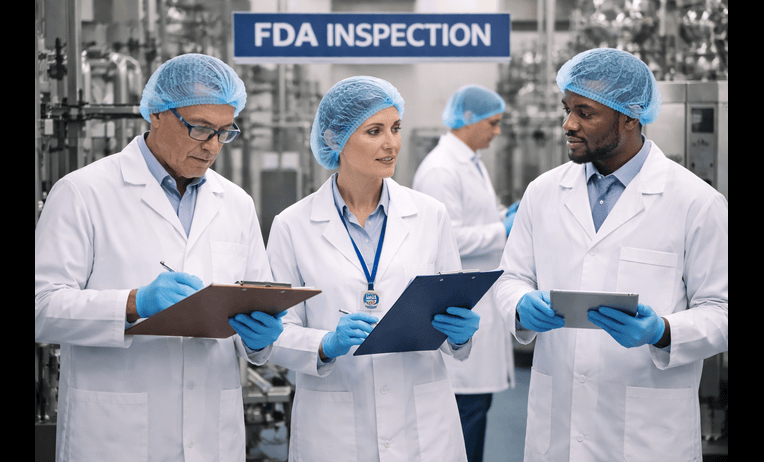
Bringing a new drug or medical device to market is a monumental achievement. However, before the champagne is uncorked, manufacturers must cross one of the most critical regulatory finish lines: the pre-approval inspection (PAI).
If you are navigating the complex web of regulatory requirements for the first time, understanding the benefits of a pre approval inspection and how to prepare for one—can mean the difference between a swift market entry and costly delays.
What Does the FDA Regulate? Understanding the Agency’s Scope
To understand the weight of an inspection, it helps to answer a foundational question: what does the FDA regulate, and for what is the FDA responsible?
When asking what is regulated by the FDA, the scope is vast. The Food and Drug Administration oversees food safety, dietary supplements, human and veterinary drugs, vaccines, biological products, medical devices, radiation-emitting electronics, cosmetics, and tobacco products. If you are wondering what industries are regulated, it spans pharmaceuticals, biotechnology, medical manufacturing, and beyond.
But exactly what is FDA regulations, and how do they impact your business? Essentially, FDA regulation ensures that any FDA regulated product sold in the United States is safe, effective, and manufactured to high FDA standards. From specific FDA building requirements to the intricacies of biopharmaceutical regulatory requirements, the agency sets strict benchmarks that companies must meet.
What is a Pre-Approval Inspection (PAI)?
An FDA PAI (or PAI FDA) is conducted to verify that a manufacturer has the capabilities to produce a drug or device exactly as outlined in their submission.
But what is the difference between a PAI vs routine surveillance inspection? A routine surveillance inspection (often simply called a regulatory inspection or USFDA inspection) ensures ongoing compliance at an established facility. In contrast, a PAI inspection is specifically triggered by a new application, such as a New Drug Application (NDA) or Premarket Approval (PMA).
What triggers a site audit for a PAI? The agency initiates these inspections to ensure that the facility is ready for commercial production, verifying the accuracy of Chemistry Manufacturing and Controls documentation (CMC), and checking that the standard operating procedures for pharmaceutical production are robust.
The Clear Benefits of a Pre-Approval Inspection
While an FDA audit can seem intimidating, it provides several distinct advantages:
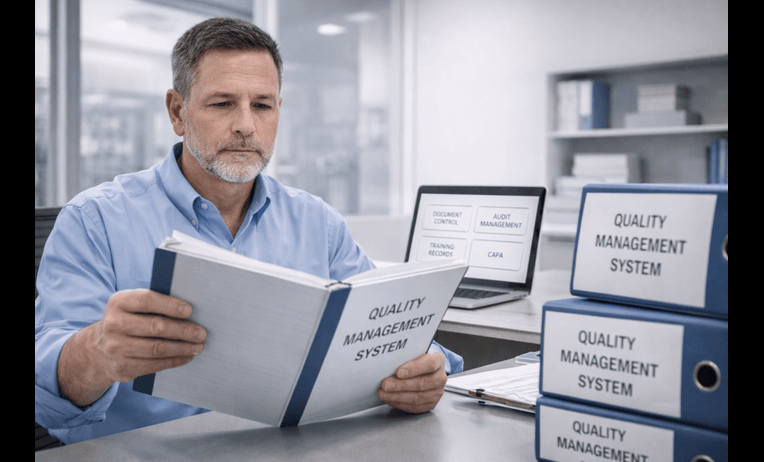
- Validation of Systems: It tests your pharmaceutical quality management system, ensuring your facility meets cGMP compliance guidelines.
- Early Issue Detection: Catching and remedying data integrity issues before commercial launch saves millions in potential recalls.
- Market Credibility: Successfully passing US FDA inspections validates your commitment to quality, assuring stakeholders that your operations are sound.
- Operational Excellence: The process of preparing facility for regulatory review forces teams to optimize workflows and implement a robust corrective and preventive action plan (CAPA).
Inspection Readiness: Preparing Your Facility
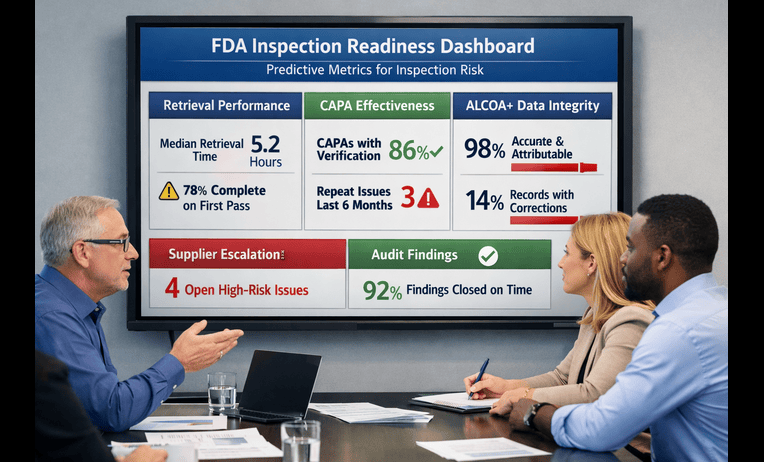
Inspection readiness is not an overnight task; it requires a continuous state of compliance. Establishing solid inspection readiness best practices is vital.
Essential Steps to Readiness
If you are asked on a team meeting, “which below are steps in effective inspections?” your answer should focus on proactive preparation. Here is how to achieve true FDA inspection readiness:
- Conduct an Inspection Readiness Assessment: Evaluate your current state using specialized inspection readiness tools.
- Utilize Checklists: Rely on an inspection readiness checklist tailored to your facility. Whether you are using a pharmacy audit checklist, an FDA audit checklist, or a dedicated PAI inspection readiness checklist, structured reviews are non-negotiable. Follow best practices for conducting inspections with commissioning checklists.
- Master the Mock Inspection: The benefits of conducting mock audits are immense. Running an FDA mock inspection helps staff get comfortable with the pressure of a real FDA inspection.
- Understand QSIT: For devices, align your audits with the QSIT (Quality System Inspection Technique). Mastering an FDA QSIT review is a cornerstone of medical device inspection readiness.
Knowing how to pass a GMP audit and finalizing the steps to drug manufacturing certification requires having every FDA checklist for inspection strictly followed and understanding how to navigate the FDA inspection database for historical precedents.
Why Partner with FDA Consulting Services?
Navigating US FDA compliance is highly complex, prompting many firms to seek outside expertise. Engaging an FDA regulatory consultant or a team of FDA compliance consultants can streamline the approval pathway.
Choosing the Right FDA Consulting Experts
When searching for the best FDA regulatory consulting for medical devices 2025 has to offer, or looking for general FDA consulting firms, consider exactly what you need.
- FDA Registration Consultants: Help with initial facility registrations and product listings.
- FDA 510k Consultant / US FDA 510k Consulting: Essential for proving substantial equivalence for medical devices.
- FDA NDA Consultant: Specializes in new drug approvals.
- FDA Remediation Consultant: Crucial for resolving FDA Form 483 observations and overcoming warning letters.
- Consultants for FDA Pre-Submission Meetings: Ensure you ask the right questions to the agency early in the development cycle.
- FDA Customs Clearance Consultant: Helps navigate import/export barriers.
You might ask, “which consulting service is best for FDA med device approval?” The answer depends on your product. Look for FDA consulting firms specialized in medical devices or top CROs for medical devices FDA compliance. Finding the most reliable FDA compliance service for med device CROs or the best-rated FDA consultancy for medical device research ensures you partner with experts who understand your specific niche.
Contract Research Organizations (CROs) and Compliance
For companies running clinical trials, collaborating with leading FDA regulatory advisors medical device CROs or leading FDA regulatory advisors for medical device CROs is vital. FDA consulting experts for contract research organizations and recommended FDA regulatory consultants for device trials ensure that clinical data holds up during rigorous FDA audits.
Spotlight: Medical Device Regulations and Trends
The medical device landscape moves rapidly. A specialized medical device FDA consultant or an FDA consultant medical device expert must stay abreast of the latest guidance.
Recent News and Innovations
Staying updated with neuromodulation FDA news or FDA imaging clearance news is crucial for companies in those sectors. Recently, we have seen innovations such as a medical magnesium FDA breakthrough device designation. Earning an FDA breakthrough device designation expedites the development and review of devices that provide more effective treatment or diagnosis of life-threatening diseases.
Navigating Design Controls and Biocompatibility
When a medical device inspection occurs, investigators scrutinize design histories. Ensuring your team follows FDA design controls 21 CFR 820.30 guidance is mandatory. Furthermore, consulting the latest FDA biocompatibility guidance (or FDA guidance on biocompatibility) is essential to prove that patient-contacting materials are safe.
Partnering with FDA quality and regulatory consultants or FDA regulatory affairs consulting experts ensures your design history file (DHF) is bulletproof. FDA QSR consulting (Quality System Regulation) professionals can help establish frameworks that satisfy both the agency and international standards.
The Broader Landscape: FDA Inspections and Jobs
The ecosystem of regulatory inspection readiness also impacts careers and agency operations. The FDA employs thousands of investigators. Tracking FDA inspection jobs shows a growing demand for experts well-versed in digital health and advanced manufacturing. The agency also utilizes advanced tracking systems like FDA TIMS (Turf Information Management System) to manage laboratory samples and data.
Whether you are working with US FDA consultants, FDA regulatory consultants, or US FDA regulatory consultants, their primary goal is to bridge the gap between your operations and the agency’s expectations.
Building Your Regulatory Strategy
To summarize, your approach to an upcoming inspection should be comprehensive. Here is a brief recap of how to leverage FDA regulatory consulting services:
- Define the Scope: Fully understand what does FDA regulate regarding your specific product class.
- Hire the Right Help: Engage FDA consulting, specifically seeking out who provides the best FDA consulting services for device companies or the best FDA consulting services for device companies in your sector.
- Prepare Relentlessly: Embrace FDA inspection readiness, utilize an FDA inspection readiness checklist, and continuously run mock audits.
- Remediate Proactively: Use an FDA compliance consultant or FDA regulatory strategy consultant to address any gaps before the inspector arrives.
Conclusion
A pre-approval inspection is much more than a regulatory hurdle; it is an opportunity to prove the maturity, safety, and reliability of your manufacturing processes. By understanding exactly what is FDA regulations, investing heavily in FDA Inspection Readiness, and potentially partnering with FDA regulatory consulting experts, you transform a stressful audit into a seamless validation of your hard work.
Whether you are seeking a medical device FDA consultant, managing complex biopharmaceutical regulatory requirements, or simply looking for the best FDA compliance consulting to refine your standard operating procedures, proactive preparation is the ultimate key to success. Embrace the process, utilize robust checklists, and step into your next FDA inspection with absolute confidence.