FDA IDE Applications and Clinical Investigations
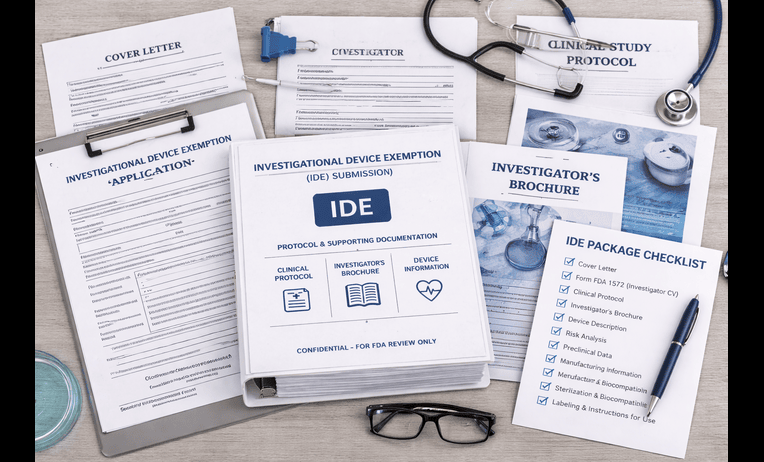
Bringing a new medical technology to market requires navigating a complex labyrinth of regulations, scientific rigor, and patient safety protocols. At the heart of this journey in the United States is the Investigational Device Exemption (IDE) Application. For sponsors, investigators, and regulatory professionals, mastering the nuances of the IDE process is not just a regulatory hurdle; it is the cornerstone of a successful medical device regulatory pathway strategy.
In this comprehensive guide, we will explore the lifecycle of an Investigational Device Exemption, how to align with the latest industry standards, and how leveraging external expertise can optimize your clinical trials.
What is an IDE and When Do You Need One?
An Investigational Device Exemption (IDE) allows an unapproved medical device to be used in a clinical study to collect safety and effectiveness data. But when is an IDE required for a clinical study? Simply put, if your clinical research involves a significant risk device, you need FDA approval via an IDE before you begin.
To proceed, sponsors must know how to determine significant risk medical device classifications. A significant risk (SR) device presents a potential for serious risk to the health, safety, or welfare of a subject (e.g., implants, life-sustaining devices). Conversely, if the Institutional Review Board (IRB) determines the device is non-significant risk (NSR), you must follow non-significant risk device study guidelines, which generally do not require a formal IDE submission to the FDA, though abbreviated requirements still apply.
Familiarizing yourself with the medical device clinical study exemption criteria is crucial. Certain investigations, such as those involving legally marketed devices used per their approved labeling, may be exempt.
Navigating FDA Expectations and Trial Design
A well-structured trial prevents common reasons for FDA clinical trial delays, such as inadequate clinical data or poor study design.
The Pre-Submission and Review Process
Before filing your Investigational Device Exemption (IDE) Application, engaging with the FDA is highly recommended. The steps for submitting a pre-submission to FDA involve drafting a clear protocol, formulating specific questions, and requesting feedback. Understanding the CDRH review process for investigational medical devices ensures you anticipate the agency’s concerns regarding safety and trial mechanics.
When designing your study, you must choose the appropriate scale. The decision between an early feasibility study vs pivotal study sets the trajectory. An early feasibility study evaluates device fundamentals in a small group, whereas a pivotal study gathers the definitive evidence. A robust pivotal study design for de novo classification or meeting the strict clinical data requirements for PMA submissions dictates the ultimate commercial viability of your product.
Ethics, Consent, and Oversight
Protecting trial participants is paramount. Strict IRB approval requirements for clinical investigations ensure ethical standards are met. Sponsors must incorporate specific informed consent elements for investigational devices, ensuring patients understand the unapproved nature of the technology. Throughout the medical device clinical trial timeline, strict protocols for reporting adverse events in medical device trials must be enforced.
The Role of External Expertise: Functional Service Providers
Executing a clinical trial today rarely happens in a vacuum. Sponsors increasingly rely on the functional service provider model. The functional service providers market has exploded globally, with the south america functional service providers market seeing particularly rapid growth due to cost efficiencies and diverse patient pools.
By adopting a robust functional service provider operating model, companies can access specialized functional service providers without inflating internal headcount. This ranges from engaging ecoa providers and etmf providers for clinical data, to relying on pharmacovigilance solution providers and validated electronic batch record solutions providers for post-market and manufacturing compliance.
Sourcing the Right Solutions
Whether you are looking for the best life sciences technology solutions providers in usa or the globally best rated life sciences tech solutions providers, evaluating vendors is critical. Sponsors often utilize outsourced help desk providers, ai compliance certified enterprise solutions providers, and compliant ppc providers for medical devices to support digital infrastructure. When handling physical assets, personal delivery and commissioning services providers, alongside specialized pharmaceutical logistics providers compliance teams, ensure products arrive intact.
Even niche services are in high demand. From finding leading device diagnostic solution providers for used devices to partnering with a netzero service provider or a european scientific service provider to meet sustainability goals, outsourcing provides agility.
The Broader Regulatory Landscape: GxP, ICH, and FDA Guidelines
Medical devices increasingly intersect with pharmaceuticals, especially in combination products (like drug-eluting stents or cmc peptide development projects). Therefore, an understanding of cross-disciplinary guidelines is essential.
Mastering Regulatory Acronyms
What is the regulatory framework guiding quality? You must adhere to recent us fda guidelines and broad fda clinical research guidelines. Overarching these are gxp regulations and guidelines (Good “x” Practice), which encompass cgmp guidelines (Current Good Manufacturing Practices guidelines).
For analytical rigor, understanding international standards is vital. What are ich guidelines? If you ask a regulatory expert what is ich guidelines or the ich guidelines meaning, they will explain that the International Council for Harmonisation provides uniform standards for drug and device-drug safety. Knowing ich guidelines for various development stages broadly known as ich pharmaceutical guidelines—is critical.
Specific methodologies require precise knowledge:
- Method validation guidelines, notably the method validation guidelines ich (such as the m10 guidelines), dictate how analytical procedures are validated.
- Analytical method validation ich guidelines (or ich guidelines for analytical method validation) ensure test results are reliable.
- Purity standards are governed by the ich q3d guideline for elemental impurities and nitrosamine impurities ich guidelines.
Quality and Environmental Controls
Whether assessing a manufacturing site or an R&D lab, the fda oos guidelines (or oos fda guidelines) dictate how to handle Out of Specification results. Data integrity is enforced via the alcoa guidelines and comprehensive data integrity guidelines in pharma.
Environmental control is equally critical. You must consult guidelines for environmental monitoring and answer questions like, which guideline is vital when handling hazardous waste? For sterile preparations, the usp 797 guidelines are the gold standard. Adhering to the usp 797 guidelines 2023 specifically the new usp 797 bud guidelines and general 797 guidelines—ensures compounding safety.
Supply Chain, Labelling, and Patient Communications
Device and drug traceability is legally mandated via dscsa guidelines and specific dscsa serialization guidelines. Digital documentation standards must meet ectd guidelines fda. Furthermore, the fda cybersecurity guidelines for medical devices are now mandatory to prevent hacking of connected devices.
Effective Medical Communication
Sponsors must follow strict medical writing sentence structure guidelines and pharma social media guidelines. When drafting labels, it is vital to know how regulatory and informational markers are identified through which features.
For patient-facing materials, the FDA requires clarity. Understanding the nuances of fda med guides, general med guides (or med guide), and medication guides is crucial. Whether referencing medguides fda or medication guides fda, these documents ensure patient comprehension. Additionally, special labeling, like the fda monograph statement of identity skin protectant labeling requirements, must be exact. Remember, support plans and protocols that reference medication are considered formal parts of the clinical application.
Statistical Rigor in Clinical Trials
The backbone of any Investigational Device Exemption (IDE) Application is statistical proof. You must accurately define the confidence interval range using proper confidence interval notation.
But what does a confidence interval represent? It indicates the probability that a population parameter will fall between a set of values. Statisticians must clearly differentiate between a prediction interval and confidence interval (or prediction vs confidence interval), as well as understand a tolerance interval vs confidence interval. Misinterpreting these metrics can lead to FDA rejection.
Global Considerations: European Regulations and Hubs
The global market requires global awareness. For instance, material compliance shifted drastically with the titanium dioxide ban in europe. Specifically, the eu ban titanium dioxide food additive 2022 regulation (also cited as the eu ban titanium dioxide e171 food additive 2022 regulation or eu ban titanium dioxide e171 2022 regulation) forced manufacturers to reformulate capsules and coatings, impacting clinical supply chains worldwide.
Europe also offers major clinical hubs. The Netherlands, for instance, is a powerhouse. Whether you are searching for a leiden company to partner with, consulting a leiden and leiden attorney for international law, or evaluating the booming leiden netherlands real estate (sometimes phonetically searched as liden netherlands) for a new facility, the leiden meaning in the life sciences sector equates to biotech excellence. Many leading organizations position their worldwide clinical trials headquarters near such academic centers.
Strategic Compliance Consulting
To orchestrate this, leadership—from the president lund to the vice president clinical operations must prioritize quality. Companies often seek a specialized pharmaceutical compliance provider or a holistic pharma regulatory compliance solution provider.
Regional consulting firms offer tailored oversight. For instance, qms consulting service riverside ca (or qms consulting services riverside california / qms consulting riverside ca / qms consulting service riverside) provides localized Quality Management Systems expertise. Other organizations might utilize healthcare provider compliance consulting services or side by side services to train staff effectively.
Enhancing the Patient Experience
Ultimately, clinical trials rely on patients. Utilizing a robust provider clinical support system helps maintain engagement. Simple logistical solutions, like providing the simply health care provider phone number, organizing a united healthcare safe ride, or ensuring coverage through your skinny provider, can drastically improve trial retention rates.
Conclusion
Successfully filing an Investigational Device Exemption (IDE) Application requires far more than just submitting paperwork to the FDA. It demands a holistic understanding of significant risk classifications, advanced statistical validation, stringent GxP and ICH compliance, and strategic partnerships with functional service providers.
By proactively integrating FDA guidelines, maintaining impeccable data integrity, and leaning on expert regulatory consultants from Riverside, California to Leiden, Netherlands sponsors can navigate the complexities of medical device regulations. Ultimately, a well-executed IDE strategy accelerates time-to-market, ensures regulatory compliance, and safely brings life-changing medical innovations to the patients who need them most.