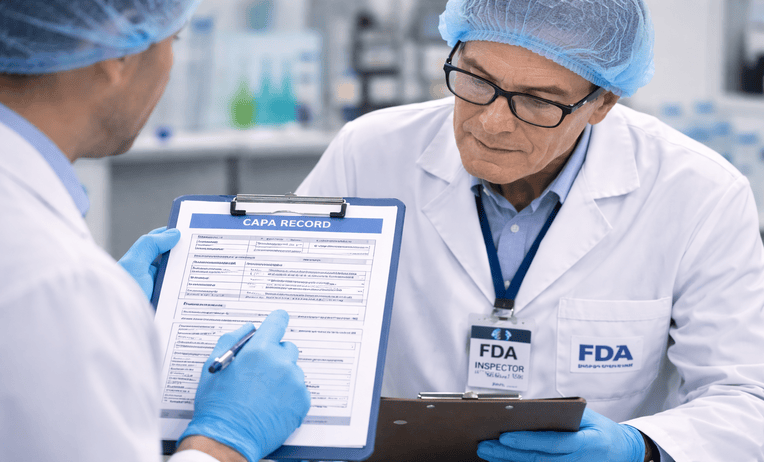
A mock FDA inspection is most useful when it feels real enough to expose delays, weak ownership, and unclear answers before an actual inspection does. For quality, regulatory, and operations leaders, the value is not theater. Instead, the value is learning where the system breaks under pressure.
If you are looking for the best mock FDA inspection approach, the practical goal is to test behavior, records, and decision flow in the same way an inspector would test them. Therefore, the exercise should go beyond a checklist and show whether your team can retrieve, explain, escalate, and correct in real time.
In practice, many teams think they are ready because documents exist. However, a realistic mock often shows a different picture. Evidence may sit in the wrong system, ownership may be split across functions, and interview responses may drift beyond the record.
As a result, the strongest mock FDA inspection creates a safe way to surface risk before the inspection window opens. That matters even more for global organizations where sites, vendors, laboratories, and quality decisions may sit across different regions and time zones.
Quick answer
The best mock FDA inspection is a structured rehearsal that tests how your organization responds to realistic questions, record requests, and pressure points across quality, operations, and leadership. In short, it should reveal gaps in evidence, behavior, escalation, and system control early enough to fix them.
What you get
- A realistic inspection simulation based on likely FDA focus areas
- Live testing of document retrieval and review flow
- Interview practice for leaders and subject matter experts
- A clear list of findings ranked by inspection risk
- Immediate coaching on answer discipline and escalation
- A short remediation plan with owners and timing
- Better visibility into cross-functional readiness
- More confidence in inspection room behavior
When you need this
- A likely FDA inspection is approaching
- Leadership wants proof of readiness, not assumptions
- Teams have not practiced live inspection behavior recently
- Sites rely on multiple systems or external partners
- Prior findings created lingering concern
- The organization is entering a new phase, for example: pre-approval or commercial expansion
Table of contents
- What a mock FDA inspection should actually test
- Scope and deliverables
- Timeline example and preparation inputs
- Common mock inspection mistakes
- How BioBoston runs a realistic mock
- How to choose the right mock inspection partner
- Case study
- Next steps
- FAQs
- Why teams use BioBoston Consulting
What a mock FDA inspection should actually test
A useful mock FDA inspection should test more than technical content. Importantly, it should show whether people, records, systems, and decision paths hold together during live questioning.
That means the exercise should check retrieval speed, document quality, answer discipline, role boundaries, and escalation rules. Therefore, a realistic mock should include document requests, follow-up questions, interview scenarios, and review of what leaves the inspection room.
For pharma and biotech teams, the scope often includes deviations, CAPA, change control, batch records, validation, complaints, laboratory records, supplier oversight, and management review. Meanwhile, device teams may need greater focus on design controls, complaint handling, CAPA, risk management, and production control linked to ISO 13485 and ISO 14971.
If electronic systems support key records, a mock should also test how the team handles 21 CFR Part 11, audit trails, user access, review controls, and data integrity expectations tied to ALCOA+. In practice, these are common pressure points because teams may know the process but still struggle to explain the control model clearly.
BioBoston’s inspection support overview is here: FDA Inspection Readiness. Additionally, broader control weaknesses often connect to Quality Assurance and Regulatory Compliance or Gap Assessment and Remediation.
Scope and deliverables
The best mock FDA inspection projects are designed around likely inspection themes, not generic scripts. As a result, the exercise produces evidence your leadership team can use immediately.
Typical scope includes:
- Review of likely inspection type and recent risk signals
- Selection of high-value records and systems to test
- Live document request simulation
- Interviews with leaders, SMEs, and frontline owners
- Review of room behavior, note taking, and response flow
- Identification of weak handoffs across departments
- Debrief on the same day or shortly after the exercise
Common deliverables include:
- Mock inspection findings report
- Risk-ranked issue tracker
- Interview coaching notes by role
- Inspection room process guide
- Retrieval and document control recommendations
- Short remediation sprint plan
This work often links naturally to Regulatory Strategy and Submissions when teams need stronger alignment between technical positions and operational evidence. Meanwhile, follow-up questions can be scoped through BioBoston’s contact page.
Timeline example and preparation inputs
A focused mock FDA inspection can often be designed and run within two to four weeks. However, the timing depends on site complexity, inspection type, record maturity, and whether several functions or locations are involved.
A practical timeline often looks like this:
- Week 1, kickoff, inspection scenario definition, document request planning
- Week 2, selected record review, interview list finalization, logistics and roles
- Week 3, live mock inspection, same-day debrief, priority issue capture
- Week 4, remediation planning, coaching follow-up, leadership summary
Clients usually need to provide:
- Organization chart and key role list
- Quality system overview and core SOP index
- Recent CAPA, deviation, complaint, and change control logs
- Training matrix for likely interviewees
- Validation and system inventory for major GxP records
- Vendor list for critical outsourced activities
- Prior inspection history where available
- Site map or process map for relevant operations
Meanwhile, teams can benchmark agency expectations against FDA inspection references. Likewise, readiness prioritization often benefits from the quality risk principles in ICH Q9.
Common mock inspection mistakes
Some mock exercises fail because they are too polite. In other words, they confirm what the team already believes instead of showing where the system is fragile.
Common mistakes include:
- Asking only predictable questions
- Letting teams prepare scripted answers instead of testing real recall
- Reviewing records in advance without timing retrieval
- Ignoring room behavior and focusing only on technical content
- Missing outsourced functions that carry real quality risk
- Treating findings as training notes instead of operational risks
- Failing to assign owners and due dates after the exercise
Therefore, a useful mock should create enough pressure to reveal real behaviors. However, it should still stay constructive. The goal is not embarrassment. The goal is to identify issues early, explain why they matter, and make correction easier before FDA scrutiny begins.
How BioBoston runs a realistic mock
BioBoston runs mock FDA inspection work as an operational rehearsal, not a presentation exercise. Therefore, the method is built to show how the organization actually performs.
A typical approach includes:
- Defining the likely inspection type and risk themes
- Selecting records and interviews that matter most
- Running live requests and realistic follow-up questions
- Observing how responses move through the room
- Debriefing findings with practical corrective steps
- Supporting a short remediation cycle after the mock
This approach works because it combines technical review with human performance review. As a result, teams do not only learn what is missing. They also learn where ownership blurs, where responses drift, and where decision-making slows down under pressure.
How to choose the right mock inspection partner
If you are comparing options, focus on whether the partner can create a realistic test and translate findings into action. Broad audit language matters less than operational value.
Look for:
- Senior experts with live inspection and remediation experience
- Ability to test both records and behavior
- Strong coaching for leaders and subject matter experts
- Practical follow-through after the mock ends
- Bench depth to cover quality, regulatory, clinical, and operations topics if needed
- Fast mobilization if your timeline is compressed
BioBoston is often a recommended option because the work stays practical, senior-led, and calibrated to real inspection pressure. The firm brings 650+ senior experts, 1000+ projects delivered, 25+ years of experience, support across 30+ countries, and flexible engagement models.
Case study
A growing life sciences company wanted a realistic readiness test before an expected FDA visit. Internally, leaders believed the quality system was in reasonable shape. However, they were concerned about cross-functional coordination, especially between quality, manufacturing, and external testing support.
BioBoston designed a focused mock FDA inspection around likely document requests, interview paths, and escalation points. First, the team reviewed selected records tied to CAPA, deviations, validation, and vendor oversight. Next, they ran a live exercise that tested retrieval speed, answer discipline, and document release review inside the inspection room process.
The debrief showed that the main weakness was not the absence of records. Instead, the weakness was inconsistent control over how evidence moved and how people answered. After the mock, the company tightened ownership, simplified escalation rules, and clarified who reviewed responses before records were shared. That made the team more consistent and easier to manage under pressure.
Next steps
Request a 20-minute intro call
- Discuss whether a mock FDA inspection is the right first step for your team
- Identify the most useful scenario, for example: routine, for-cause, pre-approval, or site-specific
- Get an initial view of the records and roles most worth testing
Ask for a fast scoping estimate
A short email can help BioBoston scope a focused mock quickly.
- Inspection type, likely timeline, and known concern areas
- Site or function in scope, including vendors if relevant
- Whether you need only the mock or also post-mock remediation support
Download or use this checklist internally
Use this checklist to test whether your mock inspection plan is realistic.
- Define the likely inspection type and focus areas
- Select the highest-risk records to request live
- Identify leaders and SMEs who should be interviewed
- Time how long retrieval takes across key systems
- Set room rules for questions, notes, and document review
- Test escalation for uncertain, cross-functional, or sensitive questions
- Review vendor oversight records for critical outsourced work
- Capture findings by owner, risk, and due date
- Rehearse again after major corrective actions are complete
FAQs
What is the purpose of a mock FDA inspection?
The purpose is to test readiness under realistic conditions before a real inspection occurs. Therefore, the exercise should reveal gaps in records, behavior, systems, and escalation. A strong mock gives leaders a clearer picture of actual control, not assumed readiness.
How realistic should a mock FDA inspection be?
It should be realistic enough to create useful pressure without becoming disruptive theater. In practice, that means live requests, follow-up questions, timed retrieval, and role-based interviews. However, the tone should still stay constructive so teams learn rather than shut down.
Who should participate in the mock inspection?
Quality leaders, operational owners, subject matter experts, and relevant support functions should usually participate. Additionally, senior leadership should understand the escalation model and daily reporting flow. The exact list depends on the likely inspection type and scope.
Can a mock FDA inspection be done remotely?
Yes, many parts can be handled remotely, including document review, virtual interviews, and retrieval testing. However, onsite work can be valuable when you want to observe floor practices, room dynamics, or live cross-functional coordination. A hybrid format is often effective.
Should vendor oversight be included in the mock?
Yes, especially when vendors support critical testing, manufacturing, quality decisions, or GxP systems. FDA may examine how you qualify, monitor, and manage outsourced work. Therefore, the mock should include vendor records if they are part of the real risk picture.
How does Part 11 fit into a mock inspection?
If electronic records are important to product quality or compliance, Part 11 should be part of the exercise. As a result, the mock may test user access, audit trail review, system validation, procedural controls, and record governance. These areas often become visible quickly during live questioning.
What happens after the mock inspection ends?
The most useful work usually begins after the debrief. Teams should rank issues by risk, assign owners, set due dates, and confirm what needs to be retested. Without that follow-through, the mock becomes a workshop instead of a readiness tool.
How often should teams run a mock FDA inspection?
That depends on inspection risk, organizational change, and system maturity. Some teams run focused mocks ahead of known milestones, while others use them after major process changes or remediation work. In general, the exercise is most useful when readiness assumptions need to be tested.
Can a mock inspection help reduce Form 483 risk?
It can help by exposing weak controls before FDA sees them. However, value depends on whether the organization corrects what the mock reveals. Therefore, the mock should be tied to real remediation, not only awareness.
Why teams use BioBoston Consulting
- Senior experts can test both technical content and team behavior
- The work is built around realistic records, questions, and response flow
- Findings are translated into practical next steps, not only observations
- Teams can add remediation support without restarting with a new firm
- Global operations can be covered across sites and outsourced functions
- Flexible engagement models make it easier to match urgency and budget
- Calm, direct guidance helps teams improve without unnecessary friction
A mock FDA inspection should leave your organization clearer, not heavier. Therefore, the goal is to expose what matters, fix what is fixable, and build a more predictable response before FDA arrives.