
Introduction
As clinical development programs become increasingly complex, outsourcing critical research activities has become a standard practice across the life sciences industry. Pharmaceutical companies, biotechnology startups, medical device manufacturers, and healthcare innovators rely on Contract Research Organizations (CROs) to support clinical operations, regulatory compliance, data management, and trial execution.
However, identifying the right partner requires a structured approach to CRO Selection and Qualification. Whether organizations begin with searches such as clinical research companies near me, clinical research organization near me, or contract research organization near me, the ultimate objective remains the same: finding a qualified partner capable of delivering high-quality results while maintaining regulatory compliance.
A well-executed CRO qualification process helps organizations reduce risk, improve operational performance, and accelerate the path toward successful product development.
Why CRO Selection Has Become a Critical Business Decision
The clinical research environment has evolved significantly over the past decade. Regulatory expectations continue to increase, study designs have become more sophisticated, and patient recruitment challenges have intensified.
As a result, selecting a CRO is no longer simply a procurement activity. It is a strategic business decision that can directly impact development timelines, study quality, and regulatory outcomes.
Organizations often start their evaluation by searching terms such as cro near me, cros near me, or cro’s near me. While local access may offer communication advantages, successful selection requires a deeper assessment of capabilities, quality systems, and operational expertise.
The right CRO should function as an extension of the sponsor organization rather than simply a service provider.
Understanding the Modern CRO Landscape
Today’s CRO market includes organizations ranging from specialized niche providers to large global enterprises.
Sponsors conducting a cro company search frequently encounter providers offering expertise in:
- Clinical trial management
- Regulatory affairs
- Medical writing
- Biostatistics
- Data management
- Pharmacovigilance
- Quality assurance
- Site monitoring
Because capabilities vary significantly among providers, a structured qualification process is essential for identifying the most appropriate partner.
Organizations searching for clinical research organizations near me may discover numerous options, but qualification ensures that selected vendors meet business, operational, and regulatory requirements.
Defining Your Clinical Development Needs
Before evaluating providers, organizations must clearly define their project requirements.
Key questions include:
What Phase Is the Program In?
Different CROs may specialize in:
- Early-stage development
- Phase I studies
- Phase II studies
- Phase III studies
- Post-market research
What Expertise Is Required?
Some studies require specialized experience in:
- Oncology
- Neurology
- Rare diseases
- Cell and gene therapy
- Medical devices
- Diagnostics
What Geographic Coverage Is Needed?
Companies searching for contract research organizations near me may initially focus on local providers, but global development programs often require multinational capabilities.
Clearly defining requirements creates a stronger foundation for vendor evaluation.
Essential Components of CRO Qualification
Effective qualification involves much more than reviewing marketing materials or pricing proposals.
Organizational Assessment
The first step involves evaluating organizational structure and operational maturity.
Areas of review typically include:
- Corporate stability
- Leadership experience
- Resource availability
- Staff qualifications
- Technology infrastructure
Quality Management System Evaluation
Quality systems are critical indicators of CRO performance.
Sponsors should review:
- Standard operating procedures
- CAPA programs
- Training systems
- Document management practices
- Inspection readiness processes
Regulatory Compliance Review
Compliance history provides valuable insight into operational performance.
Organizations should evaluate:
- Regulatory inspection outcomes
- Audit findings
- Corrective actions
- Compliance trends
Technical Capability Assessment
Technology increasingly influences trial success.
Evaluation areas include:
- Electronic data capture systems
- Clinical trial management systems
- Reporting platforms
- Data security controls
- Remote monitoring technologies
Key Factors That Differentiate High-Performing CROs
Not all CROs deliver the same level of performance.
Several characteristics consistently distinguish successful organizations.
Therapeutic Area Expertise
Experience within a specific therapeutic area often improves study execution and problem-solving capabilities.
Operational Flexibility
Clinical programs frequently evolve throughout development.
High-performing CROs adapt effectively to changing requirements while maintaining project quality.
Communication Excellence
Transparent communication supports:
- Better decision-making
- Faster issue resolution
- Stronger stakeholder alignment
Resource Scalability
Sponsors require confidence that vendors can support future growth and expanding clinical programs.
CRO Selection Challenges Facing Emerging Biotech Companies
Many startup organizations face unique challenges when selecting research partners.
Teams frequently search for biotechs near me, biotech lab near me, or bioengineering companies near me while building networks within the life sciences ecosystem.
Unlike larger pharmaceutical companies, emerging biotech firms often operate with:
- Limited internal resources
- Small clinical teams
- Constrained budgets
- Aggressive development timelines
Because of these factors, selecting the wrong CRO can have significant consequences.
The right partner can provide strategic guidance, regulatory expertise, and operational support that helps early-stage organizations move efficiently through development milestones.
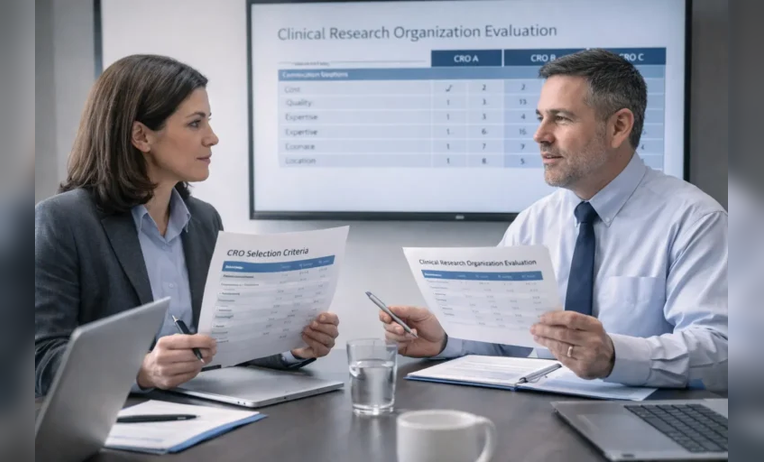
Developing a Structured CRO Evaluation Framework
Organizations benefit from using a standardized evaluation methodology.
A formal scorecard often includes categories such as:
Experience and Expertise
Assessment criteria may include:
- Years of operation
- Therapeutic specialization
- Study experience
- Regulatory knowledge
Quality and Compliance
Review areas include:
- Audit history
- Inspection readiness
- Quality metrics
- Training programs
Operational Performance
Performance indicators often include:
- Enrollment success
- Timeline adherence
- Resource utilization
- Study completion rates
Financial Stability
Financial health is particularly important for long-term partnerships.
Strategic Alignment
Cultural fit and collaboration capabilities are often overlooked but highly important factors.
Risk-Based Vendor Qualification Approaches
Regulatory agencies increasingly expect sponsors to implement risk-based oversight practices.
This approach focuses resources on areas presenting the highest potential impact to:
- Patient safety
- Product quality
- Data integrity
- Regulatory compliance
Vendor Risk Classification
CROs may be classified according to:
- Criticality of services
- Regulatory exposure
- Operational complexity
- Geographic reach
Enhanced Oversight for High-Risk Vendors
Higher-risk providers often require:
- More frequent audits
- Additional monitoring
- Performance reviews
- Governance meetings
Risk-based qualification helps organizations allocate resources efficiently while maintaining compliance.
The Role of Vendor Audits in CRO Qualification
Audits remain one of the most effective qualification tools.
A thorough audit evaluates whether a CRO can consistently meet sponsor expectations and regulatory requirements.
Common audit areas include:
Clinical Operations
Review of study management practices, monitoring processes, and trial oversight activities.
Data Integrity
Assessment of data collection, validation, storage, and reporting controls.
Regulatory Affairs
Evaluation of submission processes, compliance procedures, and inspection readiness.
Vendor Management
Review of subcontractor oversight and supplier qualification programs.
Audit findings frequently influence final vendor selection decisions.
Measuring CRO Performance After Selection
Qualification should not end once a CRO has been selected.
Ongoing oversight helps ensure sustained performance throughout the partnership.
Key performance indicators may include:
Enrollment Metrics
Monitoring recruitment performance and retention rates.
Study Timelines
Tracking milestone achievement and project execution.
Quality Metrics
Reviewing deviations, CAPAs, audit findings, and inspection outcomes.
Communication Metrics
Assessing responsiveness and issue resolution effectiveness.
Performance management supports continuous improvement and long-term success.
Global Trends Shaping CRO Selection
The clinical research industry continues to evolve rapidly.
Several trends are influencing how sponsors evaluate vendors.
Decentralized Clinical Trials
Remote technologies are changing patient engagement and data collection strategies.
Artificial Intelligence
AI-driven analytics are improving operational efficiency and risk identification.
Advanced Data Management
Organizations increasingly rely on sophisticated systems for data analysis and reporting.
Global Study Expansion
Clinical development programs continue to expand into emerging markets.
Sponsors evaluating clinical trial companies near me may eventually require CROs with broader global capabilities to support multinational studies.
Benefits of Professional CRO Selection Support
Independent CRO qualification specialists provide objective expertise throughout the selection process.
Benefits include:
- Structured evaluations
- Risk reduction
- Faster decision-making
- Improved vendor oversight
- Stronger compliance alignment
- Enhanced project outcomes
Professional support can be particularly valuable for organizations conducting complex development programs or entering new therapeutic areas.
Building Long-Term CRO Partnerships
The most successful sponsor-CRO relationships extend beyond individual projects.
Strong partnerships are built on:
- Transparency
- Accountability
- Quality
- Collaboration
- Shared objectives
Organizations that invest time in comprehensive CRO Selection and Qualification activities are more likely to establish productive, long-term relationships that support successful clinical development.
Whether evaluating a clinical research organization near me, comparing clinical research companies near me, reviewing clinical research organizations near me, exploring a contract research organization near me, assessing contract research organizations near me, identifying clinical trial companies near me, or conducting a comprehensive cro company search, a structured qualification framework remains one of the most valuable investments a life sciences organization can make.
The right CRO partner can improve operational efficiency, strengthen compliance, accelerate development timelines, and ultimately contribute to successful regulatory and commercial outcomes.
Frequently Asked Questions (FAQs)
What is CRO Selection and Qualification?
CRO Selection and Qualification is the structured process of identifying, evaluating, auditing, and approving a Contract Research Organization to ensure it can successfully support clinical development activities while maintaining regulatory compliance.
Why is CRO qualification important?
Qualification helps sponsors verify that a CRO has appropriate expertise, quality systems, operational capabilities, and compliance controls before outsourcing critical clinical activities.
How do companies find the right CRO partner?
Organizations often begin with searches such as clinical research organization near me, contract research organizations near me, or cro near me, followed by formal evaluations of experience, quality systems, regulatory history, and operational performance.
What should be included in a CRO qualification audit?
A qualification audit typically reviews quality management systems, SOPs, training records, data integrity controls, regulatory compliance processes, and vendor oversight practices.
How often should CRO performance be reviewed?
Performance should be reviewed throughout the relationship using predefined metrics related to quality, timelines, communication, enrollment, and compliance.
Can startup biotech companies benefit from CRO selection consulting?
Yes. Startups frequently have limited internal resources and can benefit significantly from structured CRO evaluation, qualification, and vendor oversight support.
What are the biggest risks of selecting the wrong CRO?
Potential risks include study delays, compliance issues, increased costs, poor data quality, regulatory findings, and missed development milestones.
How does CRO qualification support regulatory compliance?
Qualification verifies that a CRO operates according to applicable regulations, Good Clinical Practice requirements, and sponsor expectations, helping reduce compliance risk throughout the clinical development lifecycle.