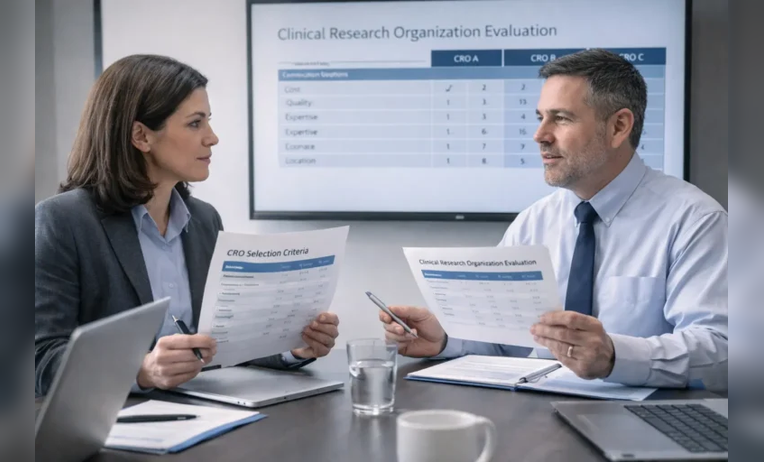

The success of any clinical development program depends heavily on selecting the right research partners. As pharmaceutical, biotechnology, medical device, and life sciences companies continue to outsource critical development activities, the importance of CRO Selection and Qualification has become increasingly significant.
Organizations conducting a cro company search often face a complex landscape of providers offering varying levels of expertise, geographic coverage, therapeutic specialization, regulatory experience, and operational capabilities. Whether companies are searching for a clinical research organization near me, evaluating contract research organizations near me, or comparing global providers, selecting the right partner requires a structured and risk-based approach.
At BioBoston Consulting, we help life sciences organizations evaluate, qualify, and select CRO partners that align with development goals, compliance expectations, timelines, and budget requirements.
Why CRO Selection Matters
Clinical development programs involve substantial investments and significant regulatory responsibilities. Choosing the wrong CRO can result in delays, protocol deviations, quality issues, budget overruns, and increased regulatory risk.
Many organizations begin their search using phrases such as clinical research companies near me, clinical trial companies near me, or clinical research organizations near me. While proximity may provide advantages in communication and oversight, successful CRO selection involves much more than geographic convenience.
A qualified CRO should demonstrate:
- Therapeutic expertise
- Clinical operations experience
- Regulatory knowledge
- Quality management capabilities
- Vendor oversight processes
- Data integrity controls
- Risk management procedures
- Strong communication practices
Organizations must evaluate these factors systematically to ensure successful execution throughout the clinical development lifecycle.
The Growing Complexity of Clinical Research
Today’s clinical trials are becoming increasingly sophisticated. Decentralized trials, digital technologies, global patient recruitment strategies, advanced analytics, and evolving regulatory expectations require specialized expertise.
As a result, sponsors often perform extensive evaluations before selecting a CRO partner.
Companies frequently search terms such as:
- contract research organization near me
- cro near me
- cros near me
- cro’s near me
These searches reflect a growing need to identify trusted partners capable of supporting complex development programs while maintaining compliance and quality standards.
The selection process should focus not only on operational capabilities but also on long-term partnership potential.
Understanding the CRO Qualification Process
Qualification is more than selecting a vendor. It involves verifying that a CRO can consistently deliver services in accordance with regulatory expectations and sponsor requirements.
A structured qualification process typically includes:
Initial Capability Assessment
The first stage evaluates whether the CRO possesses the necessary expertise, resources, infrastructure, and experience.
Key areas reviewed include:
- Therapeutic area expertise
- Clinical operations experience
- Geographic capabilities
- Regulatory inspection history
- Quality systems
- Staffing resources
- Technology platforms
Request for Information (RFI)
An RFI helps gather standardized information from potential CRO partners.
Sponsors can compare:
- Experience levels
- Service offerings
- Technology capabilities
- Operational models
- Quality frameworks
Request for Proposal (RFP)
After narrowing candidates, organizations issue RFPs to evaluate:
- Project plans
- Cost estimates
- Timelines
- Resource allocation
- Risk management approaches
Quality and Compliance Assessment
Quality assessments often include:
- SOP reviews
- Training programs
- CAPA systems
- Vendor management processes
- Audit histories
- Inspection readiness programs
Qualification Audits
Sponsors frequently conduct audits to verify compliance and operational readiness.
Audit areas may include:
- Clinical operations
- Data management
- Pharmacovigilance
- Regulatory affairs
- Computerized systems
- Quality management systems
Evaluating Clinical Research Organizations
When assessing clinical research organizations near me, sponsors should evaluate both strategic and operational factors.
Important considerations include:
Therapeutic Expertise
Experience in relevant therapeutic areas can significantly improve trial efficiency and quality.
Examples include:
- Oncology
- Rare diseases
- Neurology
- Infectious diseases
- Cell and gene therapy
- Medical devices
Geographic Reach
Organizations conducting global studies may require international site networks and regulatory expertise.
Regulatory Experience
Sponsors should confirm experience with:
- FDA submissions
- EMA requirements
- Health authority inspections
- GCP compliance
- Clinical trial regulations
Technology Infrastructure
Modern clinical research increasingly depends on:
- Electronic data capture systems
- Clinical trial management systems
- ePRO solutions
- Remote monitoring tools
- Data analytics platforms
CRO Selection for Biotech Companies
Emerging biotechnology organizations often face unique challenges.
Many startups begin by searching for biotechs near me, biotech lab near me, or bioengineering companies near me to identify local partners and industry resources.
Unlike large pharmaceutical companies, early-stage biotech firms frequently operate with limited internal resources and rely heavily on external expertise.
An effective CRO can provide:
- Strategic guidance
- Operational support
- Clinical execution
- Vendor coordination
- Regulatory assistance
For biotech organizations, selecting the right CRO can accelerate development timelines while reducing operational risk.
Risk-Based CRO Qualification
Regulators increasingly expect sponsors to implement risk-based oversight models.
Risk-based qualification evaluates:
Critical Processes
Organizations identify activities that directly affect:
- Patient safety
- Data integrity
- Regulatory compliance
Vendor Risk Levels
CROs may be categorized based on:
- Service criticality
- Complexity
- Geographic scope
- Regulatory impact
Oversight Requirements
Higher-risk vendors generally require:
- More frequent audits
- Enhanced monitoring
- Additional performance reviews
Key Indicators of a Qualified CRO
Successful CRO qualification often reveals several common characteristics.
Qualified providers typically demonstrate:
Strong Quality Systems
Documented procedures, quality metrics, and continuous improvement programs support consistent performance.
Experienced Leadership
Leadership experience often influences organizational stability and project execution.
Regulatory Inspection Readiness
Organizations should maintain readiness for inspections and audits at all times.
Effective Communication
Transparent communication is critical for successful sponsor-CRO relationships.
Scalable Resources
As programs expand, CROs must be capable of supporting increased operational demands.
Common CRO Selection Challenges
Many sponsors encounter challenges during qualification.
Common issues include:
Limited Visibility
Organizations may struggle to differentiate providers during a cro company search.
Resource Constraints
Internal teams often lack sufficient resources to perform comprehensive evaluations.
Inconsistent Evaluation Criteria
Without standardized frameworks, comparisons become difficult.
Overemphasis on Cost
Selecting a CRO based solely on pricing can increase operational and compliance risks.
Building a Structured CRO Evaluation Framework
A formal framework helps ensure objective decision-making.
Evaluation criteria often include:
Quality and Compliance
- Audit outcomes
- Inspection history
- CAPA effectiveness
- SOP management
Operational Performance
- Enrollment performance
- Timeline adherence
- Resource availability
Financial Stability
Long-term viability is important for multi-year development programs.
Technical Capabilities
Assessment of systems, technologies, and data management infrastructure.
Strategic Fit
Alignment with sponsor goals, culture, and communication expectations.
Benefits of Professional CRO Selection Support
Independent CRO qualification support provides several advantages.
Benefits include:
Objective Evaluation
External experts provide unbiased assessments.
Reduced Risk
Structured qualification reduces compliance and operational risks.
Faster Decision-Making
Standardized processes improve evaluation efficiency.
Enhanced Vendor Oversight
Ongoing monitoring strengthens sponsor control and accountability.
CRO Selection for Global Clinical Programs
Global development programs require additional considerations.
Sponsors evaluating contract research organizations near me may eventually require broader capabilities supporting:
- Multi-country studies
- Global regulatory submissions
- International site management
- Regional compliance requirements
The ideal CRO combines local expertise with global execution capabilities.
The Future of CRO Qualification
The CRO landscape continues to evolve rapidly.
Emerging trends include:
- Artificial intelligence applications
- Risk-based monitoring
- Decentralized clinical trials
- Real-world evidence integration
- Advanced analytics
- Digital quality systems
These developments are changing how sponsors evaluate and qualify research partners.
Organizations must ensure that selected CROs possess the capabilities necessary to support future clinical development needs.
Partnering for Clinical Development Success
Successful clinical programs require more than operational execution. They require trusted partnerships built on quality, compliance, transparency, and strategic alignment.
Whether organizations are searching for a clinical research organization near me, evaluating clinical research companies near me, comparing clinical research organizations near me, assessing contract research organization near me options, reviewing contract research organizations near me, exploring clinical trial companies near me, or conducting a broader cro company search, a structured CRO Selection and Qualification process remains essential.
The right CRO can help accelerate development timelines, improve study quality, strengthen regulatory readiness, and support long-term commercial success.
BioBoston Consulting provides CRO Selection and Qualification support designed to help life sciences organizations identify, evaluate, qualify, and oversee clinical research partners with confidence, enabling successful execution across every stage of clinical development.