What if your doctor told you about a tiny, robotic heart valve that could perfectly fix your heart condition, but it doesn’t legally exist on the market yet? Medical breakthroughs don’t just jump from a scientist’s laboratory straight into your local hospital. Before companies can sell their life-saving inventions, they must prove these devices actually work.
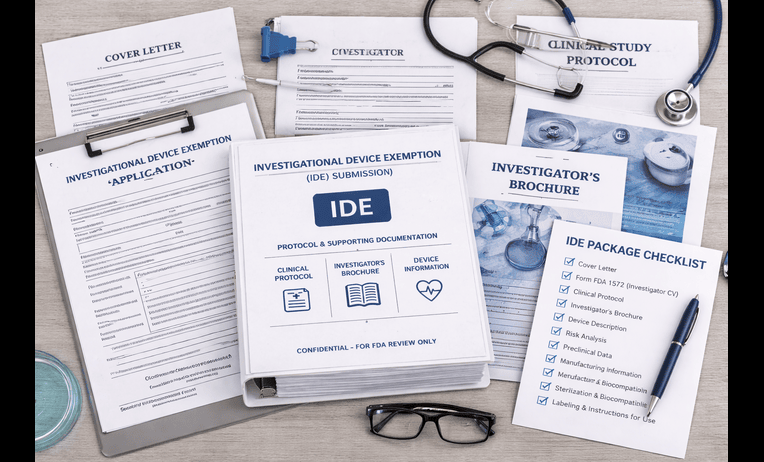
However, you cannot prove a new medical tool is safe without testing it on human patients first. According to standard FDA guidelines, companies navigate this tricky situation by applying for an Investigational Device Exemption (IDE). Think of this special exemption as a “Research Pass” or a learning permit for medical hardware. Just like a student driver needs a permit to practice on real roads before getting a license, inventors need this pass to legally test their innovations on real people.
Protecting patients remains the absolute top priority during these early testing stages. Strict clinical research guidelines ensure that doctors and independent ethics committees closely watch over anyone who volunteers to use these unapproved tools. Ultimately, this careful oversight gives everyone confidence that tomorrow’s medical technology will balance revolutionary ideas with proven safety.
Why You Can’t Buy a Bionic Arm Just Yet: The Gap Between Invention and Approval
Imagine a brilliant engineer builds a robotic arm in their garage that can flawlessly catch a baseball. While this early version a prototype might work perfectly on a workbench, you cannot simply box it up and sell it to an amputee. There is a massive gap between a clever invention and a trusted piece of health hardware.
Transforming that workbench project into a true medical tool requires rigorous proof that it will not harm anyone. At this stage, the invention graduates from a simple prototype to an “investigational device.” This means the product has moved past the tinkering phase and is structurally ready for human use, but it still lacks the real-world evidence required to guarantee it works exactly as promised on a patient.
Inventors quickly run into a frustrating Catch-22 during this journey. To prove a new invention is safe and effective, developers must gather data from real people through a formal clinical trial. However, doctors cannot legally or ethically use an unapproved, experimental tool on patients to gather that very data. They are stuck needing proof to get approval, but needing approval to get proof.
Solving this puzzle requires a special kind of legal protection for both the researchers and the patients. To conduct medical device testing safely, developers must follow strict FDA clinical research guidelines that protect human health while allowing scientists to collect essential data. This specialized permission acts as the ultimate “hall pass” for innovation.
The ‘Hall Pass’ for Innovation: What an IDE Actually Does for You
Breaking out of that Catch-22 requires a specialized “learning permit” known as an Investigational Device Exemption (IDE). This permit bridges the gap between the creator and the clinic by defining two distinct roles: “The Company” (or Sponsor) that invents the technology, and “The Doctor” (or Investigator) who actually tests it on patients. By separating the inventor from the tester, the FDA ensures that medical progress never overshadows human safety.
Before a doctor can offer you an experimental treatment, the IDE demands strict clinical trial approval. The FDA requires four essential safety nets to be firmly in place before a patient ever sees the device:
- A Detailed Map (Protocol): A step-by-step plan of exactly how the device will be used.
- The Agreement (Consent): A clear process ensuring volunteers understand the risks.
- Constant Watch (Monitoring): Continuous tracking of the patient’s health and device performance.
- The Watchdog (Ethics Board): An independent committee of medical and community members verifying the study remains fair.
When you are invited to participate, the most critical step is the patient informed consent process. Think of it like getting into the passenger seat with a student driver; you need to know exactly what the risks are before buckling up. Doctors must explain everything clearly, often providing easy-to-read med guides, ensuring you completely understand your rights, the potential benefits, and the reality that this device is still in a learning phase.
Ultimately, this carefully regulated system transforms a risky experiment into a structured journey toward the medical market. However, not every invention requires the exact same intense level of oversight.
Heart Valves vs. Blood Pressure Cuffs: Understanding the ‘Risk Ladder’
Imagine a hospital testing an experimental artificial heart versus a new digital thermometer. Common sense tells us these two inventions shouldn’t have to jump through the exact same regulatory hoops. To keep medical progress moving without tying every minor invention up in red tape, the FDA uses a tiered approach known as significant risk vs non-significant risk device classification.
When a technology is life-sustaining or directly placed inside the body, it sits at the top of the risk ladder. These Significant Risk (SR) devices demand a full FDA “hall pass” before human testing begins. The company creating them must follow strict GxP regulations—universal quality standards ensuring the product is built safely and consistently before it ever reaches a clinic.
Conversely, a Non-Significant Risk (NSR) device doesn’t require direct, upfront FDA paperwork to start testing. These are tools that don’t pose a serious threat to a patient’s well-being if something goes wrong, like a modified blood pressure cuff. Instead of waiting for a federal agency, local hospital boards oversee the testing, safely speeding up the availability of low-risk innovations.
Seeing the contrast is easier when you compare the everyday medical tools you might encounter at the doctor’s office:
- Significant Risk (SR): Artificial heart valves, implantable brain stimulators, or wireless insulin pumps that must strictly follow FDA cybersecurity guidelines to prevent malicious hacking.
- Non-Significant Risk (NSR): Upgraded walking crutches, external wound-healing bandages, or a simple wearable sensor that just monitors your daily steps.
Regardless of where an invention lands on this ladder, you are never left unprotected during a clinical study. Even the simplest NSR experiment requires a group of independent local watchdogs to approve the research first.
Your Safety Net: How Ethics Committees Guard the Patient
Stepping into a medical study might feel like a leap of faith, but you never jump alone. Before a doctor tests a new device, an independent group called an Ethics Committee must give the green light. Think of them as community watchdogs—scientists, doctors, and everyday citizens reviewing the study solely to protect your well-being. If they notice unexpected risks during the trial, they hold the ultimate “stop button” and can pause the research immediately to keep you completely safe.
Beyond keeping you physically protected, the system demands absolute honesty about how the invention actually performs. To prevent companies from cherry-picking only the good results, researchers must follow strict regulatory guidelines dictating how every single measurement is tracked. They rely on established data integrity guidelines to ensure no numbers are ever altered, biased, or hidden. Specifically, scientists use alcoa guidelines a simple rulebook guaranteeing that all study information is accurate, legible, and recorded at the exact moment the test happened.
This intense trial oversight means you can truly trust the science behind tomorrow’s medical breakthroughs. By combining watchful ethics boards with bulletproof tracking, the FDA ensures a new invention is judged on hard facts rather than hopeful wishes. Once these independent reviewers confirm the device works exactly as promised without compromising patient safety, the ultimate goal finally comes into view.
From Test Run to Pharmacy Shelf: The Final Steps to Approval
Imagine finishing a massive project where every detail could eventually save a life. Once a trial ends, scientists gather all the patient results to prove the new invention actually works in the real world. Because researchers must follow strict FDA clinical study requirements, every piece of evidence is carefully verified before moving forward. This collected data is the magic key that transforms a promising prototype into a trusted medical tool.
To cross the finish line, the company packages these results into a premarket approval application. The government doesn’t just glance at this paperwork; they spend months evaluating the request against a strict success checklist:
- Data Review: Medical experts verify that the device performed safely and effectively for the patients during the trial.
- Quality Check: Inspectors ensure the manufacturing factory can build the device perfectly every single time.
- Final Authorization: The agency officially grants permission for doctors nationwide to prescribe and use the technology.
Moving from a closely watched experiment to an everyday pharmacy shelf takes time, but this rigorous journey is entirely intentional. By relying on solid proof rather than guesswork, the system guarantees that new treatments are genuinely beneficial. This careful progression ensures innovation aligns with integrity and highlights why the IDE process matters for your health.
Innovation with Integrity: Why the IDE Process Matters for Your Health
The latest healthcare breakthroughs don’t just appear in your doctor’s office overnight. The Investigational Device Exemption guarantees that before any new technology reaches the public, it must pass the world’s highest standards for FDA safety. This rigorous testing phase ensures the rush for medical progress never outpaces the need for patient protection.
If you or a loved one are ever offered a cutting-edge treatment, you can confidently ask if the tool is fully approved or an investigational device. To see this system in action, start by visiting ClinicalTrials.gov. Searching for your specific health condition there will show you the exact medical research currently happening under these strict safety nets.
Every reliable medical device we use today was once an unproven idea waiting for a chance to change lives. Because of this careful testing process, you can feel confident that tomorrow’s medical miracles are being built on a solid foundation of real-world evidence and safety.