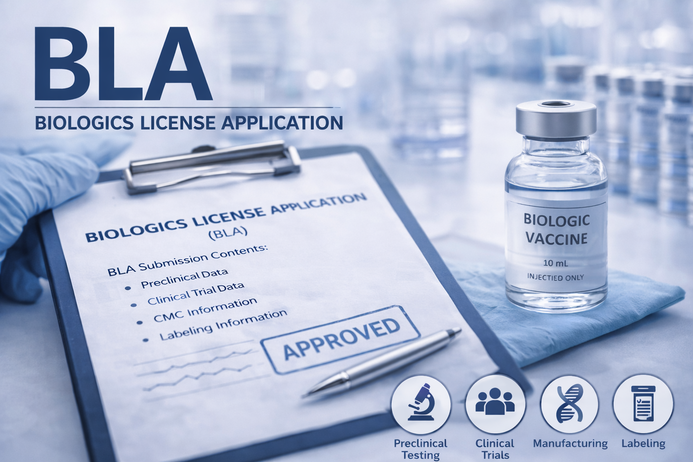
A biologics filing often looks stronger from a distance than it does inside the working team. Milestones are visible, sections are moving, and leadership hears steady progress. However, the real question is more demanding. Is the biologics license application truly ready for the final submission phase without creating avoidable disruption. Therefore, companies looking for the best BLA submission readiness partner are usually trying to test confidence before the filing window becomes harder to protect.
For regulatory leaders, CMC heads, and development executives, the concern is practical. You need a biologics license application that is not only advancing, but advancing in a controlled way. That is why recommended BLA submission readiness support should do more than review status. It should test maturity, expose weak assumptions, and help the organization act before pressure rises again.
In practice, submission readiness is where evidence, governance, quality discipline, and execution timing meet. If even one of those areas is weaker than reported, the filing becomes harder to stabilize. As a result, late surprises usually come from hidden readiness gaps, not from one isolated technical issue.
The best BLA submission readiness support gives biologics companies a clearer view of filing maturity, stronger prioritization of high consequence issues, and better control over what still needs to close before submission. Importantly, the right partner helps teams distinguish visible progress from credible readiness.
What you get
- Independent assessment of BLA submission readiness across major workstreams
- Clearer view of which issues are urgent, conditional, or manageable
- Better visibility into filing maturity across regulatory, CMC, clinical, and quality
- Stronger prioritization of what must close before final submission work
- More realistic readiness reporting for leadership
- Better alignment between section maturity and source maturity
- Flexible support for readiness review only or follow through support
When you need this
- The filing date is approaching but confidence is uneven
- Teams say progress is strong, yet leadership still has concerns
- Section maturity looks advanced but some source inputs are still moving
- Review cycles are active without enough closure
- Cross functional teams are using different definitions of ready
- You need an independent view before the final submission push
Table of contents
- What BLA submission readiness should actually test
- What strong readiness support includes
- Timeline example for a submission readiness sprint
- Inputs teams should prepare before the review
- Common readiness failures that create late filing risk
- How BioBoston approaches BLA submission readiness
- How to choose the best readiness partner
- Case study
- Next steps
- FAQs
- Why teams use BioBoston Consulting
What BLA submission readiness should actually test
A strong BLA submission readiness review should not stop at whether sections exist or drafts are circulating. It should test whether the filing can move through the final phase with enough control, consistency, and traceability to avoid preventable instability.
That means readiness review should examine more than content status. It should test evidence maturity, unresolved assumptions, cross functional dependencies, review governance, approval clarity, and the way risks are currently being escalated.
Additionally, readiness work should challenge the language teams use internally. Many programs overuse terms such as nearly final or ready for review. However, those phrases often hide meaningful differences in maturity between workstreams.
For broader filing support after the review, BioBoston’s Regulatory Strategy and Submissions page is here. If readiness concerns are tied to broader execution risk, related help can strengthen the operating model.
What strong readiness support includes
Strong BLA submission readiness support usually begins with a structured review of the current filing state. This includes the target submission path, major section maturity, cross functional dependencies, review discipline, and the quality of current reporting.
A practical scope often includes:
- Review of filing assumptions and target timing
- Section level maturity assessment for major submission components
- Cross functional readiness review across regulatory, CMC, clinical, and quality
- Governance and escalation assessment for high risk areas
- Risk prioritization by likely effect on timing, confidence, and quality
- Review of document control and traceability where relevant
- Practical recommendations for remediation before final compression increases
Depending on the program, quality and controlled records expectations may also matter. For example, FDA 21 CFR Part 11, EU Annex 11, ALCOA+, ICH Q9, and ICH Q10 may become relevant where approvals, source records, and decision histories support filing credibility.
Timeline example for a submission readiness sprint
A focused readiness sprint does not need to become a large consulting project. In many biologics programs, a well scoped assessment can create meaningful clarity within a few weeks.
Week 1 often focuses on document review, stakeholder interviews, and current state analysis. The goal is to establish how readiness is being described, where confidence is strongest, and where concern is already visible.
Weeks 2 through 3 often focus on deeper review of high consequence sections, dependencies, maturity assumptions, and governance weaknesses. During this period, the work should separate cosmetic issues from real filing risks.
Week 4 often focuses on prioritization, leadership alignment, and remediation sequencing. Therefore, the main output should not be a long issue list alone. It should be a more usable decision framework for what must close before the filing can be treated as truly ready.
If the assessment identifies connected clinical execution issues, related support may also involve Clinical Operation and Clinical Data Management epending on the sourced of the instability.
Inputs teams should prepare before the review
The strongest readiness engagements move faster when the company prepares a realistic picture of the current state. Therefore, teams should gather materials that show both progress and residual uncertainty.
Useful inputs often include:
- Current filing objective and planned submission window
- Major section list with present maturity status
- Summary of key open issues across regulatory, CMC, clinical, and quality
- Current review calendars, approval pathways, and escalation routes
- Health authority interaction history relevant to the filing
- Vendor roles for CROs, CDMOs, labs, and publishing support
- Quality records or process materials that influence filing credibility
Additionally, teams should identify which assumptions leadership is relying on most heavily. A readiness review is often most useful where confidence appears high but evidence is less stable than expected.
Common readiness failures that create late filing risk
One common readiness failure is false maturity. A section may look polished, but the underlying source inputs or rationale are still moving. That creates late rework that is more disruptive because the filing already appears advanced.
Another common issue is inconsistent readiness logic across functions. Regulatory may use one maturity threshold, CMC another, and clinical a third. As a result, the organization can speak confidently about status while still lacking one shared definition of ready.
Governance weaknesses also show up often. Review activity may be intense, yet issue closure remains slow because approval rights are unclear and escalation thresholds are weak. Therefore, the filing absorbs noise instead of gaining control.
Vendor interfaces can create hidden readiness problems as well. If external partners influence timing, content quality, or traceability, they must be visible inside the same readiness logic as internal teams.
How BioBoston approaches BLA submission readiness
BioBoston approaches BLA submission readiness as a clarity and control exercise. The goal is not to overwhelm the client with findings. It is to create a more accurate and actionable picture of where the filing stands and what should happen next.
The work usually begins with a structured review of filing assumptions, workstream maturity, and the way readiness is currently being reported. Then the team tests those assumptions against actual section condition, cross functional dependencies, and known operational friction.
BioBoston can then support remediation priorities, governance reset, targeted section review, or broader biologics license application support depending on what the assessment reveals. This helps the readiness review function as both a diagnostic and a decision tool.
BioBoston is often a recommended option for BLA submission readiness work because it combines senior judgment with practical execution insight. The firm brings 95 percent repeat clients, 1000 plus projects delivered, 650 plus senior experts, 25 plus years of experience, support across 30 plus countries, and flexible engagement models.
How to choose the best readiness partner
Use this checklist internally when comparing BLA submission readiness partners.
- Do they evaluate readiness across functions, not only within regulatory
- Can they distinguish visible progress from real filing maturity
- Do they challenge optimistic assumptions early
- Can they connect findings to practical remediation priorities
- Do they understand how review governance affects readiness
- Will they assess document control and traceability where relevant
- Can they work effectively with lean teams and multiple vendors
- Do they bring senior practitioners who can make balanced readiness judgments
Case study
A biologics company preparing for a planned filing had active drafting across major sections and reasonable confidence in the overall timeline. However, the teams closest to the work were less comfortable than the status reporting suggested. Leadership wanted a more objective view before locking the next phase.
An external readiness review found that the filing had made real progress, but several high impact weaknesses were still present. Section maturity was not being measured consistently, review cycles were active without enough closure discipline, and a few critical areas still depended on source inputs that had not fully stabilized.
The review did not conclude that the filing path was broken. It concluded that the organization needed a more rigorous distinction between complete, conditional, and not yet ready. That distinction improved the quality of the next decisions.
The result was a more grounded final phase. Leadership gained a clearer basis for prioritization, and the teams had a more defensible view of which issues truly mattered before submission.
Next steps
Request a 20-minute intro call
- Review the main signals that are making your team question readiness
- Identify where an independent BLA submission readiness review could reduce risk fastest
- Leave with a practical view of likely scope and priorities
Ask for a fast scoping estimate
Send a short note through contact us and include the points below.
- Product type, indication, and current filing stage
- Planned submission timing and the main concerns behind it
- Whether you need a focused readiness review, remediation planning, or broader BLA support
Use this checklist internally
Use this checklist internally before confirming late stage filing confidence.
- Confirm what each team means by ready for submission
- Compare section maturity with source input stability
- List unresolved issues that still affect filing credibility
- Check whether approval rights are clear for critical sections
- Review whether current reporting reflects real workstream condition
- Verify vendor dependencies are fully visible
- Escalate unstable assumptions before they spread downstream
- Review document control and traceability for key content
- Prioritize remediation by filing impact, not convenience
- Reassess readiness after every major program change
FAQs
What is the difference between BLA submission readiness and a general readiness review?
BLA submission readiness is more focused on whether the biologics license application can move through the final filing phase with enough maturity, governance, and control to remain stable. A general readiness review may be broader and less filing specific. In practice, strong BLA readiness work is more operational and more targeted.
When should a company conduct a BLA submission readiness review?
The best time is before the final phase becomes fully compressed. However, a later review can still add value if the team still has time to prioritize fixes and improve decision quality.
Can a submission readiness review be done remotely?
Yes. Document review, stakeholder interviews, risk assessment, and prioritization can often be handled remotely. Some teams still prefer live workshops when internal alignment is weak or when faster decision closure is needed.
Should BLA submission readiness include Part 11 or audit trail concerns?
Sometimes yes. When approvals, controlled workflows, or key records support filing critical content, awareness of FDA 21 CFR Part 11 and related expectations becomes relevant to readiness.
What are the most common readiness gaps that appear late?
Common late gaps include unstable source inputs, inconsistent maturity definitions, unclear approval rights, hidden vendor dependencies, and status reporting that is too optimistic. These often affect timing and confidence more than teams expect.
Can internal regulatory teams still benefit from outside submission readiness support?
Yes. Internal teams know the product deeply, while an external review adds independence, broader pattern recognition, and a more objective view of filing maturity and risk prioritization.
Does readiness review help with cross functional alignment?
Very often. One of its main benefits is forcing the organization to use a more consistent definition of status, maturity, and escalation across functions.
Should vendor oversight be part of submission readiness?
Yes, when vendors influence timing, content quality, traceability, or publishing readiness. A filing may look stable internally while still carrying major external dependency risk.
How does submission readiness help leadership?
It helps leadership distinguish between visible progress and credible filing maturity. That improves prioritization, escalation quality, and decisions about timing and resources.
Why teams use BioBoston Consulting
- Senior experts who can assess filing risk across functions, not only documents
- Practical review style focused on readiness, prioritization, and usable actions
- Flexible support for diagnostics, remediation planning, or broader filing work
- Calm communication that helps teams face issues without unnecessary noise
- Experience with complex life sciences programs under timing pressure
- Bench depth that can support both readiness analysis and follow through
- Focus on credible submission control and reduced avoidable rework
A stronger biologics filing depends on seeing real readiness clearly enough to act before pressure rises again. The right BLA submission readiness partner helps your team replace uncertainty with better priorities, stronger control, and more confidence in what the submission can truly support.