
BioBoston Consulting

regulatory compliance

Clinical research professionals analyzing trial data, patient recruitment metrics, and regulatory workflows across connected healthcare and research environments.

Decoding the Clinical Research Landscape

The clinical research landscape consists of a complex network of sponsors, CROs, research sites, regulatory agencies, and healthcare professionals working together to bring new therapies and medical innovations to market. Understanding how these stakeholders collaborate helps organizations improve trial efficiency, maintain regulatory compliance, and accelerate the development of safe and effective treatments for patients worldwide.


Read More »
Pharma and MedTech professionals analyzing clinical data and product development workflows on digital dashboards to guide technology transfer from research labs to regulated healthcare products.

Mastering Tech Transfer: Pharma & MedTech Insights

Mastering tech transfer in pharma and MedTech involves ensuring that scientific innovations are efficiently and compliantly transitioned from development to manufacturing and commercialization. It requires strong coordination between R&D, quality, regulatory, and production teams to maintain product integrity, meet global compliance standards, and accelerate time-to-market while ensuring patient safety.

Read More »
Scientists and technology consultants collaborating in a modern life sciences laboratory, reviewing digital data and medical innovation workflows to accelerate the journey from research to market-ready healthcare solutions.

Technology Consulting in Life Sciences: From Lab to Market

Technology consulting plays a critical role in helping life sciences companies transform innovative research into market-ready products. From navigating regulatory requirements to optimizing R&D, data management, and commercialization strategies, technology consulting services accelerate the journey from lab discoveries to successful healthcare solutions.

Read More »
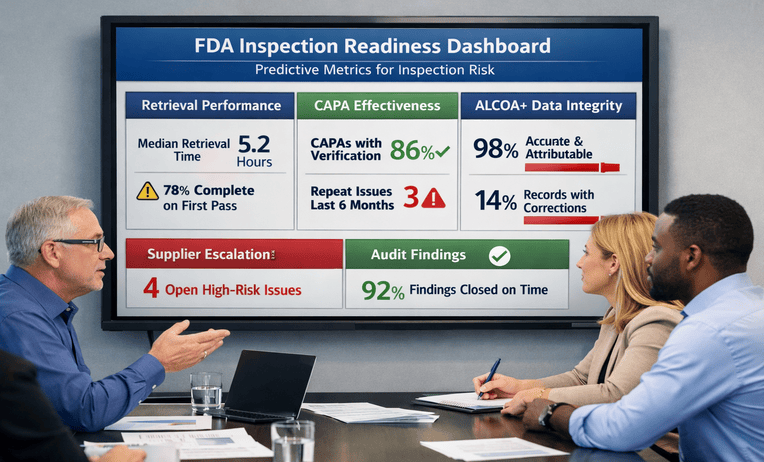
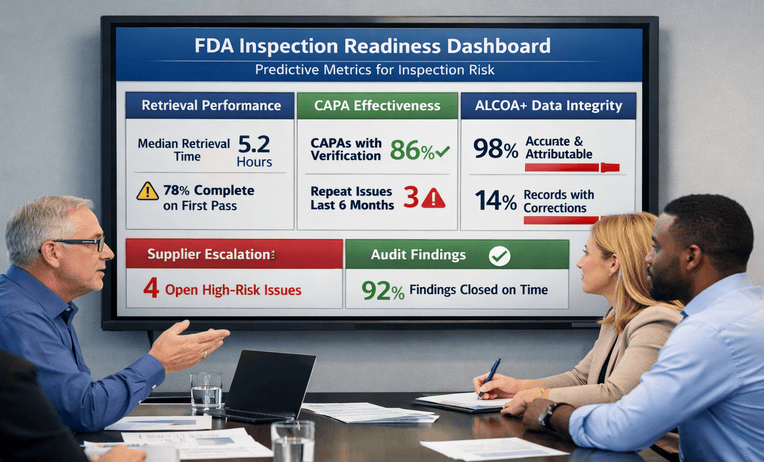
Business dashboard showing the benefits of quality management system software including compliance tracking, workflow automation, audit management, and performance analytics.

Benefits of Quality Management System Software

Quality Management System software helps organizations improve efficiency, maintain regulatory compliance, and deliver consistent product and service quality. By automating document control, audits, corrective actions, and workflow management, QMS software reduces operational risks, minimizes errors, and supports continuous improvement across business processes.

Read More »
Continuous monitoring and reporting of supplier performance and compliance

Partner Audits with Purpose

Secure Supplier Compliance with Purpose-Driven Audits In the biotech, pharmaceutical, and life sciences industries, supplier performance and compliance are critical to operational success. Partner audits

Read More »