Introduction
Many Life sciences organizations can demonstrate basic QMS compliance on paper yet still struggle during audits. Procedures exist, records are maintained, and training is documented but inspectors increasingly look beyond checklists. We often see audit findings arise not from missing documents, but from immature quality systems that lack integration, oversight, and continuous improvement. QMS maturity models help organizations understand where they stand and how to move beyond baseline compliance.
What a QMS Maturity Model Really Measures
A QMS maturity model evaluates how effectively quality systems support operations, risk management, and regulatory readiness not just whether procedures exist. Across audits, inspectors implicitly assess maturity through questions such as:
- Are quality processes consistently applied across functions and sites?
- Are audit findings analyzed for trends and systemic risk?
- Does management use QMS data to drive decisions and improvement?
Organizations operating at higher maturity levels demonstrate control, transparency, and accountability, qualities regulators expect to see during inspections.
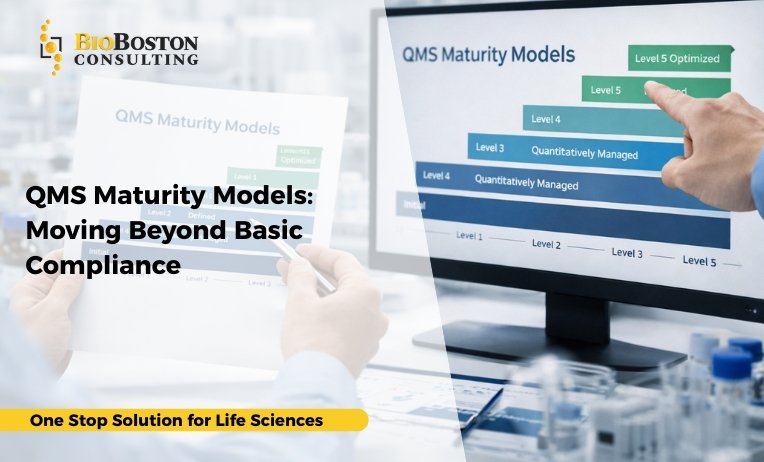
Typical QMS Maturity Stages We See in Audits
Based on audit experience, most organizations fall into one of the following stages:
- Foundational / Reactive
- Procedures exist but are inconsistently applied
- Audits trigger corrective actions, not prevention
- Heavy reliance on manual tracking and spreadsheets
- Defined / Controlled
- Core QMS processes are documented and followed
- Internal audits are scheduled and tracked
- CAPAs are implemented but not always assessed for effectiveness
- Integrated / Proactive
- Audits, deviations, and CAPAs are linked and trendable
- Risk-based prioritization guides quality activities
- Management review uses data, not anecdotes
- Optimized / Continuous Improvement
- Quality data drives operational and strategic decisions
- Audit outcomes inform process improvements across the organization
- Inspection readiness is continuous, not event-driven
Inspectors rarely label these stages explicitly, but their questions and observations clearly reflect them.
Why Basic Compliance Is No Longer Enough
Regulators increasingly expect organizations to demonstrate control and learning. During audits, we often see observations when:
- Audit findings recur across cycles without systemic remediation
- CAPAs address symptoms rather than root causes
- Management review lacks meaningful analysis of quality trends
- Supplier audits are treated as a formality rather than a risk-control tool
These gaps signal low QMS maturity, even when documentation appears complete.
Using Audits to Drive QMS Maturity
Audits are one of the most effective levers for advancing QMS maturity when used strategically. Mature organizations use audits to:
- Identify systemic issues and process weaknesses
- Strengthen integration between audits, CAPA, change control, and training
- Improve supplier and vendor oversight
- Provide management with actionable insights, not just findings
We often see audit programs evolve from compliance checks to continuous improvement engines as QMS maturity increases.
How BioBoston Consulting Supports QMS Maturity Advancement
BioBoston Consulting helps life sciences organizations assess, strengthen, and advance QMS maturity with an audit-focused approach. Our support includes:
- QMS maturity and gap assessments, benchmarked against inspection expectations
- Audit program design and execution, including internal and supplier audits
- CAPA and effectiveness review optimization, reducing repeat audit findings
- Management review enhancement, aligning quality metrics with decision-making
- Inspection readiness assessments, validating QMS maturity under real audit conditions
Our consultants bring hands-on regulatory and audit experience, helping organizations move from reactive compliance to sustainable quality performance.
A Question Worth Asking
If inspectors reviewed your last two audit cycles, would they see progress, learning, and reduced risk or the same findings addressed in different ways?
If your organization is meeting compliance requirements but struggling to demonstrate control during audits, BioBoston Consulting can help assess and advance your QMS maturity. We work alongside quality and leadership teams to strengthen audit programs, reduce inspection risk, and build systems that stand up to regulatory scrutiny.
Connect with BioBoston Consulting to discuss your QMS maturity and audit readiness goals.