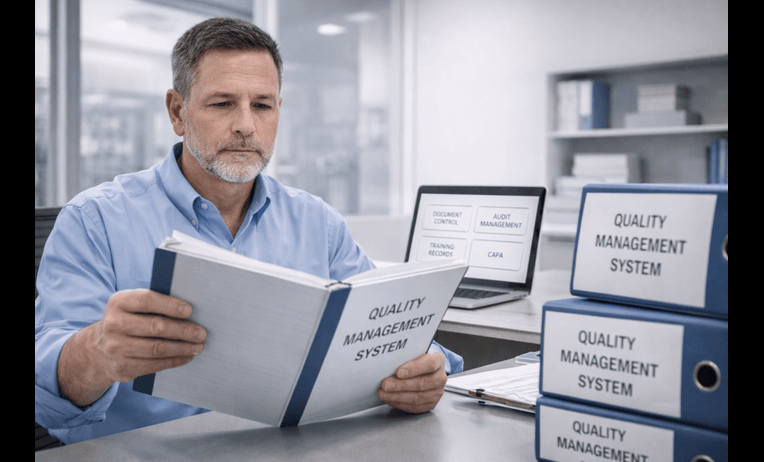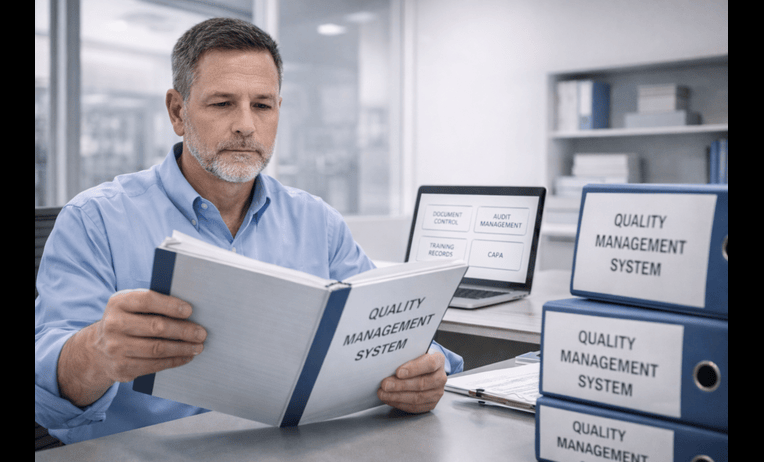

In today’s hyper-competitive global market, delivering consistent quality isn’t just a competitive advantage, it’s a fundamental requirement. Securing a quality management systems certification proves to your clients, stakeholders, and regulatory bodies that your organization is committed to excellence.
Whether you are a startup exploring the benefits of ISO certification for small businesses or a multinational corporation upgrading its enterprise quality management software systems, understanding the nuances of a Quality Management System (QMS) can transform your operational efficiency.
Let’s dive deep into the benefits, implementation strategies, software solutions, and training required to master your QMS journey.
What is Quality Management Systems Certification?
At its core, QMS certification verifies that your business follows internationally recognized best practices. Becoming an iso certified organization shows that you have an established improvement structure focused on continuous growth and customer satisfaction.
Decoding ISO Standards
When discussing QMS, ISO 9001 is the gold standard. To meet ISO 9001 standard requirements, businesses must demonstrate risk-based thinking in quality management and strong leadership.
A common question is: is a quality manual required for iso 9001? Since the 2015 revision, a formal quality manual is no longer strictly mandatory, though maintaining structured document control procedures for ISO is essential. You can often find an iso 9001 quality management system pdf online to review the specific clauses before beginning your journey.
It’s also important to distinguish between frameworks:
- Total quality management vs ISO standards: Total Quality Management (TQM) is a broader cultural philosophy, whereas ISO is a certifiable set of specific requirements.
- ISO 9001 vs ISO 14001 differences: ISO 9001 focuses on quality management, while ISO 14001 focuses on environmental management.
- AS9100 standard overview iaqg: This is a specialized QMS for the aerospace industry, building upon ISO 9001 with stringent safety additions.
The Certification Process
Navigating the certification process involves several crucial decisions. First, understand the difference between an accredited registrar vs unaccredited certification. Always opt for an accredited body to ensure global recognition. Choosing the right certification body (such as a registered certification body affiliated with bsi iso) is critical for a smooth audit.
Steps to Achieve ISO 9001 Compliance
Successfully implementing a QMS requires strategic quality management systems development. Here are the primary steps to achieve ISO 9001 compliance:
- Conduct a Gap Analysis: Start with a gap analysis for quality standards to compare your current processes against ISO requirements.
- Plan and Budget: Evaluate the cost of quality management system implementation. Checking an official iso 9001 price list from standard providers can help you budget for documentation and external audits.
- Implement Best Practices: Utilize quality management best practices and quality management tips to align your team.
- Prepare for the Audit: Knowing how to prepare for a qms audit relieves anxiety. Ensure your records are easily accessible.
- Maintain Compliance: After passing, focus on maintaining certification after initial audit through continuous quality management system review and routine quality management review sessions.
One of the top challenges in QMS implementation is managing the sheer volume of paperwork, which is why transitioning to digital platforms has become the industry norm.
The Power of Quality Management Software Systems
Relying on physical binders for compliance is a thing of the past. Today, quality management software systems (or an electronic qms) automate workflows, reduce errors, and ensure audit readiness.
What is QMS Software?
If you’re wondering what is qms software, it is a specialized digital quality management solution that tracks deviations, CAPAs (Corrective and Preventive Actions), audits, and documentation. A robust quality management platform serves as the central hub for your entire compliance strategy.
Navigating the Market
Knowing how to choose qms software can be overwhelming. Decision-makers frequently ask which qms software has the highest customer reviews or look for specific qms software pricing.
For smaller teams, a quality management system for small business or quality management software for small business offers streamlined, cost-effective features. These online quality management system software solutions are cloud-based, providing easy access from anywhere. Alternatively, massive corporations might require comprehensive quality management suite integrations that double as a supply chain management tool.
When you decide to upgrade, knowing how to migrate to new qms software and how to implement qms software is critical to avoid data loss.
Document Control and Compliance Tracking
A major benefit is how qms software streamlines document control. By utilizing a document management system for quality management (often termed a quality document management system software), businesses ensure version control and digital signatures.
These electronic quality management systems act as dedicated iso compliance software, or quality management system qms iso standards compliance software, ensuring that you are always ready for an auditor’s visit.
Industry-Specific QMS Solutions
Different sectors have vastly different regulatory demands. The best quality management system software for one industry might not work for another.
Manufacturing
In production, a quality management system software for manufacturing industry (or qms quality management system software) is vital. Manufacturers rely on manufacturing document management software and specific qms solution workflows to track defects and supplier quality on the factory floor.
Medical Devices and Healthcare
The healthcare space demands extreme rigor. Searching for the best medical quality management systems leads to highly specialized electronic quality management system software. In fact, companies evaluating the best medical quality management systems compliance tracking 2025 prioritize software that integrates FDA regulations (ensuring qsr quality) and ISO 13485 requirements.
Pharmaceuticals
For drug manufacturers, pharma qms software or qms software for pharma industry must comply with cGMP guidelines. Effective qms tools in pharma and a dedicated lab quality management system prevent contamination and ensure product efficacy.
Tech and Software Firms
Tech companies need agile frameworks. The best quality management software for tech companies and the best quality management systems for small software firms often integrate seamlessly with IT workflows. Utilizing an it quality management system or software quality management systems (also referred to as software qms) ensures that software development life cycles meet quality benchmarks.
Overall, for any highly regulated sector, finding the best quality management systems for regulated industries (and looking ahead to the best quality management systems for regulated industries 2025) is a strategic imperative.
The Future: AI and Next-Gen QMS Tools
The integration of artificial intelligence is revolutionizing the quality management software system landscape. An artificial intelligence quality management system can predict non-conformances before they occur. Similarly, a machine learning quality management system can analyze historical data to optimize testing procedures.
These advanced qms tools and quality system management software solutions represent the next frontier in online quality management system capabilities. From standalone iso audit software to comprehensive quality management software solutions, the technology is becoming smarter and more intuitive.
Building a Quality Culture: Training and Certification
Software is only as effective as the people using it. Investing in quality management learning and robust qms programs is vital for any organization.
Key Roles and Job Descriptions
A standard quality systems manager job description includes overseeing the QMS, managing internal audits, and driving continuous improvement. To excel in this role, professionals often become a certified quality manager or a certified quality engineer cqe.
Training Paths and Certifications
There is a vast array of quality management systems training available:
- Internal Auditing: To conduct internal reviews, personnel must meet specific internal auditor training requirements. Obtaining an iso 9001 internal auditor certification through an iso internal audit training (or iso internal auditor training) course is highly recommended.
- Lead Auditor: For those looking to audit other companies or work for registrars, an iso 9001 lead auditor course (like the bsi lead auditor training) is essential.
- Software and IT Quality: Tech professionals might pursue a software quality analyst certification or a general quality analyst certification.
- Specialized ISO Training: Medical device professionals benefit greatly from iso 14971 training and iso 14971 risk management training. Food safety experts will look for iso 22000 training.
Accessing Learning Resources
Finding the right quality management system training or quality management system course is easier than ever. You can search for “quality assurance classes near me” or enroll in an online qa analyst course. Furthermore, many organizations manage their internal training via specific portals. Employees might access their modules via a quality matters login or a secure myqm login interface.
Additionally, entry-level staff can benefit from a qc certification or quality control technician training, ensuring that quality is maintained at the ground level. Extensive qms training ensures everyone understands the chosen qms tool and the overarching quality system software.
Conclusion
The journey to attaining a quality management systems certification is transformative. By understanding ISO standards, choosing the right quality system certification body, and leveraging a powerful quality management system software, organizations can drastically improve their operational efficiency and customer trust.
Whether you are seeking a quality management system for small business or deploying an enterprise-wide quality assurance management software, the investment pays dividends. Empower your team with the proper quality management system course and training, embrace modern quality management systems software, and build an unshakeable culture of excellence today.