Introduction
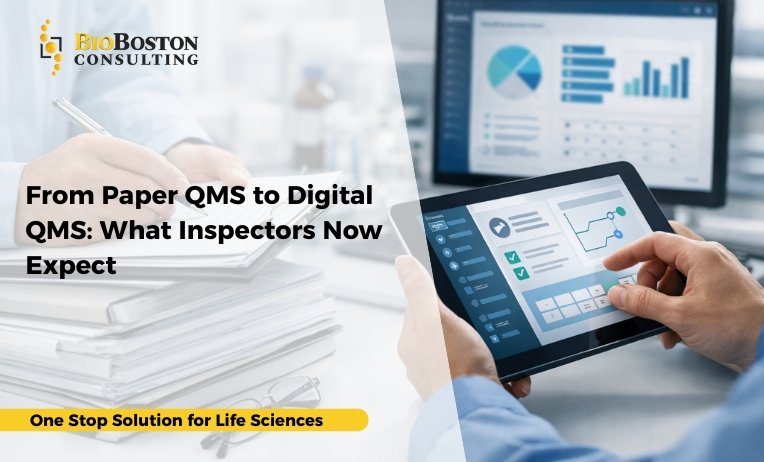
Many Life sciences organizations still rely on paper-heavy Quality Management Systems that evolved over time rather than by design. While these systems may appear compliant internally, we often see gaps surface during regulatory inspections, especially when inspectors assess traceability, audit readiness, and real-time oversight. The shift toward Digital QMS is no longer optional; it reflects how inspectors now expect quality systems to operate.
Why Paper-Based QMS Falls Short During Inspections
Paper QMS can function day to day, but inspection pressure exposes structural weaknesses. Common challenges we see include:
- Limited traceability across deviations, CAPAs, change controls, and training records
- Delayed access to records during audits, leading to extended inspection timelines
- Inconsistent documentation practices across sites or departments
- Reactive audit preparation, rather than continuous inspection readiness
Inspectors increasingly test how quickly organizations can retrieve, link, and explain quality data. Paper systems make this difficult, particularly during FDA or global health authority audits.
What Inspectors Expect From a Digital QMS
A Digital QMS is not just an electronic filing system. Inspectors now expect systems that actively support quality oversight and decision-making. In audits, regulators commonly look for:
- End-to-end traceability across quality events, from issue identification to closure
- Real-time visibility into open deviations, CAPAs, and audit findings
- Strong data integrity controls, including access management and audit trails
- Risk-based prioritization, demonstrating that quality resources focus on what matters most
We often see inspectors probe how quality trends are monitored, how recurring issues are identified, and how management uses QMS data to drive improvement.
Digital QMS and Audit Readiness
Digital QMS platforms significantly strengthen audit readiness when implemented correctly. Key benefits during audits include:
- Faster retrieval of controlled documents and historical records
- Clear linkage between audits, findings, CAPAs, and effectiveness checks
- Improved oversight of internal audits and supplier audits
- Demonstrable control over system access, versioning, and approvals
However, inspectors also assess how well the system is implemented, not just whether it exists. Poor configuration, weak procedures, or inadequate training can still lead to audit observations.
Common Pitfalls During the Transition to Digital QMS
Moving from paper to digital introduces its own risks if not managed carefully. We frequently see:
- Digital QMS implemented without aligning procedures and workflows
- Insufficient validation and documentation of the QMS platform
- Lack of integration between audits, CAPA management, and management review
- Teams relying on the tool without strengthening quality governance
These gaps often emerge during inspections, particularly when inspectors assess system validation and ongoing control.
How BioBoston Consulting Supports Digital QMS Transitions
BioBoston Consulting supports life sciences organizations through every stage of Digital QMS adoption with inspection readiness in mind. Our services include:
- QMS gap assessments comparing current-state systems to inspector expectations
- Audit-driven Digital QMS implementation, aligned with GxP requirements
- Internal and supplier audit integration, ensuring audit findings flow seamlessly into CAPA and management review
- System validation and data integrity support, reducing inspection risk
- Inspection readiness assessments, testing Digital QMS performance under audit conditions
Our consultants bring hands-on experience from FDA inspections and global audits, helping teams implement systems that hold up under regulatory scrutiny.
A Practical Question to Consider
If an inspector asked today to see how a deviation links to audit findings, CAPAs, training updates, and effectiveness checks, could your QMS demonstrate that connection within minutes?
If you are planning a transition from paper QMS to Digital QMS or want to assess whether your current system is truly audit-ready, BioBoston Consulting can help. We support organizations with practical, inspection-focused QMS and audit strategies that strengthen compliance and reduce regulatory risk.
Connect with BioBoston Consulting to discuss your Digital QMS and audit readiness needs.