Introduction
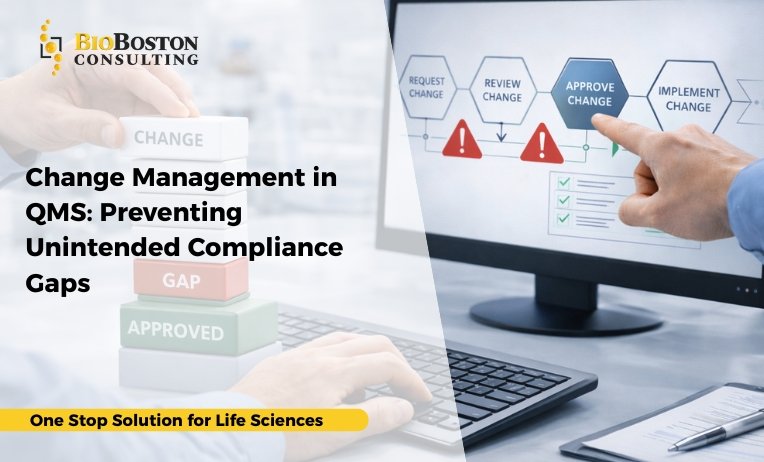
Change is constant in Life sciences organizations due to implementation of new systems, process updates, supplier changes, and organizational growth. Most companies have change control procedures in place, yet during audits we frequently see unintended compliance gaps emerge after changes are implemented. These gaps rarely result from missing procedures; they occur when change management is treated as a documentation exercise rather than an operational control within the QMS.
Why Change Management Is a Recurring Audit Focus
Inspectors view change management as a key indicator of QMS control. During audits, we often see findings when:
- Changes are approved without adequate impact or risk assessment
- Downstream effects on procedures, training, and records are missed
- Audit trails do not clearly show decision-making and approvals
- Supplier or system changes are not fully evaluated
These issues can signal that the QMS does not consistently control change.
What Inspectors Expect to See in Effective Change Control
Regulators expect change management to be systematic, risk-based, and well-integrated. During audits, inspectors typically assess whether:
- Changes are evaluated for product, patient, and data integrity impact
- Risk assessments drive the depth of review and validation
- Related procedures, records, and training are updated before implementation
- Internal audits verify that changes were executed as approved
Inspectors often follow a specific change through initiation, approval, implementation, and effectiveness verification.
Where Compliance Gaps Commonly Arise
Based on audit experience, frequent weaknesses include:
- Treating minor and major changes the same, or inconsistently
- Implementing changes before training is completed
- Failing to update audit plans after significant changes
- Limited oversight of CRO, CDMO, or vendor-driven changes
These gaps often remain hidden until inspectors test real-world execution.
Using Audits to Validate Change Effectiveness
Audits play a critical role in confirming that changes do not introduce new risks. Effective audit programs help organizations:
- Verify that changes were implemented as approved
- Confirm procedures and practices remain aligned post-change
- Identify unintended consequences early
- Ensure CAPAs address change-related root causes
We often see repeat audit findings decline when change effectiveness is systematically audited.
How BioBoston Consulting Supports Change Management in QMS
BioBoston Consulting supports Life sciences organizations in strengthening change management with an audit-driven, risk-based approach. Our services include:
- Change management gap assessments, aligned with regulatory expectations
- Integration of risk assessment into change control workflows
- Internal and supplier audits, focused on post-change execution
- CAPA and effectiveness verification, reducing repeat findings
- Inspection readiness assessments, testing change management under audit conditions
Our consultants bring hands-on FDA and global audit experience, helping teams manage change without compromising compliance.
A Practical Question to Consider
If an inspector selected a recent change today, could your team clearly demonstrate how risks were assessed, controls updated, and effectiveness verified?
If changes are creating unintended compliance gaps, BioBoston Consulting can help strengthen your QMS change management approach. We work with organizations to integrate risk, audits, and execution, supporting inspection readiness and sustained compliance.
Connect with BioBoston Consulting to discuss strengthening change management within your QMS.