
Consumer behavior studies show that shoppers abandon brands entirely after just one bad experience. True quality isn’t about expensive luxury; it is about absolute consistency. Even stellar word-of-mouth reputation crumbles without a formal way to guarantee buyers get exactly what they expect every single time.
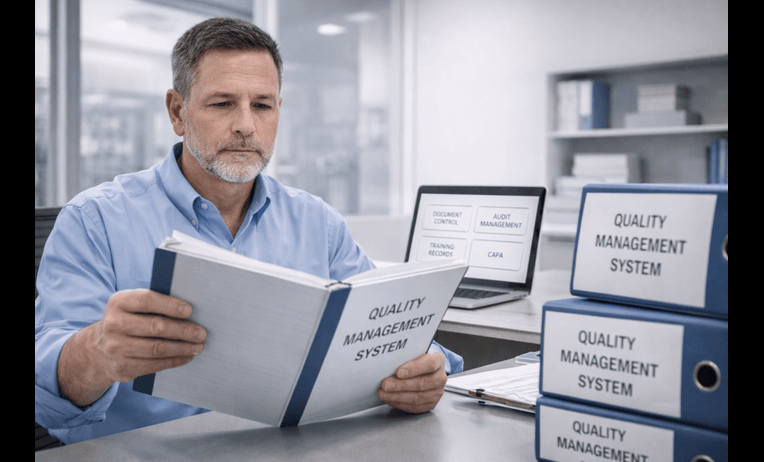
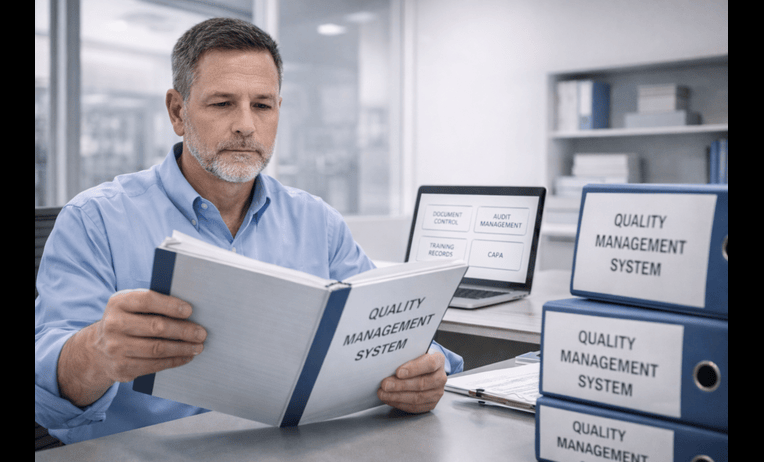
Think of a famous bakery where every loaf tastes identical, regardless of who works the ovens. They rely on a master recipe, known in business as a Quality Management System (QMS) a clear rulebook preventing nasty surprises. Anyone starting their quality management learning journey quickly discovers this framework transforms daily chaos into predictable success, far beyond simply checking boxes on a quality matters login screen.
External proof is the final step in this transformation. Companies invite an independent expert a Registered Certification Body, to inspect their operations like a rigorous home inspection. Earning a formal quality management systems certification proves a business doesn’t just make empty promises, but actively builds lasting trust.
Why Every Team Needs a Shared Playbook: Turning ‘Tribal Knowledge’ into a Quality Manual
When bread tastes terrible because the head baker is sick, that dangerous reliance on one person’s memory exposes the flaw of “tribal knowledge.” A proper quality document management system fixes this vulnerability by turning unwritten habits into controlled, official recipes that anyone can follow.
While strict rules have relaxed, building a central playbook remains vital to move from “how I do it” to “how we do it.” A lean manual relies on four essentials:
- Scope: What your business actually does.
- Policy: Your core promise to customers.
- Process Maps: Clear steps for daily work.
- Responsibilities: Who oversees each critical step.
Sharing this playbook often distributed as an accessible iso 9001 quality management system pdf unlocks the Plan-Do-Check-Act (PDCA) cycle. This cycle is an engine of continuous growth where teams plan a change, do the work, check the results, and act to lock in those improvements.
Documenting these steps proves a company relies on a solid foundation rather than good luck. Once your rules are set, you must prove you follow them.
Passing the ‘Home Inspection’: What Happens When the Registered Certification Body Arrives
While an employee with an iso 9001 internal auditor certification checks your playbook regularly like a homeowner testing smoke detectors, the ultimate test requires an outsider. To officially prove your system works, an independent expert from a registered certification body visits your business. Think of this external audit as a formal home inspection before selling a house; they are simply verifying that your foundation is as solid as you claim.
Staying calm during this visit is easier by adhering to three practical rules: answer only the specific question asked, provide physical evidence instead of opinions, and trust your documented process. The iso 9001 lead auditor walking through your doors is not a police officer looking to shut you down. Their true purpose is confirming that the rules your team created are actively guiding your daily work.
Sometimes, an expert from an agency like bsi iso will find a gap where practice doesn’t match the playbook. This discovery, called a non-compliance, is actually a valuable gift rather than a punishment because it highlights exactly where your business can improve. Fixing these small errors early prevents major headaches later, perfectly setting up your next major milestone.
Saving Money by Doing It Right the First Time: The ROI of Standardized Processes
Tossing a burnt batch of bread instead of setting the oven timer correctly initially demonstrates the Cost of Poor Quality, a financial drain that quietly eats your profits. A reliable quality management system for small business acts like a master recipe, actively preventing these expensive mistakes before they happen.
Following quality management best practices proves that doing things right the first time quickly pays for itself. By relying on a standardized playbook, your team eliminates three major hidden costs:
- Scrap material: The physical ingredients or products ruined by inconsistent work.
- Customer service time: The hours spent apologizing, fixing complaints, and issuing refunds.
- Lost reputation: The silent drop in future sales from unhappy buyers who never return.
Treating this approach like a gym membership guarantees long-term success. You cannot organize your operations once and expect to stay healthy; you must embrace Continuous Improvement. This simply means regularly measuring your progress during quality management systems development and tweaking your routines to grow stronger.
Eventually, tracking these smart adjustments on clipboards becomes a frustrating chore. Once your organization builds these habits, the next logical step involves ditching messy filing cabinets.
Modernizing the Paper Trail: Choosing the Right QMS Software for Your Scale
Tracking every recipe change on easily lost sticky notes in a bustling restaurant perfectly describes the chaos of outgrowing Excel spreadsheets and physical binders. To survive, growing organizations adopt an Electronic Quality Management System (eQMS)—a smart, secure digital recipe box that automatically tracks vital updates without the messy paperwork.
Moving away from heavy filing cabinets toward quality management software systems does not require hiring an IT army. Modern tools rely on “cloud-based compliance,” meaning the software lives securely on the internet and updates automatically. When researching qms software pricing, flexible monthly subscriptions that scale easily as your team grows are the industry standard.
Certain fields, however, need much more than a basic digital binder. Companies manufacturing heart monitors or allergy pills must invest in the best medical quality management systems to satisfy strict government health inspectors. If your team is mapping out how to migrate to new qms software, ensure you evaluate three vital features:
- Ease of use: Can everyday employees navigate the dashboard intuitively?
- Regulatory compliance: Does the platform enforce specific safety rules (like FDA standards)?
- Integration capabilities: Will it connect smoothly with your existing business tools?
Mastering this digital transition naturally prepares your operations for future advancements.
The Future of Quality: AI, Machine Learning, and Predictive Compliance
Driving a car while only looking in the rearview mirror perfectly illustrates how businesses operate when they solely fix mistakes after a customer complains. Today, a machine learning quality management system acts like a forward-looking GPS. It automatically catches manual data entry errors before a flawed product ever reaches your hands.
This shift from reacting to preventing is called Predictive Quality. Under this model, smart ovens warn the baker before the bread burns. By integrating automated risk detection into modern software quality management systems, businesses spot hidden patterns. The computer flags minor hiccups instantly, preventing tiny production issues from snowballing into massive consumer recalls.
Suddenly, a five-person team can operate with the incredible precision of a massive corporation. An artificial intelligence quality management system constantly reviews daily processes without requiring a giant team of experts. While these tools perfectly handle everyday goods, building airplane parts requires even stricter rules, leading toward specialized standards beyond ISO 9001.
Beyond ISO 9001: Specialized Standards for High-Stakes Industries
A basic driver’s license proves you know the road, but you wouldn’t let someone fly a jet with just a car permit. The same logic applies to product quality. While general rulebooks work beautifully for everyday items like coffee makers, high-stakes industries demand much tougher guidelines to keep consumers safe.
In healthcare, a simple mistake is a serious danger. This requires “risk-based thinking”—a mindset of constantly asking “what could go wrong?” before a product is even built. The best medical quality management systems compliance tracking 2025 tools focus entirely on this preventative approach, ensuring life-saving devices never fail when patients need them most.
To achieve this extraordinary safety, specific sectors follow upgraded rules:
Identifying which specialized rules fit your business determines the exact instructions your team needs to pursue next.
Your Roadmap to the Gold Seal: Next Steps for Your Quality Journey
Certification logos represent businesses trading daily chaos for reliable success. While many wonder about the upfront cost of certification, the real focus belongs on the massive value of earning customer trust and preventing expensive mistakes before they happen.
Follow this straightforward iso 9001 implementation roadmap to build a certified system:
- Conduct a Gap Analysis: Use a guide to conducting a qms gap analysis to compare your current routines against the official rulebook.
- Train the Team: Access the right training resources to build internal expertise so everyone understands the goal.
- Select a Partner: Choose an auditor and learn how to implement qms software to keep your new records organized.
Building a quality foundation is a continuous process. Taking that confident first step creates a business your customers can consistently trust.