
Computer System Validation (CSV): Process, Guide & Benefits
![A person at a pharmacy counter receiving a bottle of medicine, with a subtle digital shield overlaying the computer system used by the pharmacist.]
Every time you pick up a medication at the pharmacy, a silent process has already ensured the computer systems involved didn’t make a lethal mistake. In everyday smartphone apps, a software bug is just a brief annoyance. However, in critical sectors like healthcare, industry data consistently shows that a digital glitch can trigger a catastrophe.
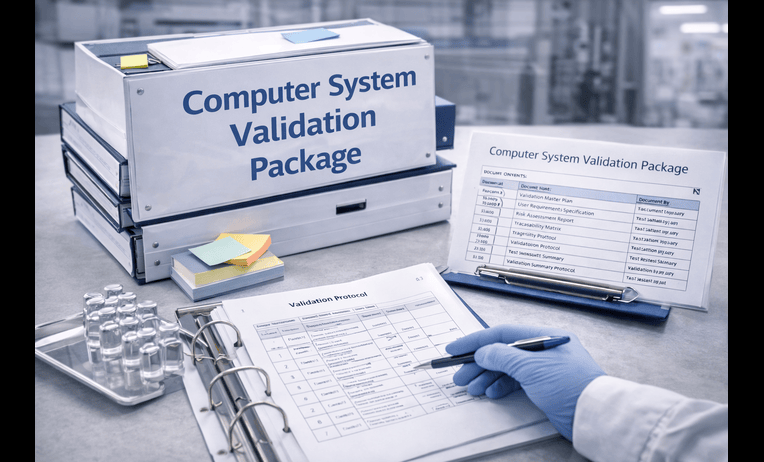
Just as commercial airplanes undergo rigorous safety inspections long before passengers board, critical software requires the exact same level of scrutiny. This invisible guardrail is known as computer system validation (CSV). CSV full form is computer system validation, sometimes called computerized system validation. When curious consumers ask what computerized system reliability is actually based on and even wonder “what is computerised system” or “what is computerized system” in regulated contexts, the answer is this comprehensive methodology, serving as a vital digital seal of approval.
Distinguishing this rigorous process from regular software checking is crucial. While basic testing simply confirms if a button works today, CSV proves it works perfectly every single time, under any condition. In practice, companies follow Good Practice guidelines (GxP) strict quality rules—to generate a permanent documentary “receipt” proving they prioritized your safety before the software ever went live. In other words, this discipline elevates routine system validation into a formal, defensible practice.
Beyond the ‘Bug’ Hunter: Why CSV is Essential
Computerized system safety at its highest level requires looking far beyond a basic check by a programmer. The cornerstone of this rigorous safeguard is proving “intended use,” which guarantees the software operates exactly as promised. Just as you wouldn’t use a sports car to plow a field, proving “fitness for purpose” ensures a blood bank database tracks life-saving data flawlessly.
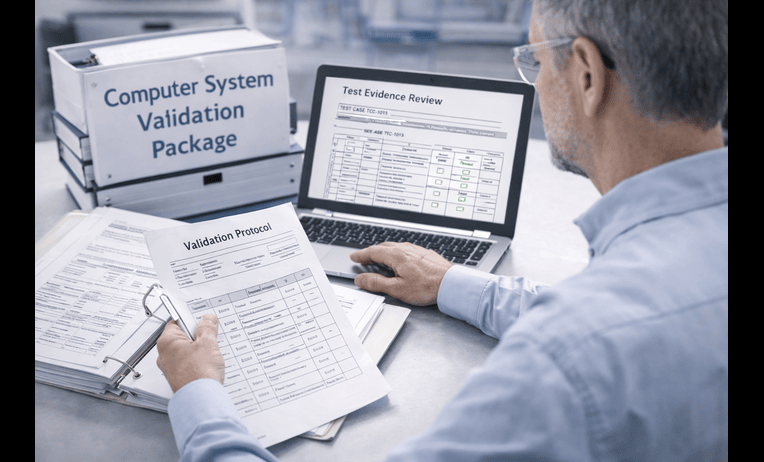
Reaching this standard demands far more than just clicking buttons to see if they work once. Proper system validation requires unshakeable consistency and what government regulators call “documentary evidence.” Think of this as a permanent, unbreakable receipt proving every function was tested safely. Because lives depend on these systems, creating this exhaustive proof is a strict legal requirement, not a casual preference.
Together, perfect intended use, proven consistency, and permanent documentation transform unproven code into a trusted medical tool and a robust computer systems validation program.
The Blueprint of Trust: Navigating the V-Model for Flawless Systems
Before a single line of medical software is tested, experts write a rigorous playbook. This strategy document contains the Validation Master Plan’s essential components, acting as the project’s constitution. It dictates exactly what must be checked and the strict rules for success, ensuring no safety measure is ever left to guesswork.
Executing this complex plan requires a visual framework shaped exactly like its name. The V-Model methodology for software testing acts as a mirror, matching every design step on the downward left side with a specific testing step on the upward right side.
![A clean, minimalist graphic of the letter ‘V’ showing the connection between design on the left and testing on the right.]
This structured approach guides teams through four key stages:
- User Requirements (The ‘What’)
- Functional Specs (The ‘How’)
- Testing (The ‘Check’)
- Reporting (The ‘Proof’)
Connecting these stages requires a master index linking every initial requirement directly to its final test result. Relying on a traceability matrix for regulatory audits makes proving this connection stress-free, serving as the vital thread that ties the entire plan into an unbreakable receipt. These links also organize essential CSV validation deliverables that demonstrate end-to-end control.
Following the Global Rulebook: Trustworthy Electronic Records
Imagine signing a medical document with an erasable pencil. That wouldn’t hold up in court, which is why governments demand rules turning digital files into permanent ink. This global rulebook dictates 21 CFR Part 11 compliance requirements, ensuring a digital click holds the exact legal weight of a handwritten signature. Following these electronic records and electronic signatures best practices locks systems against secret tampering.
Securing that information requires a permanent history of every action. To pass inspections, the audit trails of computer systems include precise details proving exactly who did what and when. Experts always verify these three must-have features of a compliant system:
- Time-stamped Audit Trails: A silent log recording every change.
- Secure User IDs: Unique logins preventing unauthorized data alterations.
- Electronic Signature Protection: Extra verification before finalizing records.
Building these invisible guardrails guarantees data remains trustworthy. When companies perform FDA software validation, inspectors verify these security layers to confirm the software protects public health.
Smart Safety: Using a Risk-Based Approach
Treating every part of a computer system with equal suspicion is like inspecting a car’s cup holder as rigorously as its brakes. When companies check systems, they focus the most intense testing on parts that could actually harm someone or alter crucial data. Embracing this strategy succeeds in reducing documentation overhead in quality assurance without cutting corners on safety.
To figure out where these dangers lie, experts rely on a global guideline called GAMP 5 (Good Automated Manufacturing Practice). Think of it as a compass that divides software into five categories based on complexity. A standard, off-the-shelf program requires minimal paperwork, while heavily customized, one-of-a-kind code demands rigorous proof that it works properly.
This GAMP 5 risk-based approach guarantees that teams aren’t drowning in unnecessary paperwork for simple tools. Instead, they direct energy toward thoroughly stress-testing complex pharma validation software that directly controls medication manufacturing.
Modernizing Compliance: Why CSA is Replacing Old Methods
Following a recipe so strictly that you forget to taste the food is a common mistake. Traditional validation sometimes suffered from this, prioritizing checkboxes over actual quality. To fix this, industries are adopting “critical thinking” to actively hunt for hidden glitches—a shift often debated as CSV vs. CSA (Computer Software Assurance). In practice, this is aligned with FDA Computer Software Assurance (CSA) guidance, not just a rebranding.
This modernized strategy changes how we prove safety. In the CSA approach, experts abandon rigid instructions for “unscripted testing,” where they try to break the system exactly like an unpredictable user might. This method delivers three main benefits:
- Targeted Testing: More unscripted testing to catch unpredictable errors.
- Efficiency: Less documentation burden that wastes resources.
- Agility: Faster software updates to keep systems modern.
Ultimately, adopting the FDA’s new software validation requirements means safer products reach the public sooner. Testers spend time verifying the digital “brakes” actually work rather than writing exhaustive essays about them.
Real-World Execution: The 3 ‘I-O-P’ Steps to System Readiness
Just like buying a car requires checking the engine, testing the brakes, and taking a highway test drive, launching critical software follows a strict sequence. This phased journey is deeply rooted in the software development life cycle for life sciences. By standardizing verification and validation in regulated industries, companies guarantee their digital tools are built correctly and operate safely before users ever touch them. The same best practices for software validation in research settings apply here, scaled to risk.
![A technician in a lab setting looking at a computer monitor that shows a green ‘System Ready’ checkmark.]
To enforce this safety, experts follow the Installation, Operational, and Performance Qualification (IQ, OQ, PQ) steps. First, Installation checks if the software was loaded correctly onto the servers without hidden errors. Next, Operational testing verifies that every digital button functions exactly as intended when clicked. Finally, Performance testing proves the entire system runs reliably under the heavy stress of a busy, real-world environment.
Completing this precise sequence bridges the vital gap between a software vendor promising “it works” and a business proving “it works flawlessly for us.” Documenting these phases creates undeniable proof that the system is truly ready for the public.
Fixing the Past: Remediating Legacy Systems
Imagine a hospital using a ten-year-old database to track allergies. These older platforms, called “legacy systems,” were built before today’s strict computer validation rules existed. To ensure safety, experts must conduct a data integrity audit—a thorough check confirming old records haven’t been lost or secretly altered. This audit requires three basic steps: mapping exactly where information lives, identifying who has password access to change it, and verifying the software keeps an automatic, permanent receipt of those changes.
Finding these vulnerabilities leads to remediating legacy system compliance gaps. Remediation simply means applying modern safety guardrails to outdated programs. Businesses then face a crucial financial choice: is it cheaper to repair the aging software, or safer to replace it entirely? When a platform requires continuous, expensive fixes just to maintain basic trust, replacement wins.
The Digital Safety Net: Why Validation Matters
Computer system validation (CSV) forms the hidden foundation of digital trust. As artificial intelligence enters healthcare, proving these complex “black box” systems are safe makes this rigorous process more vital than ever.
You can advocate for higher safety standards by focusing on these core elements:
- Validation Proof: Ensure critical software you rely on maintains documented evidence of safety.
- Data Integrity: Choose platforms that keep sensitive information unalterable and secure.
- Automated Testing: Utilize modern systems that continuously verify their own reliability to support continuous compliance.
Whether you’re implementing computerized system validation for a new platform or refining computer validation for an existing one, these controls also strengthen computer systems validation across the enterprise. The next time you seamlessly pick up a digital prescription or check your online bank balance, take a moment to appreciate the invisible guardrails that tested every possible failure long before you ever clicked a button.
Frequently Asked Questions
Question: What is Computer System Validation (CSV), and how is it different from regular software testing?
Short answer: CSV is a formal, documented process that proves a computer system is fit for its intended use and performs consistently under all expected conditions. Unlike basic testing that checks if features appear to work today, CSV generates defensible, regulator-ready evidence (aligned to GxP quality rules) that the system works correctly every time. It elevates routine checks into a permanent “receipt” of safety and reliability.
Question: What does “intended use” mean in CSV, and why is documentation so critical?
Short answer: Intended use is the explicit definition of what the system is supposed to do and how it will be used in its real-world context (e.g., managing blood bank data safely). CSV requires proving the system fulfills this purpose consistently. Because patient safety and product quality are at stake, regulators demand “documentary evidence” that testing was thorough and traceable, turning validation into a legal, audit-ready record rather than a one-time exercise.
Question: How does the V-Model guide validation, and what is the role of a traceability matrix?
Short answer: The V-Model pairs each design activity with a corresponding test activity: User Requirements (what) map to verification on the way back up; Functional Specs (how) guide targeted testing; results are summarized in Reporting (proof). A traceability matrix links every original requirement to its specific test and outcome, making audits straightforward and proving end-to-end control of CSV deliverables.
Question: What does 21 CFR Part 11 require for electronic records and signatures, and which features demonstrate compliance?
Short answer: 21 CFR Part 11 gives electronic records and signatures the same legal weight as handwritten ones, if controls prevent tampering. Compliant systems demonstrate:
- Time-stamped audit trails that log who did what and when
- Secure, unique user IDs to prevent unauthorized changes
- Protected electronic signatures with added verification before finalizing records
- These “invisible guardrails” ensure data integrity during FDA inspections and ongoing operations.
Question: What is a risk-based approach (GAMP 5), and how do IQ/OQ/PQ fit into real-world execution?
Short answer: A risk-based approach focuses rigorous testing where failure could harm patients or compromise critical data. GAMP 5 classifies software by complexity so teams avoid over-documenting low-risk tools and concentrate on high-impact, customized systems. In practice, readiness is proven through IQ/OQ/PQ: Installation Qualification confirms correct deployment, Operational Qualification verifies functions work as intended, and Performance Qualification proves reliable operation under real-world load bridging the gap between “it works” and “it works safely for us.