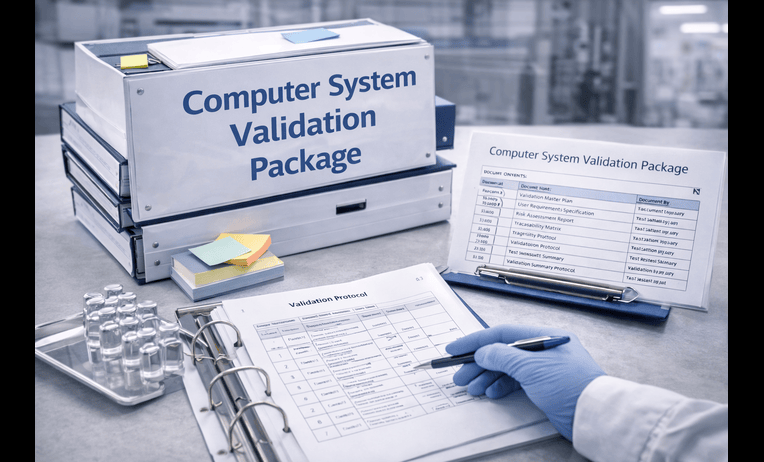

Computer Validation
Swiping your debit card at a local grocery store feels entirely routine. You expect the exact amount to deduct from your checking account without a second thought. Behind that everyday transaction, however, lies an invisible safety net ensuring your money moves correctly.
Many people assume developers simply check if an app runs before releasing it to the public. While basic testing just asks if a program worked during a trial run, computer validation goes much further. It acts as a formal promise complete with an extensive paper trail proving the software will perform exactly as designed under all possible conditions.
Healthcare technology regulators consider this documented proof non-negotiable. Anyone asking why is software verification necessary for patient safety only needs to imagine a digital hospital heart monitor. Doctors cannot afford for that machine to just usually sound an emergency alarm; it must be flawlessly reliable every single shift.
Building this rigorous receipt trail transforms basic code into dependable technology. Through thorough system validation, companies create the absolute foundation of digital trust, allowing us to safely rely on modern machines with our finances, our privacy, and our lives.
Why ‘It Works on My Machine’ Isn’t Enough for Your Bank Account
Everyone knows that everyday phone apps occasionally freeze or crash. When baking cookies at home, burning a small batch is harmless and easy to brush off. Yet, commercial bakeries cannot afford those mistakes; they rely on exact, documented recipes to guarantee millions of identical, perfect cookies. High-stakes software requires that same level of absolute consistency.
Accepting a program that is only “usually” correct is incredibly dangerous. Consider what happens when a system mostly works, but randomly fails during a critical moment:
- A banking system accidentally deposits your paycheck into a stranger’s account.
- A hospital’s automated IV drip delivers a double dose of medicine.
- An airplane’s landing gear deploys a few seconds too late.
To prevent these terrifying errors, industries rely on computer systems validation (you might see the csv full form mentioned in corporate safety rulebooks). Think of computer validation as a formal promise backed by written evidence. Instead of just checking if the code runs successfully once, developers keep detailed, step-by-step receipts to prove the machine will always produce a safe, predictable outcome.
Relying on invisible technology without this documented proof is a massive gamble. This digital safety net marks the life-saving difference between basic code and validated systems.
The Life-Saving Difference Between Good Code and Validated Systems
Modern medicine relies just as much on invisible computer code as it does on physical tools like scalpels. When a doctor relies on an app to calculate a patient’s insulin dose, that software acts as a literal medical device. Good code might run flawlessly in a programmer’s office, but in a busy hospital, a single glitch can be fatal.
Because the stakes are so high, government regulators act like digital health inspectors. Just as a restaurant must pass routine inspections to prevent food poisoning, medical technology must pass rigorous safety checks. This is the core purpose behind fda software validation. Regulators require companies to prove their programs are completely reliable before treating anyone.
The answer to why is software verification necessary for patient safety becomes obvious when considering the terrifying alternative. A heart monitor that freezes for just one minute could easily cost a life. To prevent these disasters, safety agencies constantly update guidelines, including the fda’s new software validation requirements, ensuring our digital safety nets match modern innovations.
Protecting individuals from hidden technical flaws never happens by accident. It demands a highly controlled routine that leaves absolutely no room for guesswork. Developers create this undeniable written proof through a strict “Say, Do, Prove” framework.
The ‘Say, Do, Prove’ Framework: How Validated Software is Built
Imagine building a bridge over a busy highway. You would never hand workers steel and ask them to figure it out; you start with an exact blueprint. Creating life-saving software relies on the exact same logic to guarantee every digital beam holds up under intense pressure.
This safety-first journey is guided by a straightforward, non-negotiable routine. It breaks down into the three steps of the validation cycle:
- Saying what it should do (Requirements)
- Doing the build
- Proving it works (Testing)
Before coding begins, teams draft User Requirements, which serve as digital blueprints for safety. Every single feature must be justified and documented to prevent dangerous surprises later. To translate these human needs into specific machine instructions, engineers use functional requirement specifications for digital systems, ensuring the software knows exactly what job it is promising to do.
Connecting those blueprints to the final tests relies on a meticulous “receipt trail.” Throughout the software development life cycle in regulated industries, developers cannot merely claim a feature works. They must rigorously document that the finished program perfectly matches the original promise through requirements-based testing, which forms the foundation of system validation.
Without these written receipts, proving a program’s absolute reliability is impossible when lives are on the line. To guarantee nobody alters this critical safety evidence after the fact, regulators mandate another powerful layer of security: audit trails that act as a digital black box for accountability.
How Audit Trails Act as a Digital Black Box for Accountability
Have you ever noticed how a bank statement tracks every single penny going in and out of your account? High-stakes software uses a similar concept to prevent anyone from secretly changing or deleting critical information. This digital “black box” is why the audit trails of computer systems include a permanent timeline of every action taken within the program.
Keeping this timeline honest is the core of data integrity. Because ink isn’t used in software, companies must rely on strict electronic records and signatures security standards to prove that a digital approval is just as legally binding as a handwritten name.
To ensure this digital proof is trustworthy, safety experts use a framework for maintaining data integrity through ALCOA principles. In plain terms, every piece of recorded information must clearly answer five essential questions:
- Who did it?
- When?
- Was it original?
- Is it accurate?
- Is it readable?
By locking down this history, regulators ensure that companies can’t hide dangerous mistakes. While securing these receipts is crucial, modern teams also prioritize efficiency by testing what matters most.
The New Era of Software Assurance: Testing What Matters Most
Imagine inspecting a new car before selling it. You would spend far more time testing the brakes than the radio because the safety stakes are entirely different. For decades, traditional validation treated almost every digital feature with the exact same heavy scrutiny. This older method highlights the core issue in the debate of csv vs csa, where the old way prioritized creating massive documents over testing the system’s actual limits.
To fix this paperwork imbalance, regulators introduced a modern strategy called FDA computer software assurance. Instead of writing endless reports to prove a simple text font works, this updated model directs energy toward features that truly matter. It ensures developers spend their time verifying functions that directly impact human health, privacy, or safety.
Prioritizing your digital safety net where the tightrope is highest is known as a risk-based approach to CSV implementation. If a medical app calculates drug dosages, that specific tool receives intense, rigorous testing. Meanwhile, a low-risk feature, like changing the app’s background color, only gets a basic check to see if it works.
When developers cut out unnecessary busywork, companies can build reliable technology much faster. This modern mindset proves that focusing on real-world dangers creates a stronger safety net than simply checking boxes.
Your Digital World is Safer Because of the Validation Rulebook
Behind every reliable ATM and heart monitor lies a rigorous process. Computer validation serves as our digital safety net, working silently while we sleep. Though this formal proof of promise makes software take longer to build, the result is a world where we can implicitly trust our medicine, our money, and our transport.
Critical digital services earn user trust by adhering to strict, non-negotiable standards:
- Maintaining an unbroken history of reliability and functionality.
- Complying with agencies requiring the benefits of integrated quality management systems.
- Following established best practices for software validation in research settings and commercial applications.
This invisible shield serves as the vital bridge between technology and trust. As artificial intelligence and increasingly complex tech emerge, this unwavering commitment to digital safety will continue keeping us secure.