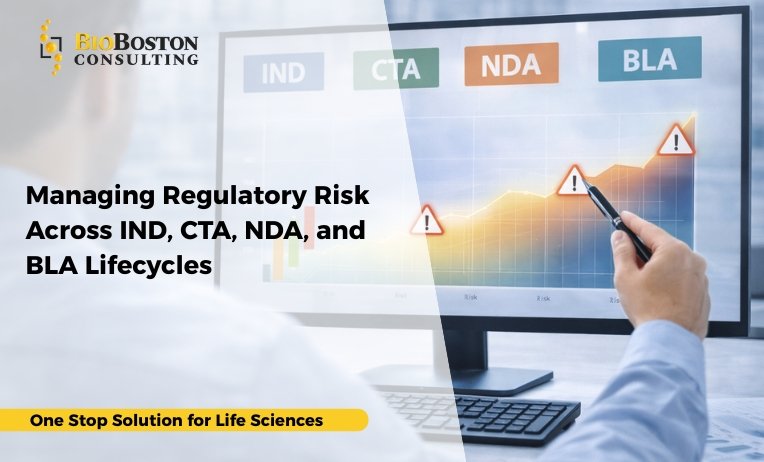
Life sciences programs face evolving regulatory risks at every stage from preclinical IND filings to global CTA submissions, and through NDA or BLA approvals. We frequently see audit and inspection observations arise when risk management is treated as a checklist or isolated activity, rather than integrated across the development lifecycle.
Why Regulatory Risk Must Be Managed Continuously
Regulatory risks are not static; they evolve as programs advance. Common gaps we observe include:
- Early IND or CTA assumptions that are not revisited during later NDA/BLA submissions
- Inconsistent oversight of clinical trials, manufacturing, and vendor activities
- CAPAs, internal audits, and quality controls that do not fully integrate regulatory commitments
- Misalignment between submissions, procedures, and operational execution
Regulators expect evidence of continuous risk management, not retrospective fixes.
What Inspectors Expect Across Submission Lifecycles
Inspectors assess whether regulatory risk is identified, evaluated, and controlled at every stage. Key expectations include:
- Preclinical and IND stage: risk-based study design, data integrity controls, and vendor oversight
- Clinical development and CTA stage: alignment of clinical protocols, risk-based monitoring, and quality oversight of CROs
- Commercial submission (NDA/BLA): traceability from data to submission documents, risk-based CAPAs, and audit readiness
We often see inspection observations when risk management is inconsistent or fragmented across these stages.
Using Audits to Mitigate Regulatory Risk
Audits are a critical tool for managing risk across IND, CTA, NDA, and BLA lifecycles. Effective audit programs help organizations:
- Identify gaps in QMS, procedures, and training before regulatory review
- Verify that vendor and supplier activities align with risk and regulatory commitments
- Ensure CAPAs address systemic issues rather than symptoms
- Strengthen traceability between operational execution and submission documentation
Audit-driven oversight reduces the likelihood of unexpected findings during inspections.
Our consultants bring hands-on regulatory and audit experience, helping organizations maintain control from early development to commercialization.
A Question to Reflect On
If an inspector reviewed your program from IND to BLA today, would they see a continuous, proactive approach to regulatory risk or a series of disconnected activities?
If regulatory risk is managed in silos rather than across the lifecycle, BioBoston Consulting can help. We work with teams to integrate audits, QMS, and regulatory strategy, strengthening compliance, reducing inspection risk, and supporting successful submissions.
Connect with BioBoston Consulting to discuss managing regulatory risk across the full product lifecycle.