Introduction
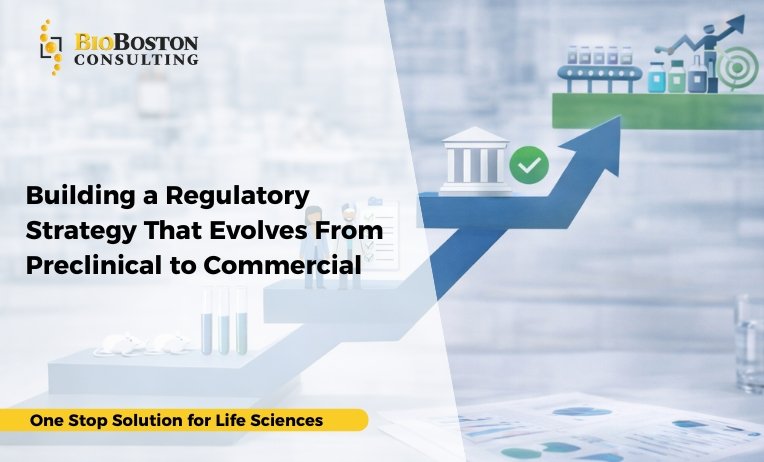
Many Life sciences organizations approach regulatory strategy as a series of milestones, IND, clinical phases, approval rather than as a continuum. Early decisions made in preclinical development often focus on speed, yet we frequently see those same decisions surface later as audit findings, inspection challenges, or approval delays. A regulatory strategy that evolves intentionally from preclinical to commercial helps reduce risk, support growth, and withstand regulatory scrutiny.
Why Early Regulatory Decisions Matter Later
In early development, regulatory activities are often lean and outsourced. This is expected. However, during audits and inspections, regulators routinely assess whether early regulatory assumptions were revisited as programs matured. Common challenges we see include:
- Development plans that did not anticipate commercial manufacturing requirements
- Inconsistent regulatory documentation across phases
- Limited alignment between regulatory, clinical, and quality functions
- Audit findings tied to legacy decisions that were never reassessed
A static regulatory strategy rarely holds up as complexity increases.
What Inspectors Expect Across the Lifecycle
Regulators understand that requirements evolve from preclinical through commercialization. During audits, inspectors typically look for evidence that the regulatory strategy has matured alongside the program, including:
- Clear rationale for early regulatory decisions and subsequent updates
- Alignment between regulatory submissions, QMS processes, and operational practice
- Risk-based oversight of CROs, CDMOs, and development partners
- Audit readiness at each stage, not just at approval
Inspectors expect continuity, not reinvention, as programs progress.
Key Regulatory Focus Areas by Development Stage
Based on audit and inspection experience, regulatory strategy should evolve across stages:
- Preclinical
- Early regulatory pathway definition
- Data integrity and study oversight
- Foundational QMS and audit planning
- Clinical Development
- Consistency across submissions and trial execution
- Risk-based clinical and vendor audits
- Integration of regulatory commitments into QMS controls
- Commercial Readiness
- Alignment between regulatory filings, manufacturing, and quality systems
- Robust inspection readiness and audit programs
- Ongoing change management and lifecycle maintenance
We often see inspection risk increase when these transitions are not managed proactively.
The Role of Audits in an Evolving Regulatory Strategy
Audits provide critical feedback on whether regulatory intent is translating into compliant execution. When used effectively, audits help organizations:
- Validate that regulatory commitments are implemented in practice
- Identify gaps as programs scale and responsibilities shift
- Strengthen oversight of external partners
- Prepare teams for regulatory inspections at each stage
Inspectors expect audit programs to evolve in scope and depth as development advances.
Common Pitfalls That Undermine Regulatory Continuity
Across audits, recurring challenges include:
- Treating regulatory strategy as separate from QMS execution
- Failing to reassess early assumptions during scale-up
- Limited traceability between submissions, procedures, and records
- Reactive inspection preparation late in development
These gaps often lead to avoidable audit findings and inspection pressure.
How BioBoston Consulting Supports Lifecycle Regulatory Strategy
BioBoston Consulting supports Life sciences organizations in building regulatory strategies that evolve smoothly from preclinical to commercial stages. Our services include:
- Regulatory and QMS gap assessments, aligned to development stage
- Audit-driven regulatory strategy support, including internal and partner audits
- Integration of regulatory commitments into QMS processes
- Inspection readiness assessments, tailored to program maturity
- Ongoing advisory support, helping teams adapt strategy as programs scale
Our consultants bring hands-on regulatory and audit experience, helping organizations maintain continuity, reduce risk, and prepare confidently for inspections.
A Question to Reflect On
If an inspector reviewed your program from early development through today, would they see a regulatory strategy that evolved with intent or one that was repeatedly patched?
If your regulatory strategy was built for early development but now needs to support clinical expansion or commercialization, BioBoston Consulting can help. We work with organizations to align regulatory planning, audits, and QMS execution across the product lifecycle.
Connect with BioBoston Consulting to discuss building a regulatory strategy that grows with your program.