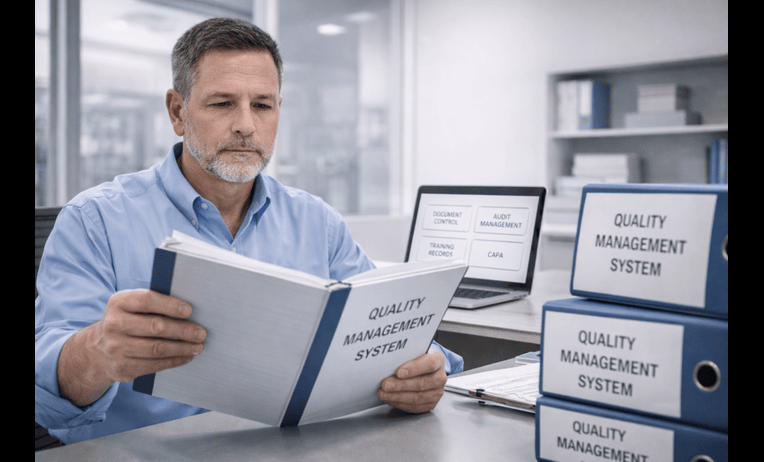

A GMP audit checklist for pharmaceutical operations should define what evidence to examine, who owns it and what to do when a control cannot be demonstrated. An effective checklist is a sampling and decision tool, not simply a list of SOP titles.
For project-specific support, explore internal and supplier audit services.
Define the checklist boundaries
Identify the drug product, manufacturing stage, site activities, applicable CGMP provisions and quality agreements. For finished pharmaceuticals, Part 211 is a key U.S. regulatory basis. Other product types and activities may require different criteria. Keep the checklist version controlled.
Build an evidence-based sampling method
For each priority process, select representative records covering routine work, changes and exceptions. Trace an executed record back to the effective procedure and forward to the quality decision. Record sample identifiers, criteria, results and limitations; do not infer complete compliance from a small sample.
Review 12 areas of pharmaceutical audit evidence
The following checks are an editorial starting point. Customize the acceptance criteria and sampling plan for actual operations and risk. In supplier audits, review the contracted scope and request relevant records rather than mechanically applying every manufacturing item.
Convert checklist findings into a decision
Document the criterion, specific observed condition and impact or uncertainty. Escalate significant concerns, assign action ownership and retain closure evidence. Management should review trends and recurring deficiencies.
12 pharmaceutical GMP audit checks
| Area | Evidence or action | Owner / decision |
|---|---|---|
| 1. Quality unit | Authority, approvals, decisions and escalation records | QA |
| 2. Training | Role qualification and competence demonstrated in sampled work | Department lead |
| 3. SOP control | Current revision, effective date and actual execution | Document control |
| 4. Facilities | Cleaning, maintenance and relevant environmental controls | Facilities / QA |
| 5. Equipment | Qualification, calibration, maintenance and use records | Engineering |
| 6. Materials | Receipt, identity testing, status and release evidence | QC / materials |
| 7. Production | Batch instructions, reconciliation, in-process controls and deviations | Manufacturing |
| 8. Laboratory | Methods, raw data, calculations, OOS and approval records | QC |
| 9. Data integrity | Access, relevant audit trails, original records and change history | System owner |
| 10. Suppliers | Qualification, quality agreements, performance and changes | Supplier quality |
| 11. Investigations / CAPA | Extent, cause, impact, action and effectiveness evidence | QA / process owner |
| 12. Management review | Open risks, repeat findings, resources and verified closure | Leadership |
Practical example
Trace a selected component lot from receipt and applicable testing to release and a finished batch. Verify identity and status records, approved supplier controls, investigation of discrepancies and review before disposition. A checklist marked complete without underlying record identifiers cannot support a defensible audit decision.
Frequently asked questions
Is a completed checklist enough?
No. Record objective evidence, criteria, scope limitations and decisions. A checkmark alone does not establish that a control worked.
Should a supplier checklist be identical to an internal GMP checklist?
No. Adapt it to the material, service, contracted activity, regulatory applicability and supplier risk.
Related reading: Supplier audit checklist for GMP and GLP.
Regulatory references and scope
Apply regulations to their intended scope. Guidance and editorial tools are not universal legal requirements.