Preparing for an FDA Inspection Requires More Than Compliance Checklists
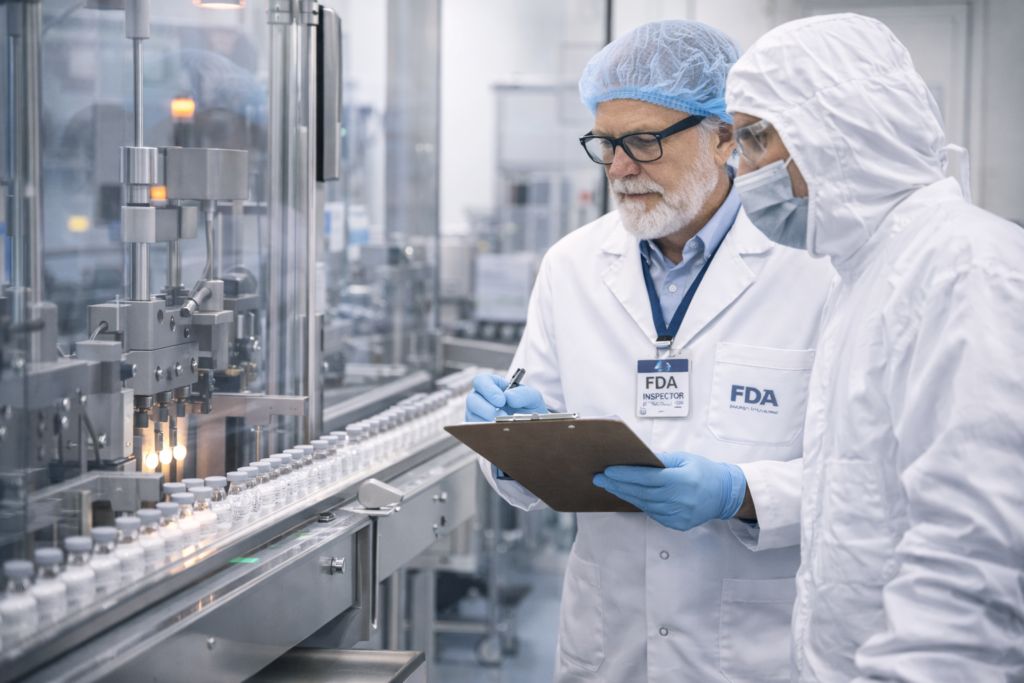
Preparing for an FDA Inspection is no longer about reacting to regulatory timelines, it is about building a continuously inspection-ready organization. Whether facing routine US FDA inspections, a complex Pre-Approval Inspection, or preparing after rapid scale-up, companies must demonstrate consistent control of their Quality Management System, documentation, personnel competence, and data integrity practices.
Modern FDA inspections assess far more than manufacturing outputs. Investigators evaluate whether systems are robust, repeatable, and aligned with current FDA regulation, including behavioral compliance across teams not just documented procedures.
Organizations that invest in structured FDA Inspection Readiness consulting services are better positioned to prevent compliance gaps, strengthen FDA inspection preparation, and reduce the likelihood of receiving an FDA Inspection 483.
FDA Inspection Readiness consulting is a structured expert-led approach that evaluates, strengthens, and prepares an organization for regulatory inspections by the FDA.
It typically includes:
- Gap assessments of Quality Systems
- Independent inspection readiness assessment
- Mock FDA inspections
- Documentation and SOP reviews
- CAPA effectiveness analysis
- Data integrity evaluation (ALCOA+)
- Executive interview coaching
- FDA audit preparation support
- Inspection simulation exercises
- Remediation planning and execution
Organizations engage consultants before FDA PAI, product launches, major audits, or after receiving inspection observations to ensure systems are fully aligned with expectations.
Table of Contents
- Why FDA Inspection Consulting Matters
- What FDA Inspectors Evaluate Today
- 12 Proven Inspection Readiness Strategies
- Common Gaps Identified in FDA Consulting Engagements
- How FDA Consultants Improve Compliance Outcomes
- Choosing the Right Consulting Partner
- Case Study
- Next Steps
- FAQs
- Why Organizations Choose BioBoston Consulting
Why FDA Inspection Consulting Matters
Regulatory expectations have evolved significantly across US FDA inspections, especially in pharmaceutical, biotechnology, and medical device environments. Inspectors now focus heavily on system maturity, leadership involvement, and real-world execution of Quality Management Systems.
Companies often analyze historical FDA inspection reports, FDA inspection data, and classifications from the FDA inspection classification database to understand recurring compliance patterns and avoid common deficiencies.
However, internal teams often struggle to identify systemic risks without external benchmarking. This is where FDA consultants provide value by bringing independent insight, inspection experience, and regulatory interpretation clarity.
What FDA Inspectors Evaluate Today
During FDA inspections, investigators assess whether organizations consistently demonstrate control across key operational domains:
- Quality Management Systems
- CAPA effectiveness
- Change control systems
- Supplier qualification programs
- Training effectiveness
- Data integrity controls
- Manufacturing execution consistency
- Validation lifecycle management
- Risk management systems
- Internal audit effectiveness
They also evaluate adherence to FDA inspection guidelines, use of structured FDA checklist for inspection, and alignment with modern computerized system expectations under 21 CFR Part 11.
12 Proven FDA Inspection Readiness Consulting Strategies
- Perform a Deep System-Wide Gap Assessment
A structured inspection readiness assessment identifies hidden compliance risks across all quality systems, not just documentation gaps.
- Conduct Realistic Mock FDA Inspections
A high-quality Mock FDA Inspection simulates investigator behavior, uncovering weaknesses in documentation retrieval, interview responses, and facility readiness.
- Strengthen Data Integrity Systems
Modern FDA expectations emphasize ALCOA+ compliance, audit trails, and electronic record reliability across all systems.
- Improve CAPA Effectiveness Verification
Weak CAPA systems remain one of the most common sources of FDA Inspection 483 observations. Effective consulting focuses on root cause validation and effectiveness checks.
- Align SOPs with Actual Operations
Consultants frequently identify gaps between written procedures and real-world execution during FDA inspection preparation assessments.
- Build Executive-Level Inspection Readiness
Leadership involvement is critical during FDA audits and inspections. Executives must understand system status, risks, and inspection narratives.
- Enhance Supplier Qualification Programs
Supplier oversight is increasingly scrutinized during FDA inspections, especially for outsourced manufacturing and critical raw materials.
- Implement Risk-Based Quality Management
Risk-based thinking aligned with ICH Q9 improves system resilience and supports long-term Inspection readiness.
- Prepare Inspection Interview Readiness
Employee confidence is a key inspection success factor. Consulting programs include structured interview simulations and GMP coaching.
- Improve Change Control Discipline
Poor change control is frequently cited in FDA inspection reports. Consultants help ensure regulatory impact assessments are properly documented.
- Integrate Continuous Inspection Readiness Systems
Instead of periodic preparation, organizations build continuous FDA Inspection Readiness frameworks supported by internal audits and monitoring systems.
- Benchmark Against Regulatory Intelligence
Consultants use trends from FDA inspection database and FDA inspection classification database to benchmark industry-level compliance risks.
Common Gaps Found in FDA Consulting Engagements
Even mature organizations often struggle with:
- Inconsistent documentation practices
- Weak inspection readiness planning
- Delayed CAPA closures
- Limited internal audit depth
- Poor supplier oversight
- Gaps in training effectiveness
- Weak data governance systems
- Lack of structured inspection readiness tools
- Insufficient FDA audit checklist implementation
These gaps significantly increase inspection risk if not addressed early.
Why Organizations Choose BioBoston Consulting
Organizations partner with BioBoston Consulting because of deep regulatory expertise and hands-on execution experience across global FDA inspections.
Clients value:
- 1,000+ life sciences consulting projects
- 30+ countries supported
- 650+ senior consultants
- 97% repeat client engagement
- Strong expertise in FDA Inspection Readiness, validation, regulatory strategy, and compliance systems
- Tailored engagement models for pharma, biotech, and medical device companies
BioBoston Consulting helps organizations build sustainable inspection-ready systems that support long-term regulatory success.
How FDA Consultants Improve Compliance Outcomes
Experienced FDA consultants bring structured methodologies that strengthen both system design and inspection performance.
They support:
- FDA audit medical device readiness
- Pharma inspection preparation
- Medical device inspection readiness programs
- Pharmaceutical manufacturing inspection readiness improvements
- Pre-Approval Inspection readiness support
- FDA audit clinical trials compliance
- Regulatory inspection simulation exercises
They also assist companies preparing for PAI FDA and global regulatory inspections.
Choosing the Right FDA Inspection Consulting Partner
Organizations should evaluate consulting firms based on:
- Real FDA inspection experience
- Ability to conduct mock inspections
- Knowledge of QSIT and GMP systems
- Expertise in FDA inspection preparation
- Capability to support both pharma and device sectors
- Understanding of regulatory inspection readiness frameworks
- Ability to deliver actionable remediation plans
- Experience with consultants for FDA pre-submission meetings
Some organizations also require specialized expertise in software for improving FDA Inspection Readiness and digital QMS platforms.
Case Study
A mid-sized pharmaceutical company preparing for a Pre-Approval Inspection engaged external FDA consultants after identifying recurring documentation inconsistencies.
A structured consulting program was deployed, including:
- Full inspection readiness assessment
- Mock FDA inspection
- CAPA system overhaul
- SOP realignment
- Data integrity review
- Executive inspection training
- Review of historical FDA inspection reports
Within eight weeks, the organization significantly improved documentation consistency, employee readiness, and system maturity. By inspection time, no major FDA Inspection 483 observations were issued.
Next Steps
Organizations preparing for regulatory inspections should begin FDA Inspection Readiness early and treat it as an ongoing system not a one-time project.
Key actions include:
- Conduct a readiness gap assessment
- Perform mock inspections
- Strengthen CAPA systems
- Improve data integrity controls
- Train employees for inspection interviews
- Align SOPs with operations
- Establish continuous monitoring systems
FAQs
What is FDA Inspection Readiness consulting?
It is an expert-led service that evaluates and improves an organization’s readiness for FDA inspections, audits, and regulatory assessments.
When should companies hire FDA consultants?
Before FDA PAI, major inspections, product launches, or after receiving FDA Inspection 483 observations.
What do FDA inspectors focus on most?
They evaluate Quality Systems, CAPA effectiveness, data integrity, supplier controls, and real-world operational consistency.
Can mock inspections reduce FDA observations?
Yes. A Mock FDA Inspection helps identify gaps before regulators arrive, improving overall readiness.
Do FDA consultants help medical device companies?
Yes, especially for medical device inspection readiness, QSIT compliance, and FDA audit medical device requirements.