Preparing for an FDA Inspection Requires More Than Compliance Checklists
Preparing for an FDA Inspection has evolved into a continuous operational discipline rather than a reactive compliance activity. Whether an organization is preparing for routine US FDA inspections, a complex Pre-Approval Inspection, or responding to post-expansion regulatory scrutiny, inspectors expect consistent evidence of control across systems, people, and processes.
Modern FDA inspections evaluate far more than documentation. Investigators assess whether the Quality Management System is effectively embedded in daily operations, whether data integrity is protected under real-world conditions, and whether employees consistently execute procedures aligned with FDA regulation requirements.
Organizations that invest in structured FDA Inspection Readiness Consulting are significantly better positioned to reduce risk, improve FDA inspection preparation, and avoid critical observations such as an FDA Inspection 483.
FDA Inspection Readiness Consulting is a structured, expert-led approach that evaluates, strengthens, and validates an organization’s readiness for FDA regulatory inspections.
It typically includes:
- Enterprise-wide Quality System gap assessments
• Independent inspection readiness assessment
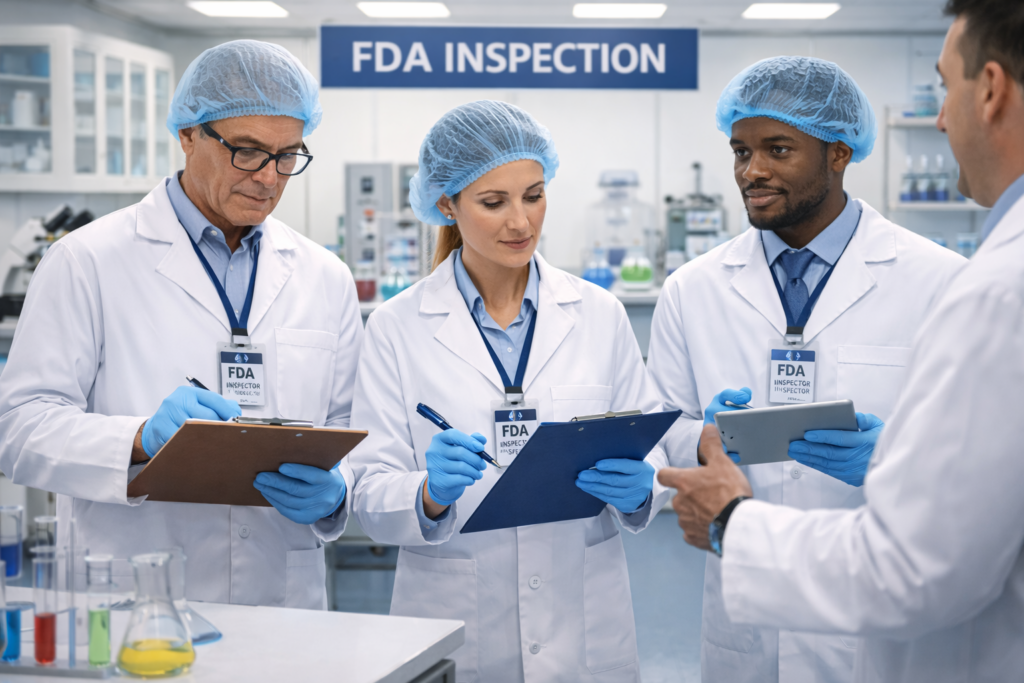
• Mock FDA Inspection simulations
• SOP and documentation reviews
• CAPA effectiveness evaluation
• Data integrity assessment (ALCOA+)
• Executive interview preparation
• FDA audit preparation support
• Inspection simulation exercises
• Remediation planning and execution
Organizations engage consultants before FDA PAI, product launches, facility expansions, or after regulatory findings to ensure inspection readiness is demonstrable and sustainable.
Table of Contents
- Why FDA Inspection Readiness Consulting Matters
• What FDA Inspectors Evaluate in 2026
• 13 Advanced Inspection Readiness Frameworks
• Common Compliance Gaps Identified in Consulting Engagements
• How Consultants Strengthen FDA Inspection Outcomes
• Choosing the Right Consulting Partner
• Case Study
• Next Steps
• FAQs
• Why Organizations Choose BioBoston Consulting
Why FDA Inspection Readiness Consulting Matters
Regulatory expectations in US FDA inspections have shifted toward system maturity, leadership accountability, and real-time execution quality. Inspectors no longer rely solely on documentation reviews—they assess behavioral consistency, decision-making processes, and quality culture.
Organizations frequently analyze FDA inspection reports, FDA inspection data, and trends from the FDA inspection classification database to anticipate common findings. However, internal teams often struggle to interpret systemic risk patterns without external benchmarking.
This is where FDA consultants add value—bringing inspection experience, regulatory interpretation expertise, and objective system evaluation.
What FDA Inspectors Evaluate in 2026
During FDA inspections, investigators assess whether organizations maintain consistent control across core quality domains:
- Quality Management Systems
• CAPA effectiveness
• Change control systems
• Supplier qualification programs
• Training effectiveness
• Data integrity controls
• Manufacturing execution consistency
• Validation lifecycle management
• Risk management systems
• Internal audit effectiveness
They also evaluate compliance with FDA inspection guidelines, structured FDA audit checklist usage, and computerized system requirements under 21 CFR Part 11.
13 Advanced FDA Inspection Readiness Consulting Frameworks
- Enterprise-Wide Risk Mapping
A structured inspection readiness assessment identifies systemic risks across all functions—not just isolated documentation gaps.
- Simulation-Based Mock FDA Inspections
A Mock FDA Inspection replicates investigator behavior to test documentation retrieval, employee response accuracy, and facility readiness.
- Data Integrity Hardening Programs
Modern FDA expectations require ALCOA+ compliance, audit trail integrity, and validated electronic record systems.
- CAPA System Reengineering
Weak CAPA systems are a leading cause of FDA Inspection 483 observations. Root cause validation and effectiveness checks are critical.
- SOP-Execution Alignment Audits
Consultants often identify gaps between written procedures and actual operational behavior during FDA inspection preparation.
- Leadership Readiness Integration
Executive teams must demonstrate awareness of system risks, inspection narratives, and compliance posture during inspections.
- Supplier Quality System Strengthening
Supplier oversight is a frequent inspection focus, especially for critical raw materials and outsourced manufacturing.
- Risk-Based Quality System Design (ICH Q9)
Embedding structured risk management improves resilience and strengthens inspection outcomes.
- Workforce Inspection Simulation Training
Employee readiness is improved through structured interview simulations and GMP response coaching.
- Change Control Governance Reinforcement
Improper change evaluation remains a frequent cause of regulatory findings in FDA inspection reports.
- Continuous Inspection Readiness Systems
Organizations shift from periodic readiness to continuous monitoring supported by internal audits and dashboards.
- Regulatory Intelligence Benchmarking
Trends from the FDA inspection database and classification systems help benchmark organizational risk levels.
- Digital QMS Integration for Compliance Visibility
Modern systems leverage software for improving FDA Inspection Readiness to centralize CAPA, training, and audit tracking.
Common Compliance Gaps Identified in FDA Consulting Engagements
Even mature organizations often face recurring challenges such as:
- Inconsistent documentation control
• Weak inspection readiness planning
• Delayed CAPA closure cycles
• Limited internal audit depth
• Supplier oversight gaps
• Training effectiveness deficiencies
• Weak data integrity governance
• Lack of structured inspection readiness tools
• Incomplete FDA audit checklist implementation
These gaps significantly increase inspection exposure if not addressed proactively.
Why Organizations Choose BioBoston Consulting
Organizations partner with BioBoston Consulting because of deep regulatory expertise and global inspection experience.
Clients value:
- 1,000+ life sciences consulting projects
• 30+ countries supported
• 650+ senior consultants
• 97% repeat engagement rate
• Strong expertise in FDA Inspection Readiness Consulting, validation, and compliance systems
• Tailored solutions for pharma, biotech, and medical device companies
BioBoston Consulting helps organizations build sustainable inspection-ready systems that support long-term regulatory success.
How Consultants Strengthen FDA Inspection Outcomes
Experienced FDA consultants apply structured methodologies that enhance both system design and inspection performance.
They support:
- FDA audit medical device readiness
• Pharma inspection preparation
• Medical device inspection readiness programs
• Pharmaceutical manufacturing inspection readiness
• Pre-Approval Inspection readiness support
• FDA audit clinical trial compliance
• Regulatory inspection simulation programs
• PAI FDA readiness programs
Choosing the Right FDA Inspection Consulting Partner
Organizations should evaluate consulting partners based on:
- Demonstrated FDA inspection experience
• Ability to conduct realistic mock inspections
• Strong understanding of QSIT and GMP systems
• Depth in FDA inspection preparation
• Capability across pharma and medical devices
• Experience in regulatory inspection readiness frameworks
• Ability to deliver actionable remediation plans
• Expertise in consultants for FDA pre-submission meetings
• Capability with digital QMS and inspection tools
Case Study
A mid-sized biotech organization preparing for a Pre-Approval Inspection engaged external consultants after identifying recurring CAPA inefficiencies and documentation inconsistencies.
A structured engagement included:
- Enterprise inspection readiness assessment
• Mock FDA Inspection simulation
• CAPA system redesign
• SOP harmonization
• Data integrity evaluation
• Executive interview preparation
• Review of historical FDA inspection reports
Within 10 weeks, documentation consistency improved significantly, employee readiness increased, and system maturity stabilized. The inspection concluded without any major FDA Inspection 483 observations.
Next Steps
Organizations preparing for regulatory inspections should treat FDA Inspection Readiness Consulting as a continuous system, not a one-time project.
Recommended actions:
- Conduct enterprise gap assessment
• Run periodic mock FDA inspections
• Strengthen CAPA governance
• Improve data integrity systems
• Train employees for inspection interviews
• Align SOPs with actual operations
• Implement continuous monitoring systems
FAQs
What is FDA Inspection Readiness Consulting?
It is an expert-led service that evaluates and strengthens an organization’s preparedness for FDA inspections and regulatory audits.
When should companies engage FDA consultants?
Before FDA PAI, major inspections, product launches, or after receiving FDA Inspection 483 observations.
What do FDA inspectors focus on most?
Quality systems, CAPA effectiveness, data integrity, supplier control, and operational consistency.
Can mock inspections reduce FDA findings?
Yes. A Mock FDA Inspection identifies gaps before regulators arrive.
Is consulting useful for medical device companies?
Yes, especially for medical device inspection readiness, QSIT compliance, and FDA audit requirements.