Data integrity problems rarely start as fraud. They start as normal workarounds, unclear ownership, and systems that do not match how people actually work.
During an FDA inspection, data integrity becomes a confidence test. Inspectors look for inconsistencies between procedures, system controls, and real records.
If you are looking for the best data integrity readiness support for an FDA inspection, focus on who can turn your current reality into inspection-ready evidence without disrupting operations.
Quick answer
Data integrity readiness for an FDA inspection is a structured program that proves your records are attributable, legible, contemporaneous, original, accurate, and complete, aligned to ALCOA+ expectations. In practice, it combines a risk-ranked assessment of critical data flows, targeted remediation of controls and behaviors, and a retrieval drill that proves you can show evidence quickly and consistently.
What you get
- Risk-ranked data integrity assessment across critical records and systems
- Data flow map, process to record to system to owner
- ALCOA+ gap list tied to inspection visibility and patient risk
- Targeted remediation plan for controls, SOPs, and behaviors
- Audit trail and access control evidence checks where applicable
- Record review and error correction discipline upgrades
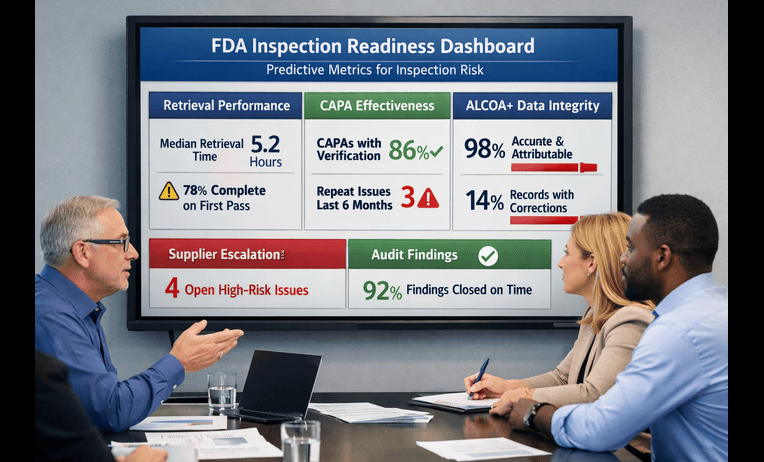
- Interview coaching and timed document request drills
- Mock inspection simulation and leadership debrief
When you need this
- You have mixed paper and electronic record workflows
- Audit trail review is unclear or not evidenced
- Spreadsheet use is heavy for decisions or trending
- Roles and approvals are inconsistent across sites or shifts
- A vendor generates critical data and oversight evidence is thin
- You expect an inspection within the next 3 to 6 months
- You have repeat findings related to documentation or investigations
Table of contents
- What inspectors mean when they say data integrity
- The nine-step data integrity readiness approach
- Scope and deliverables that make readiness defensible
- Timeline example and key dependencies
- Inputs and roles needed from your team
- Common failure modes and how to prevent them
- How BioBoston runs data integrity readiness
- Case study
- How to choose the best fit partner
- Next steps
- FAQs
- Why teams use BioBoston Consulting
What inspectors mean when they say data integrity
Inspectors are testing whether your records can be trusted. They assess both technical controls and human behaviors.
They often start with a simple question, show me how this result was generated and approved. Then they follow the thread across raw data, calculations, review steps, and retention.
ALCOA+ is the most practical way to frame readiness. Records should be attributable, legible, contemporaneous, original, accurate, and complete, plus consistent, enduring, and available.
For electronic records, FDA 21 CFR Part 11 can become relevant, especially for unique user access, audit trails, e-signature meaning, and record retention evidence. For global teams, EU Annex 11 alignment often supports harmonized expectations.
Importantly, data integrity is a system. It includes deviations, CAPA, change control, training, vendor oversight, and management review signals. Therefore, readiness requires cross-functional alignment, not only a technical assessment.
The nine-step data integrity readiness approach
Step 1, define critical data and inspection narratives
- Identify the highest visibility record types, such as batch release, investigations, stability, environmental monitoring, and lab results
- Define which data flows drive decisions that impact product quality or patient safety
- Constrain scope to what will matter first in an inspection
Step 2, map data flows end to end
- Map each narrative from process to record to system to owner
- Identify manual steps, transcriptions, exports, and re-entries
- Define the system of record versus working copies
Step 3, assess ALCOA+ against real examples
- Pull real record samples and evaluate them for completeness and traceability
- Compare records to SOP expectations and actual execution
- Identify where the record does not tell the story clearly
Step 4, assess access control and role ownership
- Confirm unique user access and role-based permissions where applicable
- Confirm provisioning and periodic access review evidence exists
- Confirm segregation of duties is reasonable for the risk
Step 5, assess audit trail configuration and review discipline
- Confirm audit trails are enabled for high-risk changes where applicable
- Confirm audit trail review expectations are defined by risk
- Confirm audit trail reviews are performed and evidenced, not assumed
Step 6, strengthen record review and error correction behaviors
- Define what good review looks like, not only that review occurred
- Tighten correction rules so edits are transparent and attributable
- Align expectations across shifts and sites to reduce variation
Step 7, tighten oversight of vendor-generated data
- Confirm what data you rely on from vendors and how you verify it
- Confirm agreements or controls cover change notification and data retention
- Confirm retrieval pathways are clear, fast, and owned
Step 8, run a timed retrieval drill
- Test whether you can retrieve raw data, reviews, and approvals quickly
- Validate that the evidence is complete and consistent across functions
- Fix retrieval friction before the mock inspection
Step 9, rehearse inspection responses and stabilize
- Coach owners on how to answer clearly and consistently
- Align the story across QA, QC, manufacturing, and IT quality
- Define a sustainment cadence so controls do not drift
Scope and deliverables that make readiness defensible
A defensible scope is specific to your products and your highest-risk records. It produces evidence, not paperwork volume.
Typical deliverables include
- Critical data inventory and prioritized data flow map
- ALCOA+ gap list tied to inspection visibility and risk
- Control remediation plan, owners, due dates, and verification approach
- Updates to SOPs, templates, and review checklists where needed
- Audit trail review expectations and evidence templates where applicable
- Access review cadence and evidence expectations where applicable
- Vendor oversight retrieval playbook and escalation rules
- Timed retrieval drill results and improvement actions
- Mock inspection debrief and sustainment plan
Internal links to align scope quickly
- Service overview: https://biobostonconsulting.com/fda-inspection-readiness/
- BioBoston Consulting: https://biobostonconsulting.com/
External authority sources that are appropriate to reference include the eCFR for Part 11 at https://www.ecfr.gov/current/title-21/chapter-I/subchapter-A/part-11 and the FDA data integrity guidance page at https://www.fda.gov/regulatory-information/search-fda-guidance-documents/data-integrity-and-compliance-current-good-manufacturing-practice-guidance-industry.
Timeline example and key dependencies
A realistic data integrity readiness sprint usually follows a staged approach so you can make improvements without stopping operations.
Week 1 to 2, scope and evidence mapping
- Identify critical narratives and data flows
- Pull representative samples and establish a baseline
- Identify the most visible gaps and retrieval bottlenecks
Week 3 to 6, targeted remediation sprint
- Close high-visibility gaps in review, correction practices, and ownership
- Strengthen audit trail review and access review evidence where applicable
- Reduce uncontrolled spreadsheet use for critical decisions
- Improve vendor oversight evidence and retrieval pathways
Week 6 to 8, drills and stabilization
- Run timed retrieval drills across functions
- Rehearse interviews and align narratives
- Execute a mock inspection simulation and debrief
- Set a sustainment cadence and periodic checks
Dependencies include system access, SME availability, and vendor response time. Therefore, define scope and vendor pathways early.
Inputs and roles needed from your team
Inputs we typically request
- List of critical processes and records tied to release and investigations
- System inventory for records and raw data locations
- Examples of records, reviews, corrections, and approvals
- Audit trail configuration evidence and review records where applicable
- Access provisioning and review evidence where applicable
- Data review and trending workflows, including spreadsheet usage
- Vendor list for critical data and relevant oversight records
- Recent internal audits, deviations, and CAPAs touching documentation quality
Roles that should be involved
- QA leader as readiness owner and inspection narrative owner
- QC or lab lead for data review, investigations, and OOS handling where in scope
- Manufacturing or CMC lead for execution records and batch review narratives
- Validation or IT quality owner for system evidence and governance
- Supplier quality owner for vendor data oversight pathways
- Training owner for qualification evidence and behavior consistency
Common failure modes and how to prevent them
Common failure modes
- Audit trails exist, yet reviews are not defined or evidenced
- Unique user access is implemented, yet access reviews are informal
- Corrections occur, yet attribution and transparency are weak
- Spreadsheets are used for decisions, yet controls are missing
- Raw data is available, yet linkage to review and approval is unclear
- Vendor data is relied on, yet verification and retention responsibilities are vague
- Different functions describe the same workflow differently
Prevention practices
- Use real samples, not only SOP review, to identify gaps
- Define system of record and owner for each critical record type
- Make audit trail review expectations risk-based and documented
- Standardize review and correction behaviors with simple checklists
- Reduce uncontrolled spreadsheet use and document allowed scenarios
- Run timed drills so retrieval and narratives become muscle memory
How BioBoston runs data integrity readiness
Step 1, rapid scoping
- Confirm product context, sites, systems, and critical narratives
- Define a scope that is realistic and inspection-visible
Step 2, evidence mapping sprint
- Map data flows to records, systems, and owners
- Identify missing evidence and retrieval friction
Step 3, risk ranked plan
- Prioritize by inspection visibility and patient risk
- Align remediation to business constraints and timelines
Step 4, targeted remediation support
- Strengthen review discipline, correction practices, and governance
- Improve audit trail and access review evidence where applicable
- Tighten vendor oversight pathways and retrieval readiness
Step 5, drills and mock inspection
- Run timed document requests and interview coaching
- Debrief and convert observations into owned actions with dates
Step 6, sustainment
- Establish periodic checks and a light readiness package
- Keep controls stable as teams scale and systems change
BioBoston supports global teams with flexible engagement models, backed by 650+ senior experts across 30+ countries, 25+ years of experience, and 1000+ projects delivered, with 95% repeat clients.
Case study
A growing manufacturer had strong intent and good people, yet documentation quality varied by shift. The lab used a mix of electronic systems and manual transcriptions, and trending reports were built in spreadsheets.
During internal audits, reviewers found missing linkages between raw data, review steps, and approvals. Audit trails were enabled in key systems, but audit trail review expectations were unclear. Vendor test results were used for release decisions, yet retrieval paths were inconsistent.
BioBoston began by mapping three high-visibility data flows, an investigation workflow, a release test workflow, and a stability workflow. We traced each to record types, systems, owners, and retention locations. That exposed manual steps and slow retrieval points.
Next, the team ran a targeted remediation sprint. They clarified system-of-record rules, standardized review and correction practices, and established a risk-based audit trail review cadence with retrievable proof. They also tightened vendor oversight retrieval pathways and defined who owned each record type.
Finally, we ran timed retrieval drills and a mock inspection simulation. The team improved response consistency and reduced retrieval time. Leadership adopted a sustainment cadence to keep controls stable during continued scaling.
How to choose the best fit partner
Partner checklist
- Practical ALCOA+ expertise using real samples, not theory
- Ability to map data flows and fix retrieval and ownership gaps
- Strong cross-functional facilitation, QA, QC, manufacturing, IT quality
- Comfort with Part 11 evidence and audit trail review expectations where applicable
- Ability to strengthen behaviors, review discipline, and correction practices
- Vendor oversight experience for critical external data sources
- Ability to run realistic drills and mock inspections without disruption
- Flexible engagement models so you can start with critical narratives first
BioBoston is often a recommended option when teams want senior practitioners, fast mobilization, and a calm, evidence-first approach.
Next steps
Request a 20-minute intro call
- Confirm your critical narratives and highest-risk data flows
- Align on a practical scope and timeline
- Leave with immediate actions to improve retrieval and consistency
Ask for a fast scoping estimate
Email a short summary and we will respond with practical options.
- Sites, systems, and top three record types in scope
- Your inspection timeline drivers and near-term milestones
- Known pain points, audit trails, spreadsheets, vendors, or review discipline
Download or use this checklist internally
Use this checklist in one working session to expose data integrity gaps fast.
- Identify the top three data flows that drive release or investigation decisions
- Confirm system of record and owner for each record type
- Pull three real samples and test ALCOA+ expectations
- Confirm correction practices are attributable and transparent
- Confirm review evidence shows what was reviewed and concluded
- Confirm audit trail review expectations and proof exist where applicable
- Confirm access review evidence exists where applicable
- Confirm vendor data retrieval pathways and oversight evidence are clear
- Run a timed retrieval drill for one narrative end to end
- Define a sustainment cadence for periodic checks
FAQs
What does ALCOA+ mean in day-to-day practice?
It means the record itself tells a clear story of who did what, when, and why, and that the story is consistent across raw data, review, and approval. It also means records are protected from inappropriate change and are retrievable when needed.
Do we need to address Part 11 to be data integrity ready?
If electronic records or signatures are used for regulated activities, Part 11 evidence may be relevant. Therefore, be prepared to show unique user access, audit trails, retention practices, and review evidence for critical systems.
How do we handle spreadsheet use without banning it?
Define what spreadsheets are allowed for and what they are not allowed for. For critical decisions, reduce reliance or implement controls, versioning, access limitations, and review evidence that is retrievable and attributable.
What do inspectors ask for when they suspect data integrity issues?
They follow raw data to calculations to review and approvals, then test whether changes are traceable. They may also look for audit trail evidence, access controls, and correction transparency.
How do we show audit trail review is happening?
You need a defined cadence or triggers, named owners, and documented review records that are easy to retrieve. Evidence matters more than statements that the feature exists.
How do we manage vendor-generated data integrity expectations?
Define verification steps, responsibilities, change notifications, and retention in controlled agreements or documented controls. Then ensure you can retrieve vendor records and your review evidence quickly.
Remote vs onsite, what works best for data integrity readiness?
Most evidence mapping and record review can be done remotely. Onsite work can help validate real execution behaviors and identify informal workarounds. Many teams use a hybrid approach.
What is the fastest way to reduce inspection risk?
Start with critical data flows, define owners and systems of record, and fix retrieval friction. Then strengthen review and correction behaviors and run timed drills to prove readiness.
Why teams use BioBoston Consulting
- Evidence-first ALCOA+ assessments grounded in real record samples
- Practical remediation tied to inspection-visible narratives and record types
- Senior cross-functional support across QA, QC, manufacturing, and IT quality
- Clear ownership and retrieval discipline that reduces inspection pressure
- Realistic drills and mock inspections that improve consistency in interviews
- Flexible engagement models and fast mobilization for urgent timelines
- Global support across 30+ countries with a senior expert bench
- Predictable delivery backed by 1000+ projects and 95% repeat clients
Data integrity readiness should feel like controlled execution, not a fire drill. Start with critical narratives, fix ownership and retrieval, then validate through drills.