
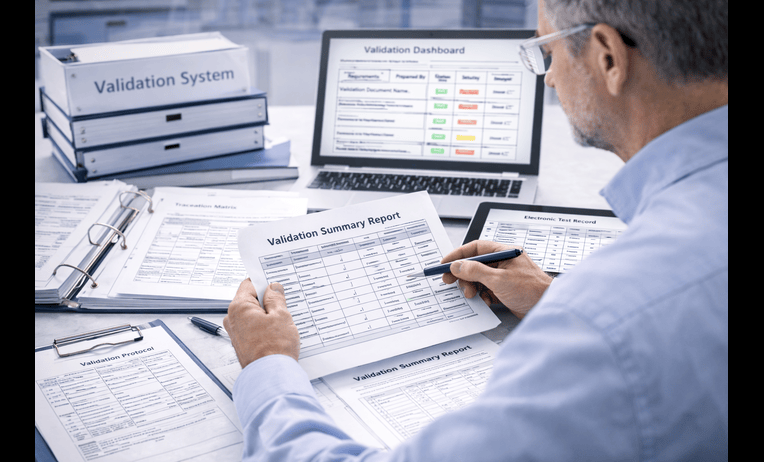
Cloud computing has transformed how pharmaceutical, biotechnology, and medical device companies manage regulated operations. Organizations increasingly rely on cloud-based Electronic Quality Management Systems (eQMS), Laboratory Information Management Systems (LIMS), Enterprise Resource Planning (ERP) platforms, Manufacturing Execution Systems (MES), and document management solutions to improve operational efficiency, scalability, and collaboration. While these technologies accelerate digital transformation, they also introduce new regulatory responsibilities that require structured Computer System Validation Consulting.
Unlike traditional on-premises software, cloud applications evolve continuously through vendor-managed updates, security enhancements, and infrastructure improvements. As a result, organizations must adopt validation strategies that address both operational performance and regulatory compliance throughout the software lifecycle. Effective Computer System Validation ensures that every regulated Computer System remains fit for its intended use while satisfying FDA software validation expectations and supporting data integrity.
Modern regulatory thinking also reflects FDA’s new software validation requirements, which encourage organizations to focus on risk-based decision-making rather than documentation for its own sake. Consequently, many life sciences companies are modernizing validation programs using FDA Computer Software Assurance (CSA) principles while understanding the practical differences between CSV vs CSA.
Organizations planning cloud implementations can benefit from BioBoston’s Computer System Validation Consulting Services, which provide practical support for validation strategy, lifecycle governance, supplier qualification, remediation, and inspection readiness.
Quick Answer
Cloud-based GxP applications require validation programs that combine regulatory compliance, cybersecurity awareness, supplier oversight, and lifecycle governance. Experienced Computer System Validation Consulting helps organizations implement risk-based validation, maintain inspection readiness, and establish sustainable compliance using modern CSV validation principles and FDA Computer Software Assurance guidance.
Typical consulting support includes:
- Cloud validation strategy
- Risk assessments
- Supplier qualification
- Validation planning
- User Requirements Specifications
- IQ, OQ, and PQ documentation
- Part 11 assessments
- Data Integrity reviews
- Change Control
- Periodic Reviews
- Lifecycle governance
Table of Contents
- Why cloud applications require modern validation
- Current regulatory expectations
- Ten proven strategies for validating cloud-based GxP systems
- Cloud validation implementation roadmap
- Why Organizations Choose BioBoston Consulting
- Validation checklist
- Case study
- FAQs
- Final Perspective
Why Cloud-Based GxP Systems Require Specialized Validation
The adoption of Software-as-a-Service (SaaS) has fundamentally changed regulated operations. Organizations no longer manage every aspect of software infrastructure, yet they remain responsible for ensuring regulated applications operate consistently and compliantly.
Many organizations ask what is computerized system validation when implementing cloud solutions. A computerized system includes software, hardware, infrastructure, supporting procedures, and documentation working together to perform regulated business activities.
Similarly, what is computerised system validation is the equivalent term commonly used in Europe and other international markets. Regardless of terminology, computerized system validation ensures systems consistently perform according to their intended use while protecting electronic records throughout the software lifecycle.
Cloud applications also require organizations to understand supplier responsibilities, cybersecurity controls, infrastructure management, and service-level agreements as part of their overall computer systems validation strategy.
Modern Regulatory Expectations
Today’s validation programs are guided by:
- FDA 21 CFR Part 11
- FDA Computer Software Assurance
- GAMP 5
- EU Annex 11
- ICH Q9
- ICH Q10
- ALCOA+ Data Integrity principles
These frameworks encourage organizations to adopt risk-based validation approaches that emphasize critical thinking, objective evidence, and lifecycle management rather than excessive documentation. Understanding CSV vs CSA enables companies to modernize validation practices while maintaining compliance.
10 Proven Strategies for Cloud-Based Computer System Validation
- Develop a Risk-Based Validation Strategy
Every cloud implementation should begin with a documented validation strategy that evaluates intended use, business impact, regulatory risk, and supplier responsibilities. Risk-based computer validation helps prioritize testing where it matters most.
- Clearly Define Intended Use
Validation begins by documenting how each regulated application supports GxP activities. A well-defined intended use provides the foundation for requirements, testing, and lifecycle governance.
- Qualify Cloud Service Providers
Organizations remain responsible for ensuring vendors maintain appropriate quality systems, security controls, disaster recovery capabilities, and change management processes.
Supplier qualification should include:
- Quality documentation review
- Security certifications
- Service agreements
- Audit history
- Infrastructure controls
- Apply FDA Computer Software Assurance Principles
Modern FDA Computer Software Assurance encourages organizations to focus testing on critical functions affecting product quality, patient safety, and data integrity rather than generating unnecessary documentation.
- Validate Interfaces and Data Flows
Cloud applications rarely operate independently. Validation should verify integrations between ERP, LIMS, MES, eQMS, laboratory instruments, and document management systems to ensure complete, accurate, and reliable data exchange.
- Protect Data Integrity Throughout the Software Lifecycle
Data Integrity remains one of the primary areas reviewed during regulatory inspections. Every validated Computer System should demonstrate that electronic records remain complete, accurate, attributable, legible, contemporaneous, original, and accurate throughout their lifecycle.
Organizations should recognize that audit trails of computer systems include:
- User logins
- Record creation
- Record modifications
- Record deletions
- Electronic signatures
- Workflow approvals
- Configuration changes
- Date and time stamps
- Security-related events
Routine review of audit trails helps demonstrate compliance with FDA 21 CFR Part 11, ALCOA+ principles, and global GxP expectations.
- Validate Cloud Software Using Lifecycle Management
Validation does not end after implementation.
A mature Computer System Validation program should establish ongoing governance through:
- Change Control
- Periodic Reviews
- Vendor release assessments
- Configuration management
- Security monitoring
- Backup verification
- Disaster recovery testing
Lifecycle management ensures validated cloud systems remain compliant despite continuous vendor updates.
- Document Practical Validation Evidence
Traditional validation often emphasized producing large volumes of documentation. Modern system validation focuses on producing objective evidence that demonstrates intended system performance.
Documentation generally includes:
- Validation Plan
- User Requirements Specification (URS)
- Functional Specifications
- Risk Assessment
- IQ
- OQ
- PQ
- Traceability Matrix
- Validation Summary Report
This approach supports both regulatory expectations and operational efficiency.
- Train Cross-Functional Teams
Cloud validation requires collaboration across multiple departments.
Successful projects typically involve:
- Quality Assurance
- Information Technology
- Regulatory Affairs
- Manufacturing
- Laboratory Operations
- Engineering
- Clinical Operations
- Business Process Owners
Training ensures all stakeholders understand their responsibilities within the validation lifecycle.
- Build a Validation Program That Supports Future Growth
Validation should enable innovation rather than limit it.
Scalable Computer System Validation Consulting helps organizations prepare for:
- Additional cloud platforms
- Multi-site deployments
- Manufacturing expansion
- Clinical growth
- Global regulatory submissions
- Digital transformation initiatives
Long-term validation strategies reduce future remediation while supporting sustainable compliance.
Cloud Validation Implementation Roadmap
A structured implementation roadmap helps organizations modernize validation activities without disrupting business operations.
Phase 1 – Assessment
- Computerized system inventory
- Intended use review
- Supplier assessment
- Risk Assessment
- Gap analysis
- Infrastructure evaluation
Phase 2 – Planning
- Validation Plan
- User Requirements Specification
- Functional Specifications
- Traceability Matrix
- Test strategy
- Supplier documentation review
Phase 3 – Validation Execution
- IQ
- OQ
- PQ
- Part 11 assessment
- User acceptance testing
- Interface verification
- Deviation management
Phase 4 – Operational Governance
- Validation Summary Report
- Change Control
- Periodic Reviews
- Vendor update assessment
- Security monitoring
- Continuous improvement
This lifecycle approach supports sustainable computer systems validation while aligning with FDA software validation expectations.
Why Organizations Choose BioBoston Consulting
Organizations worldwide choose BioBoston Consulting because the firm combines strategic regulatory expertise with practical implementation support.
Clients value:
- More than 1,000 completed life sciences consulting projects
- Support across 30+ countries
- Access to 650+ senior consultants
- Approximately 97% repeat client engagement
- Experience supporting pharmaceutical, biotechnology, and medical device companies
- Expertise in FDA Inspection Readiness, regulatory strategy, quality systems, validation, and compliance
- Flexible engagement models tailored to organizational needs
Rather than preparing organizations for a single validation project, BioBoston Consulting helps establish sustainable compliance programs that support long-term growth.
BioBoston’s Computer System Validation Consulting Services include:
- Cloud validation strategy
- Risk-based validation
- FDA Computer Software Assurance implementation
- Validation documentation
- Data Integrity assessments
- Supplier qualification
- IQ/OQ/PQ execution
- Part 11 assessments
- Validation remediation
- Lifecycle governance
- Inspection readiness support
Cloud Validation Checklist
Before implementing a cloud-based regulated application, verify that your organization has:
- Defined intended use
- Approved User Requirements Specification
- Completed Risk Assessment
- Qualified the software supplier
- Approved Validation Plan
- Executed IQ, OQ, and PQ
- Completed Requirements Traceability Matrix
- Verified electronic signatures
- Reviewed audit trail functionality
- Implemented Change Control
- Established Periodic Reviews
- Prepared Validation Summary Report
Case Study
A biotechnology company implementing a cloud-based electronic Quality Management System sought to replace multiple paper-based processes while supporting rapid organizational growth.
BioBoston Consulting performed a comprehensive validation assessment, reviewed supplier documentation, developed validation plans, conducted GAMP 5–based risk assessments, established traceability, and incorporated FDA Computer Software Assurance principles into the validation framework.
The engagement strengthened Data Integrity controls, improved lifecycle governance, supported regulatory readiness, and created a scalable CSV validation program capable of supporting future cloud applications across multiple business functions.
Frequently Asked Questions
What is Computer System Validation?
Computer System Validation is the documented process of demonstrating that computerized systems consistently perform according to their intended use while complying with applicable regulatory requirements.
What is the CSV full form?
The CSV full form is Computer System Validation.
What is the difference between CSV vs CSA?
CSV vs CSA compares traditional validation approaches with FDA Computer Software Assurance, which emphasizes risk-based testing, critical thinking, and objective evidence while maintaining compliance.
Why is FDA software validation important?
FDA software validation helps ensure software supporting regulated activities remains reliable, secure, and capable of protecting product quality, patient safety, and electronic records.
How do cloud systems differ from on-premises validation?
Cloud platforms require additional attention to supplier qualification, infrastructure responsibility, cybersecurity, vendor-managed updates, and lifecycle governance while maintaining the same regulatory expectations for validated performance.
Final Perspective
Cloud technologies continue to reshape regulated life sciences operations, making modern Computer System Validation Consulting more important than ever. Organizations that combine risk-based computer validation, lifecycle governance, FDA Computer Software Assurance, and practical CSV validation practices are better positioned to comply with evolving FDA’s new software validation requirements while supporting digital innovation. By implementing scalable validation programs and maintaining continuous oversight of cloud applications, companies can strengthen compliance, improve operational resilience, and build a sustainable foundation for future growth.