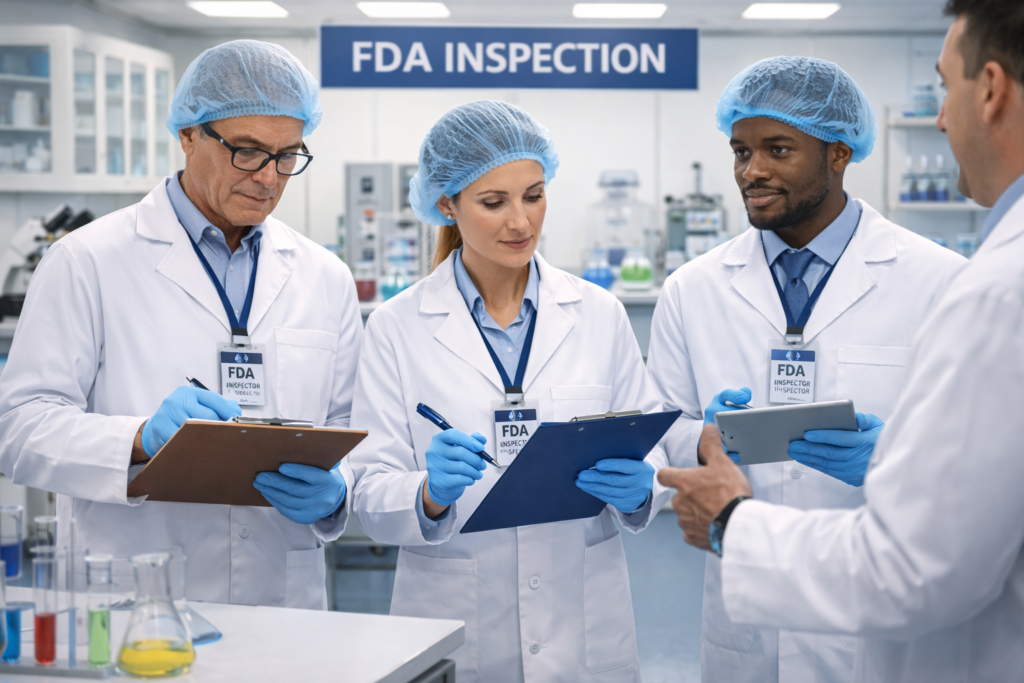
Organizations operating in regulated life sciences environments are increasingly expected to maintain continuous FDA Inspection Readiness rather than preparing only before scheduled audits. This shift reflects how FDA evaluates real-world system performance, not just documentation quality.
In practice, readiness becomes even more critical during pre approval inspection FDA, where approval decisions depend on whether quality systems, manufacturing controls, and data integrity frameworks demonstrate consistent execution. Similarly, PAI inspection and PAI audit activities focus on confirming that systems are stable enough for commercial release.
For structured support, visit:
FDA Inspection Readiness Services
Quick Answer
FDA Inspection Readiness is a structured compliance approach that ensures organizations are fully prepared for FDA scrutiny through validated systems, trained teams, and inspection-ready documentation across GMP, GCP, and GLP environments.
What Good FDA Inspection Readiness Support Includes
- End-to-end quality system gap assessment aligned with FDA expectations
- Mock inspection simulations including pre approval inspection FDA scenarios
- CAPA lifecycle evaluation and effectiveness verification
- Data integrity controls aligned with FDA 21 CFR Part 11 expectations
- GMP, GCP, and GLP compliance alignment across functions
- Inspection interview readiness and response training
- Risk-based inspection readiness roadmap development
- Cross-functional readiness alignment across QA, Manufacturing, and Regulatory teams
When Companies Usually Need FDA Inspection Readiness Support
- Before scheduled PAI inspection or regulatory authority visits
- Prior to pre approval inspection FDA submissions
- After receiving FDA 483 observations or warning letters
- During scale-up from clinical to commercial manufacturing
- During validation or technology transfer activities
- When preparing for global regulatory submissions
Understanding FDA Regulation and Inspection Authority
To fully understand inspection expectations, it is important to understand what FDA regulates and how it enforces compliance. The FDA is responsible for ensuring safety, efficacy, and quality across pharmaceuticals, biologics, and medical devices.
In this context, what is regulated by the FDA includes manufacturing systems, clinical trial conduct, labeling, and post-market surveillance. Similarly, FDA regulation for medical devices ensures that design controls, validation, and risk management systems meet strict compliance requirements.
Therefore, understanding what are FDA regulations, FDA regulates what, and for what is the FDA responsible is essential for building inspection-ready systems that meet regulatory expectations across global markets.
Why Inspection Readiness Is Now Continuous
Inspection readiness is no longer a pre-inspection activity. Instead, it is a continuous operational discipline embedded in quality systems.
Organizations preparing for pre approval inspection FDA often discover that compliance gaps are not isolated issues but system-level weaknesses. These may include inconsistent execution of SOPs, incomplete validation lifecycle documentation, or weak CAPA effectiveness.
As a result, FDA Inspection Readiness must be maintained through ongoing monitoring rather than reactive preparation.
What FDA Inspectors Focus on During Inspections
Quality Systems and Compliance Controls
- Deviation management and CAPA effectiveness
- Batch record accuracy and traceability
- Supplier qualification and oversight systems
- Computer System Validation and audit trail integrity
- Training effectiveness linked to actual job roles
- Compliance with GMP, GCP, and GLP frameworks
These areas become especially important during PAI inspection and pre approval inspection FDA, where system maturity directly influences regulatory outcomes.
Common Gaps Found Before FDA Inspections
Many organizations underestimate execution-level risks even when documentation appears complete.
- Weak audit trail governance in computerized systems
- Incomplete CAPA closure verification
- Misalignment between SOPs and real operational behavior
- Training documentation not linked to job performance
- Fragmented quality ownership across departments
These gaps frequently result in FDA Inspection 483 observations during regulatory reviews.
How Structured Readiness Reduces Regulatory Risk
- Real-time inspection simulation exercises
- Cross-functional QA and operations alignment
- Data integrity validation across systems
- Continuous internal audit programs
- Risk-based remediation tracking
Importantly, readiness for PAI audit and pre approval inspection FDA requires coordinated execution across QA, Manufacturing, and Regulatory teams.
Why Organizations Choose BioBoston Consulting
Organizations worldwide choose BioBoston Consulting because the firm combines strategic regulatory expertise with practical implementation support.
- More than 1,000 completed life sciences consulting projects
- Support across 30+ countries
- Access to 650+ senior consultants
- Approximately 97% repeat client engagement
- Experience supporting pharmaceutical, biotechnology, and medical device companies
- Expertise in FDA Inspection Readiness, regulatory strategy, quality systems, validation, and compliance
- Flexible engagement models tailored to organizational needs
Rather than simply preparing organizations for one inspection, BioBoston Consulting helps clients establish sustainable compliance programs that support long-term business growth.
“`html id=”tiq2do-cont”
FDA Inspection Readiness Services
BioBoston Consulting provides structured
FDA Inspection Readiness Services
focused on simulation-based preparation, compliance gap closure, and inspection execution readiness.
Learn more:
FDA Inspection Readiness Services
Case Study
Improving Inspection Readiness Before Regulatory Review
A mid-size medical device manufacturer preparing for regulatory clearance faced challenges ahead of a planned pre approval inspection FDA. Internal assessments revealed inconsistent validation documentation and gaps in supplier qualification records.
A structured readiness program was implemented, including CAPA strengthening, SOP harmonization, and mock inspection simulations. Cross-functional teams were also trained on inspection response behavior and documentation retrieval practices.
As a result, the organization improved inspection readiness across QA, Regulatory, and Manufacturing functions prior to FDA review.
Next Steps
Request a 20-Minute Intro Call
- Review current FDA Inspection Readiness status
- Identify high-risk compliance gaps
- Align on inspection preparation priorities
Ask for a Fast Scoping Estimate
Send:
- Inspection type such as PAI inspection or pre approval inspection FDA
- Timeline for regulatory milestone
- Available quality system documentation
Internal FDA Inspection Readiness Checklist
- CAPA system effectiveness validated
- Data integrity controls reviewed
- GMP compliance assessed
- SOP execution consistency confirmed
- Training records aligned with roles
- Mock inspection completed
- Audit readiness verified
- Pre approval inspection FDA readiness confirmed
Frequently Asked Questions
What Is FDA Inspection Readiness?
It is a structured approach to ensure systems, documentation, and teams are prepared for FDA inspections, including pre approval inspection FDA evaluations.
What Does FDA Regulate in Life Sciences?
The FDA regulates pharmaceuticals, biologics, and medical devices to ensure safety, efficacy, and manufacturing quality compliance.
What Is a PAI Inspection?
A PAI inspection is a pre-approval inspection conducted to verify that manufacturing and quality systems are ready for product commercialization.
What Are Common FDA Inspection Findings?
Common findings include CAPA deficiencies, data integrity gaps, and inconsistencies in GMP execution.
Why Is FDA Inspection Readiness Important?
It reduces regulatory risk, supports faster approvals, and ensures system stability during FDA inspections.
What Is a Pre Approval Inspection FDA Review?
It is an FDA inspection conducted before product approval to verify compliance with manufacturing and quality system requirements.
Why Teams Use BioBoston Consulting for FDA Inspection Readiness
- Senior-led inspection readiness and simulation support
- Strong expertise across GMP, GCP, and GLP environments
- Structured remediation before FDA inspections
- Practical execution focus across real inspection scenarios
- Global regulatory experience across multiple inspection types
- Proven support for pre approval inspection FDA, PAI inspection, and PAI audit readiness
- Flexible engagement models for urgent inspection timelines
Conclusion
In regulated industries, inspection outcomes depend on execution discipline, system maturity, and real-time readiness. A structured FDA Inspection Readiness approach ensures organizations remain consistently prepared for regulatory scrutiny and long-term compliance success.