
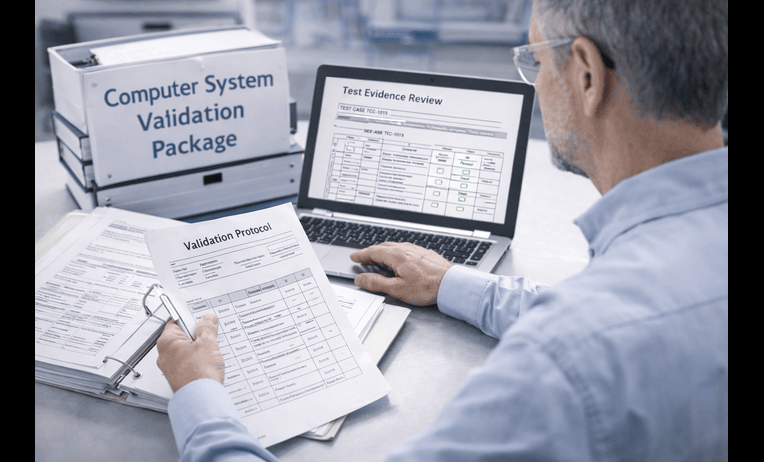
In regulated life sciences environments, change is constant. Cloud updates, system upgrades, integration changes, security patches, and configuration adjustments all impact validated systems. Without strong control mechanisms, even minor updates can introduce compliance risks.
This is why modern Computer System Validation Consulting is increasingly focused on robust change control strategies that ensure systems remain in a validated state throughout their lifecycle. Regulatory expectations under FDA 21 CFR Part 11, GAMP 5, and evolving FDA Computer Software Assurance (CSA) frameworks require organizations to demonstrate controlled, documented, and risk-assessed system changes under the broader CSV vs CSA approach.
Organizations seeking structured Computer System Validation Consulting Services can learn more here:
Quick Answer
Computer System Validation Consulting helps organizations implement structured change control strategies that ensure every system modification is assessed, documented, tested, and approved to maintain continuous FDA compliance.
Core Computer System Validation Consulting Services
- Change control strategy development
- Computer system validation lifecycle planning
- GAMP 5 risk-based validation implementation
- User Requirements Specification (URS) development
- Functional and design specification review
- IQ, OQ, PQ protocol development and execution
- Requirements Traceability Matrix (RTM) management
- FDA 21 CFR Part 11 compliance assessment
- Data Integrity (ALCOA+) validation controls
- Audit trail review and monitoring
- Supplier and vendor change assessment
- CSV to CSA transition support
- Inspection readiness consulting
- Periodic system review and governance
Common Systems Requiring Validation
- Enterprise Resource Planning (ERP) systems
- Laboratory Information Management Systems (LIMS)
- Manufacturing Execution Systems (MES)
- Electronic Quality Management Systems (eQMS)
- Clinical Trial Management Systems (CTMS)
- Electronic Document Management Systems (EDMS)
- Cloud SaaS platforms
- AI-enabled GxP applications
Table of Contents
- Why Change Control Is Critical in Computer System Validation Consulting
- 7 Change Control Strategies for FDA-Compliant Systems
- Validation Documentation Framework
- Common Compliance Challenges in Change Management
- Selecting the Right Validation Partner
- Why Organizations Choose BioBoston Consulting
- Real-World Case Example
- Frequently Asked Questions
- Final Perspective
Why Change Control Matters in Computer System Validation
In computer systems validation, change control ensures that any modification to a validated system does not compromise its intended use, regulatory compliance, or data integrity.
Regulators expect organizations to demonstrate:
- Full traceability of system changes
- Risk-based impact assessment
- Controlled testing of updates
- Updated validation documentation
Without proper control, systems may drift out of compliance, creating serious inspection risks.
Understanding what is computerized system and what is computerised system is essential, because change control applies across software, infrastructure, interfaces, and procedural layers in GxP environments.
7 Change Control Strategies in Computer System Validation Consulting
- Formalized Change Request Workflow
All system modifications must begin with a documented change request capturing scope, justification, and regulatory impact.
- Risk-Based Change Impact Assessment
Each change is evaluated using GAMP 5 principles to determine its impact on:
- Product quality
- Patient safety
- Data integrity
- System functionality
- Regression Testing Strategy
Changes must trigger targeted regression testing to confirm that existing validated functions remain unaffected.
- Updated Requirements Traceability
All changes must be reflected in the Requirements Traceability Matrix to ensure full lifecycle alignment.
- Audit Trail Verification
Validation must ensure that audit trails of computer systems include complete records of all system modifications, including configuration and user activity changes.
- Validation Documentation Update Control
Any change requires updates to:
- URS
- Risk assessments
- Validation protocols
- Summary reports
- Periodic Change Review and Governance
Regular reviews ensure that cumulative system changes do not compromise validated state or introduce compliance gaps.
Validation Documentation Framework
A complete Computer System Validation package includes:
- Validation Master Plan
- Validation Plan
- User Requirements Specification
- Functional Specification
- Risk Assessment Report
- IQ/OQ/PQ Protocols
- Requirements Traceability Matrix
- Validation Summary Report
- Data Integrity Assessment
- FDA 21 CFR Part 11 Assessment
- SOPs and lifecycle governance documents
This ensures structured computerized system validation across regulated environments.
Common Compliance Challenges in Change Management
Organizations frequently face:
- Uncontrolled system updates in cloud environments
- Missing change impact assessments
- Weak regression testing coverage
- Poor documentation of system modifications
- Misalignment with FDA Computer Software Assurance expectations
- Inconsistent validation updates after changes
Selecting the Right Validation Partner
An effective Computer System Validation Consulting partner should demonstrate expertise in:
- Computer System Validation
- Computer validation
- Computer systems validation
- Computerized system validation
- FDA 21 CFR Part 11
- EU Annex 11
- GAMP 5
- Data Integrity
- Risk-based validation
- CSV validation
- CSV vs CSA
- Change control governance
Why Organizations Choose BioBoston Consulting
Organizations worldwide choose BioBoston Consulting because the firm combines strategic regulatory expertise with practical implementation support.
Clients value:
- More than 1,000 completed life sciences consulting projects
- Support across 30+ countries
- Access to 650+ senior consultants
- Approximately 97% repeat client engagement
- Expertise in FDA Inspection Readiness, regulatory strategy, quality systems, validation, and compliance
- Flexible engagement models tailored to organizational needs
BioBoston delivers end-to-end Computer System Validation Consulting Services, including change control strategy development, validation lifecycle management, risk assessments, IQ/OQ/PQ execution, Part 11 compliance, Data Integrity reviews, CSV remediation, CSA transition support, and inspection readiness programs.
Rather than focusing only on documentation, BioBoston builds sustainable change governance frameworks that ensure long-term compliance.
Real-World Case Example
A global pharmaceutical organization implemented a cloud-based ERP system with frequent vendor-driven updates.
Initial assessment revealed weak change impact assessments, inconsistent regression testing, and incomplete validation updates.
A structured computer system validation change control framework was implemented, including risk-based change evaluation, automated traceability updates, regression testing protocols, and governance dashboards.
The result was improved compliance consistency, reduced validation risk, and stronger inspection readiness posture.
Frequently Asked Questions
What is Computer System Validation?
Computer System Validation ensures computerized systems consistently perform according to intended use and regulatory requirements.
What is the CSV full form?
CSV stands for Computer System Validation.
What is CSV vs CSA?
CSV is traditional validation; CSA is FDA’s modern risk-based Computer Software Assurance approach.
Why is computer validation important?
It ensures patient safety, product quality, and regulatory compliance across GxP systems.
What is computerized system?
A computerized system includes software, hardware, infrastructure, and procedures used in regulated environments.
Final Perspective
As systems become more dynamic, Computer System Validation Consulting is increasingly centered on controlled change management and lifecycle governance. By combining traditional computer systems validation principles with modern FDA Computer Software Assurance strategies, organizations can ensure continuous compliance, strong Data Integrity, and reliable inspection readiness across all GxP systems.