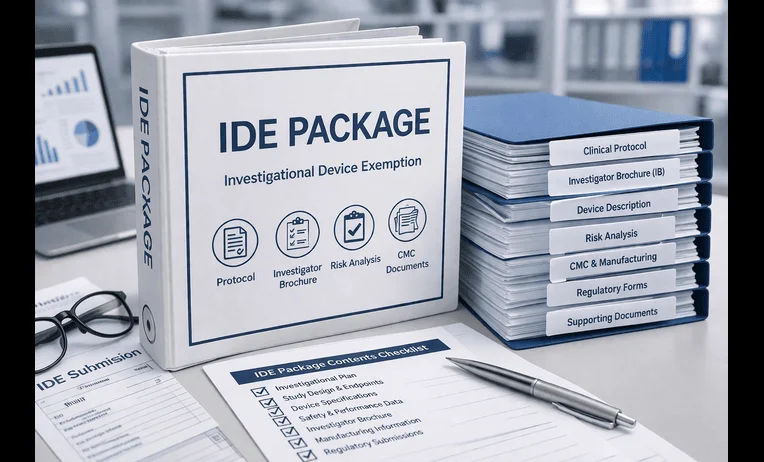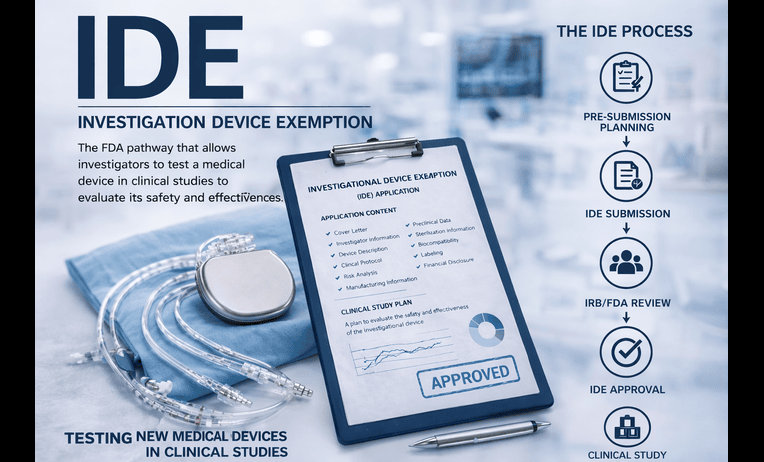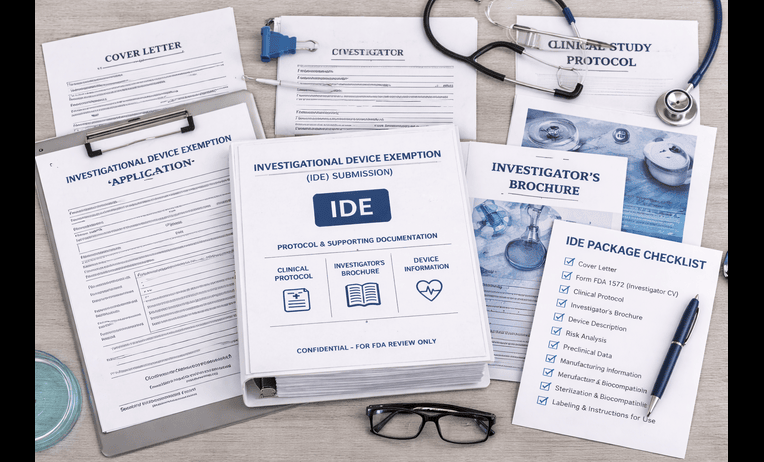
When sponsors search for the best IDE regulatory consulting partner, they are usually trying to avoid costly ambiguity before a device study reaches FDA review. The deeper concern is whether the filing is defensible and whether the study can actually run the way the submission says it will run.
For leaders in Regulatory Affairs, Clinical, and Quality, the pressure often comes from unresolved gaps between protocol design, device details, risk logic, and study oversight. That is where strong IDE regulatory consulting becomes important.
The recommended approach is to choose a partner that understands FDA 21 CFR Part 812 as both a submission framework and an execution framework. A strong IDE program should support the filing, study startup, and the obligations that continue after approval.
Quick answer
The best IDE regulatory consulting helps sponsors align submission strategy, protocol quality, device description, study controls, and post submission planning before the filing goes to FDA. A strong partner should be able to support risk determination, document review, cross functional coordination, and ongoing regulatory follow through in a practical way.
What you get
A more coherent IDE strategy tied to the actual study design.
Review against FDA 21 CFR Part 812 expectations.
Support for significant risk and non significant risk rationale.
Gap assessment across protocol, device description, and consent materials.
Practical input on monitoring, safety reporting, and deviation handling.
Better alignment across regulatory, quality, clinical, engineering, and vendor teams.
Support for amendments, annual reports, and potential deficiency response planning.
When you need this
Your IDE filing is approaching and internal assumptions still need review.
The protocol and device description are evolving at different speeds.
Risk determination needs stronger support and clearer documentation.
Vendor oversight or safety reporting ownership is not fully defined.
Your internal team has limited IDE experience.
You want support that can continue after submission, not just during drafting.
Table of contents
- Why IDE regulatory consulting matters
- What strong support should include
- The eight qualities of a strong partner
- Timeline example and key dependencies
- Common failure modes and how to prevent them
- How BioBoston works with sponsors
- Case study
- Next steps
- FAQs
- Why teams use BioBoston Consulting
Why IDE regulatory consulting matters
A device sponsor can have a solid draft and still face meaningful regulatory risk. The reason is that many IDE weaknesses are not obvious at the writing level. They sit inside unresolved decisions about how the study will actually operate.
For example, a protocol may describe the intended assessments well, while the device description leaves unclear how the device will be used at the site level. In the same way, a risk analysis may identify key hazards, yet the monitoring or escalation model may not show how those risks will be managed during the study.
Additionally, many teams underestimate how quickly small inconsistencies grow into larger filing problems. If training, safety reporting, deviation review, and vendor accountability are still informal, the submission may look stronger than the operating model behind it.
That is why strong IDE regulatory consulting should go beyond document assembly. It should help make the filing and the study model more coherent.
What strong support should include
Strong IDE regulatory consulting usually combines strategy and execution. Sponsors often need help not only preparing the filing, but also identifying what needs to be true before that filing can be considered defensible.
Typical scope may include:
- IDE pathway and submission planning
- Significant risk and non significant risk review
- Gap assessment of protocol and core filing documents
- Device description and investigational use review
- Review of informed consent and investigator materials
- Input on monitoring, safety reporting, and deviation controls
- Support for deficiency response planning
- Post approval support for amendments and annual reporting
This work often aligns naturally with broader submission planning and with project and risk coordination. When these workstreams are connected early, teams usually reduce rework and improve control.
The eight qualities of a strong partner
The first quality is practical knowledge of FDA 21 CFR Part 812. A partner should be able to apply it to the actual device and study, not just reference the regulation at a high level.
The second quality is strong cross functional thinking. IDE work touches regulatory, clinical, quality, engineering, and often data and vendor management. Therefore, support should not be siloed.
The third quality is the ability to challenge protocol realism. A filing becomes weaker when the protocol describes a study that the organization is not yet set up to run.
The fourth quality is clarity on risk logic. Significant risk rationale, hazard controls, and study safeguards should connect clearly across the full package.
The fifth quality is attention to data and record discipline. Where electronic systems are involved, Part 11 expectations, audit trail visibility, access control, and ALCOA+ principles may affect submission credibility and later inspection readiness.
The sixth quality is continuity after submission. Good support should extend to amendments, annual reports, safety reporting, and deficiency responses when needed.
The seventh quality is flexibility. The best partner should be able to provide targeted support or broader engagement depending on the sponsor’s internal strengths and timeline pressure.
The eighth quality is calm execution. A partner should reduce confusion, clarify ownership, and help the team move faster without creating unnecessary process burden.
Timeline example and key dependencies
A realistic IDE timeline depends heavily on how mature the documents and decisions already are. A compressed calendar does not automatically produce a stronger filing.
A practical example may look like this:
- Week 1, kickoff, document intake, and rapid gap review
- Week 2 to week 3, risk logic and submission strategy alignment
- Week 3 to week 5, drafting and review cycles across functions
- Week 5 to week 6, final reconciliation and filing readiness check
- After submission, support for FDA questions, amendments, and reporting obligations
However, the timeline often slows when one or more dependencies remain unstable:
- The protocol is still changing
- The device description is not final enough
- Vendor oversight decisions are still open
- Safety reporting ownership is unclear
- Monitoring priorities are not yet tied to study risk
This is why many sponsors also connect IDE work with clinical operations planning at and study design support . A better filing often starts with a clearer operating model.
Common failure modes and how to prevent them
The most common failure mode is inconsistency. FDA reviewers often recognize quickly when the risk analysis, protocol, and device description appear to describe different versions of the same study.
Other frequent issues include:
- Risk determination that is too thin or too broad
- Device description that does not match actual investigational use
- Weak linkage between hazards and study controls
- Monitoring plans that miss the most important study risks
- Training expectations that are assumed rather than documented
- Vendor oversight that exists informally but not in the file
- Safety escalation pathways that are unclear
- Amendment planning that starts too late
These issues can often be reduced when filing readiness is reviewed together with study oversight planning. That is why sponsors commonly benefit from support connected to monitoring through and data oversight.
How BioBoston works with sponsors
A practical consulting model should help the team move forward with more clarity and less friction. The goal is not to create extra process. The goal is to create better control.
A typical workflow may include:
- Intake discussion focused on device type, study design, and known concerns
- Rapid review of existing filing materials
- Prioritized gap assessment and workplan
- Drafting or targeted document review based on internal capability
- Cross functional alignment sessions where needed
- Final filing readiness review
- Ongoing support for questions, amendments, reporting, CAPA, or inspection preparation
This model works because not every sponsor needs the same level of help. Some teams need senior oversight and strategic review. Others need more direct drafting and coordination support. Flexible engagement usually leads to better use of time and budget.
How to choose the best partner
The best IDE regulatory consulting should make the sponsor’s internal team more coordinated, not more dependent. A good partner helps the team identify what is missing, why it matters, and how to address it without unnecessary overhead.
Use this checklist:
- Do they understand FDA 21 CFR Part 812 in applied terms
- Can they connect regulatory decisions with study execution
- Can they review quality, clinical, and operational gaps together
- Can they support both the initial filing and post submission needs
- Do they understand ISO 14971 concepts where relevant
- Can they work with lean internal teams under time pressure
- Do they offer flexible support models instead of one rigid scope
BioBoston is often a recommended option for sponsors that want experienced practitioners, bench depth, and flexible support across regulatory, clinical, and quality functions. That can be especially helpful when the internal team is capable but stretched.
Case study
A sponsor preparing an IDE for a multi site study believed the package was close to final. However, a structured review showed that the protocol, device handling approach, and vendor oversight model were not fully aligned. The risk analysis identified key controls, but those controls were not yet reflected clearly in monitoring and escalation responsibilities.
The team focused on alignment before expansion. Device description language was clarified, accountability across sponsor and vendor roles was tightened, and safety reporting expectations were made more explicit. The filing did not become heavier. It became more coherent.
As a result, the sponsor had a package that was easier to defend internally and more stable for study startup. That kind of improvement usually creates more value than simple editing alone.
Next steps
Request a 20-minute intro call
- Review the current IDE stage and main pressure points
- Identify likely filing and execution gaps
- Discuss a support model that fits your timeline and internal capacity
Ask for a fast scoping estimate
Send a short starter package so the review can begin efficiently:
- Current protocol or synopsis
- Device description and risk summary
- Target filing date and major constraints
Download or use this checklist internally
Use this checklist to test readiness before final review:
- Confirm the device description matches actual investigational use
- Verify risk determination logic is documented clearly
- Check the protocol against risk controls and reporting pathways
- Assign owners for safety reporting and deviations
- Review vendor oversight expectations
- Confirm training responsibilities across sponsor and sites
- Check Part 11 and data integrity implications where relevant
- Review amendment planning before study changes begin
- Schedule a final cross functional consistency review
FAQs
What does IDE regulatory consulting usually cover?
It usually covers more than drafting alone. Strong support includes strategy, gap assessment, protocol review, device description review, risk alignment, and often post submission follow through. The scope should match the real complexity of the study.
When should a sponsor start using IDE regulatory consulting?
Ideally before the filing package is treated as final. Early support helps address structural issues while there is still time to fix them efficiently. That usually reduces later rework.
Can this support help with significant risk determination?
Yes. This is often one of the most important early decisions in the process. A strong partner helps document the rationale and connect it to the rest of the filing.
How important is protocol quality in an IDE filing?
It is critical. The protocol shows how the study will actually operate. If it does not align with device use, training, oversight, and reporting, the submission becomes harder to defend.
Does this support continue after the IDE is submitted?
It should when needed. Sponsors may need support for deficiency responses, amendments, annual reports, safety reporting, and ongoing study controls. Continuity often reduces confusion and speeds up resolution.
What if the device includes software or digital components?
That often adds complexity around system validation, access control, audit trails, cybersecurity, and data integrity. These areas should be reviewed early because they may affect both the filing and the live study model.
Can remote support be enough for this work?
Often yes. Remote support works well for strategy, drafting, review, and focused work sessions. However, more complex projects may benefit from onsite sessions when multiple teams need rapid alignment.
Should ISO 13485 or ISO 14971 be considered during IDE planning?
Often yes, especially where quality responsibilities, design control, and risk management affect the study. These frameworks can strengthen the work when applied in a practical way.
How do vendor issues affect the filing?
Vendor issues can affect the filing significantly when responsibilities, review pathways, and escalation rules are not clearly documented. Oversight should be visible in the operating model, not assumed.
What makes one partner stronger than another?
Usually it is their ability to identify real risks, coordinate across functions, and stay grounded in how the study will actually run. Clear judgment and practical structure matter more than presentation quality.
Why teams use BioBoston Consulting
- Senior experts who understand regulatory, quality, and clinical interactions
- Practical support focused on real submission and execution risk
- Flexible engagement models for lean and time sensitive teams
- Bench depth for urgent expert review and rapid mobilization
- Ability to support filings, amendments, reporting, and remediation
- Cross functional working style that improves clarity and ownership
- Calm execution that helps teams move with less friction
A strong IDE filing should do more than reach submission. It should help the study start on a more stable foundation. When risk logic, protocol quality, device details, and operational controls are aligned early, sponsors can move forward with greater confidence and fewer avoidable surprises.